 Is Now Vyapar TaxOne | Same Trust, New Name!
 AI Weapon for Financial Soldiers


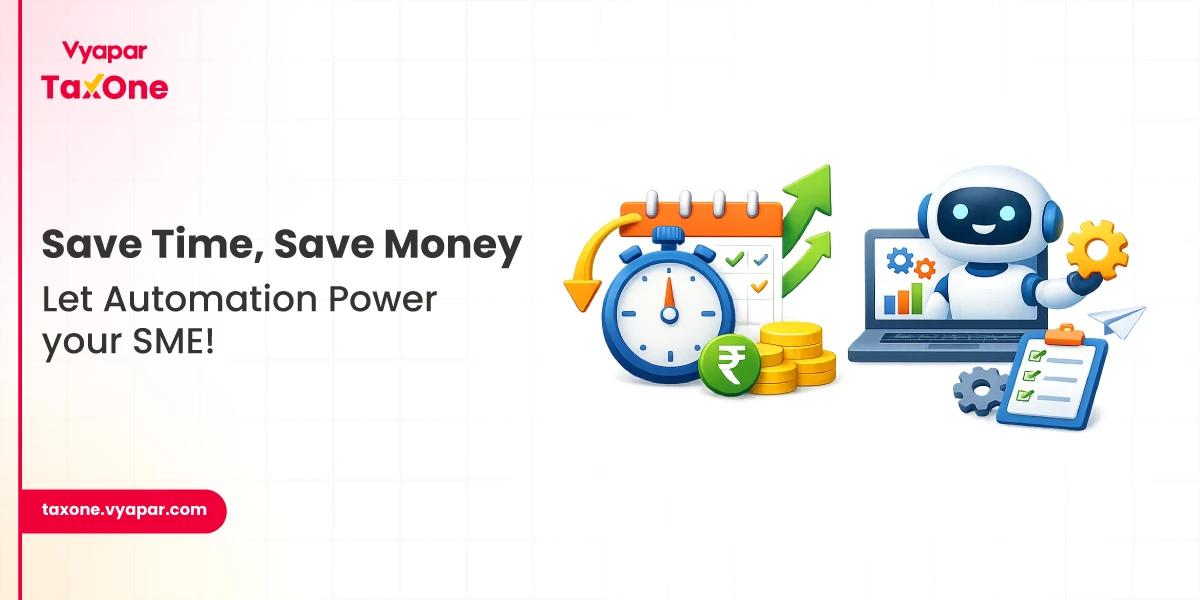
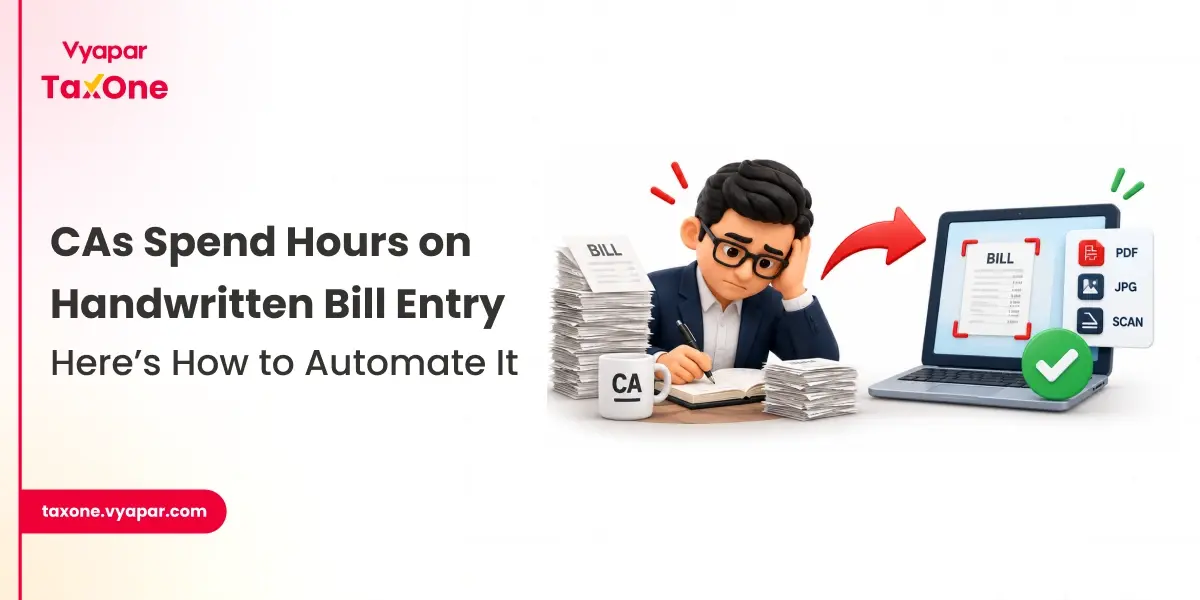
Managing accounting manually becomes harder as an SME grows. What starts as basic bookkeeping often turns into hours of invoice entry, reconciliation, GST follow-ups, payment tracking, and report preparation.
That manual workload creates hidden costs. Teams spend more time on repetitive tasks, mistakes take longer to fix, financial visibility gets delayed, and compliance pressure increases during filing periods.
Accounting automation helps SMEs reduce this burden by automating routine finance workflows such as data entry, invoice handling, document management, reconciliation, reminders, and reporting.
In this guide, we explain what accounting automation means for SMEs, where it saves time, how it improves compliance, what it can cost, and how to evaluate whether the investment makes sense for your business.
Accounting automation uses technology and software to automate repetitive and time-consuming financial tasks.
For SMEs, this could include automating invoice generation, managing payroll, tracking expenses, or filing taxes.
Instead of manually entering data, business owners and accountants can rely on automation tools to handle these tasks with speed and accuracy.
Manual accounting may seem manageable in the early stages of a business, but the cost rises as transaction volume increases.
1. Repetitive data entry slows the team down
When invoices, purchase records, bank details, and tax data are entered manually across spreadsheets or multiple tools, the finance process slows and becomes harder to scale.
2. Small mistakes create bigger downstream problems
A wrong figure, duplicate entry, or missing invoice can lead to mismatches, rework, reporting delays, or compliance issues.
3. Collections and reconciliation take longer
Manual follow-ups, document chasing, and invoice matching can delay cash flow visibility and slow down payment cycles.
4. Decision-making suffers when reports are delayed
If owners do not have timely access to expense, receivable, payable, or margin data, they end up making business decisions with incomplete information.
No matter how experienced an accountant is, human error is inevitable. A misplaced digit or a forgotten invoice can result in financial discrepancies. Automation minimizes these errors by using algorithms to process data without manual intervention.
At first glance, investing in accounting software might seem like a big upfront expense. But when you factor in long-term savings on labor costs, human errors, and compliance issues, the return on investment becomes clear. Plus, many automation tools offer affordable packages for SMEs, making them accessible for businesses of all sizes.
Tasks that used to take hours, like preparing financial statements or tracking expenses, can now be done in minutes with automation. This increased efficiency allows SMEs to focus on growing their business instead of getting bogged down by paperwork.
One of the biggest challenges for Indian SMEs is staying compliant with GST regulations. Missing deadlines or filing inaccurate returns can lead to hefty fines. Automation tools like Vyapar TaxOne's GST ecosystem can ensure that compliance is handled smoothly, reducing the risk of penalties.
Also Read: Avoid GST Fraud: Simple Steps to Verify if GST Bill is Genuine and Valid
Forget about manually entering every transaction. Automated tools can integrate with your bank account, pulling data directly into your financial system and categorizing expenses automatically.
Managing client records, contracts, and invoices can be streamlined through automation. These tools can generate invoices, send reminders for overdue payments, and store essential documents securely.
For Indian SMEs, GST compliance is a significant concern. Automation tools help you generate GST-compliant invoices, track input tax credits, and file returns on time, making it easier to navigate the GST ecosystem.
Get real-time insights into your business's financial health. Automated tools generate detailed reports, helping you make informed decisions based on your cash flow, expenses, and profit margins.
With fewer manual tasks, businesses can reduce their reliance on a large accounting team, or even reassign employees to more strategic roles. This doesn't mean eliminating jobs but rather streamlining processes, so your team can focus on what really matters.
Paper-based accounting requires storage space and supplies, adding up to operational costs. Digital automation removes this need, leading to cost savings on physical resources.
With automation, invoices can be generated and sent in a matter of seconds. This reduces the time it takes to receive payments, improving your cash flow and reducing delays in financial operations.
As your business grows, so do your financial operations. Automation tools can easily scale to match your business’s needs, without requiring significant increases in manpower.
With real-time data at your fingertips, business owners can make quicker, data-driven decisions. Whether it’s forecasting future profits or identifying cost-saving opportunities, automation gives you the clarity to manage your finances strategically.
The less time you spend on administrative tasks, the more you can focus on innovation and growth. Automation allows SMEs to allocate more resources to product development, customer service, and market expansion.
One of the main concerns for SMEs is the initial investment required for automation tools. While there is a cost involved, the long-term benefits far outweigh this. From reduced labor costs to minimizing errors and penalties, automation can save your business a significant amount over time.
Some businesses worry about the learning curve involved in adopting new technology. However, most automation tools are designed with user-friendliness in mind. With intuitive interfaces and customer support, transitioning to an automated system is easier than you might think.
Another common concern is the safety of financial data. Reputable automation tools offer high-level security features, including encryption and secure data storage, ensuring your financial information is safe.
Also Read: Clearing Up Myths About AI in Accounting With Reality Check
At Vyapar TaxOne, we’ve seen firsthand how accounting automation can transform SMEs in India.
By cutting down costs, increasing efficiency, and ensuring better compliance, automation is a game-changer for small businesses.
As we continue to develop tools that cater to the needs of Indian SMEs, we’re excited to help businesses grow faster and more effectively.
The initial investment may seem daunting, but the long-term returns make accounting automation a worthy investment for any SME.
Try our tool for free for a week!
Accounting automation uses software to reduce repetitive finance tasks such as invoice entry, expense tracking, reconciliation, and reporting.
Not always. The right way to evaluate cost is by measuring time saved, reduced errors, faster collections, and lower manual effort.
It can support invoice consistency, reconciliation workflows, document handling, and deadline tracking, depending on the tool.
Usually, when transaction volume, compliance workload, or reporting delays start affecting efficiency and visibility.

Get started today and simplify your accounting process!