 Is Now Vyapar TaxOne | Same Trust, New Name!
 AI Weapon for Financial Soldiers


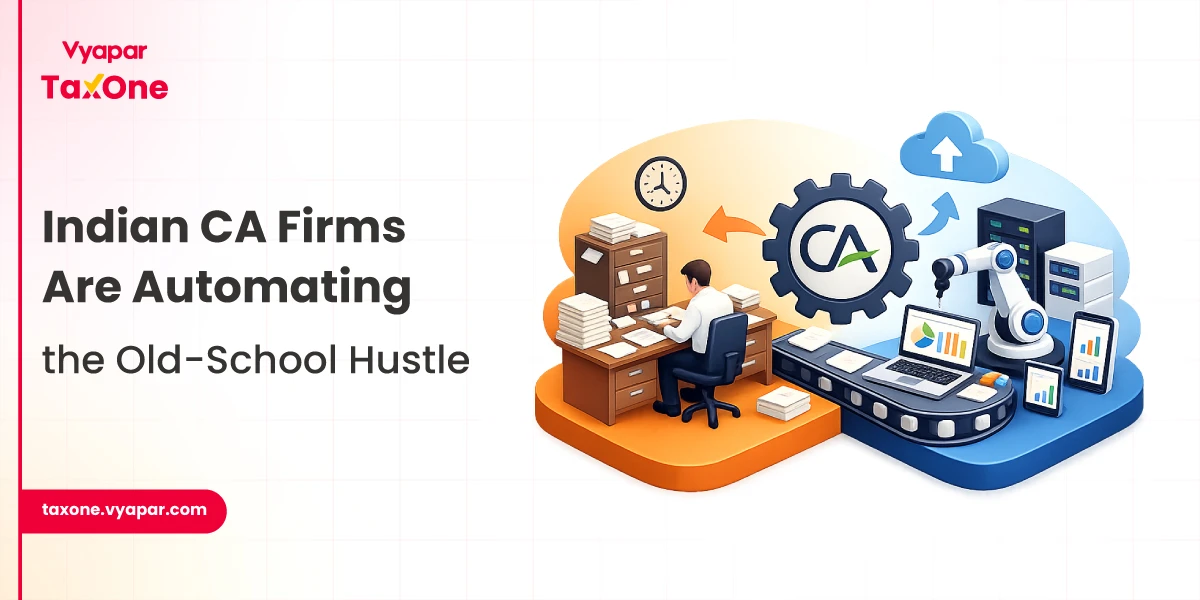
In 2026, automation and accounting are becoming central to how Indian CA firms operate. Accounting is no longer limited to bookkeeping and return filing.
It now includes structured data capture, GST reconciliation, workflow tracking, and faster client communication.
As compliance becomes more digital, firms need systems that improve accuracy, speed, and review control.
For tax professionals in India, this shift is not reducing the role of the Chartered Accountant. It is making that role more strategic. Automation handles repetitive tasks, while CAs focus on review, judgment, and advisory services.
Indian tax compliance has become increasingly data-sensitive. GST workflows depend on accurate transaction records, timely reconciliation, and cleaner reporting structures.
When firms continue to rely on fragmented spreadsheets, manual follow-ups, and repeated data entry, the risk is not only inefficiency but also inconsistency. The official e-invoice system exists specifically to standardize invoice reporting across the GST ecosystem and improve interoperability.
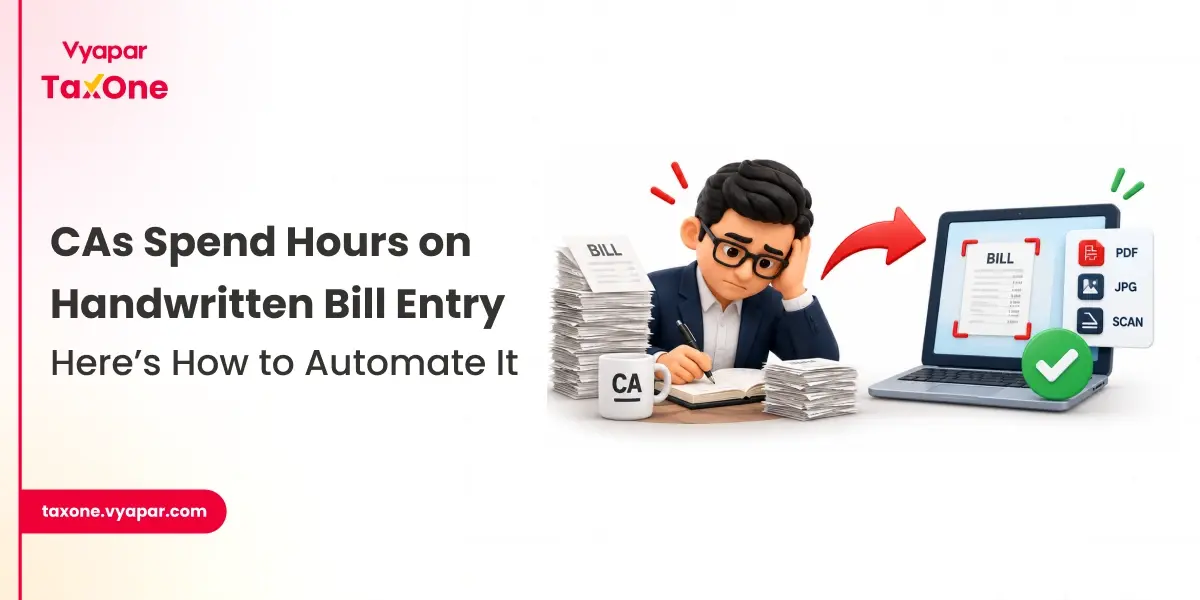
Routine accounting work, such as voucher entry, ledger matching, return preparation support, and document chasing, remains necessary, but it is no longer where firms create the most value. Clients expect faster turnaround, fewer errors, and better responsiveness.
That makes traditional labor-heavy execution harder to scale profitably. ICAI's recent AI material and case studies also emphasize that automation reduces administrative burden and allows professionals to focus on higher-value work, such as analysis and client consultation.
The real change in 2026 is not that accounting is becoming automated. Advisory becomes increasingly important as repetitive work is automated. When software handles structured tasks, firms can spend more time on reviewing quality, tax planning, compliance health, and strategic client support.
ICAI's AI use cases for CA offices reflect this direction by focusing on workflow automation, compliance intelligence, and practice management enhancement.
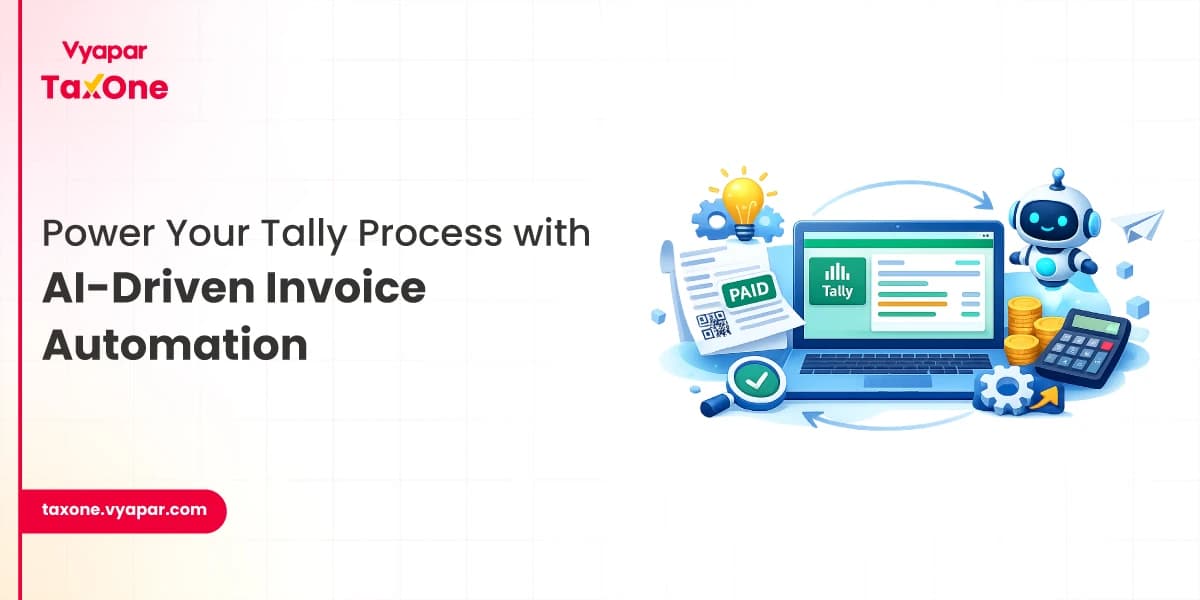
Automation in a CA firm does not mean replacing accountants with software. It means building a connected workflow where data enters once, moves through validation and reconciliation, and reaches the review stage with fewer manual touchpoints.
This is where platforms such as Vyapar TaxOne become relevant. It is an all-in-one practice management platform for Chartered Accountants and tax professionals in India, featuring automated data entry, GST filing, and client communication.
Bookkeeping remains the base layer of every accounting engagement. Automation improves this layer by reducing repetitive posting work, improving consistency, and shortening turnaround time.
When transaction data is cleaner at the start, downstream compliance work becomes more reliable.
This is one of the strongest use cases for automation and accounting in India. GST reconciliation is repetitive, data-heavy, and deadline-sensitive.
Vyapar TaxOne's GST reconciliation offers ITC tracking, validation checks, and return-related workflows, all integrated with Tally and TaxOne Chat. That directly aligns with the core pain points of CA firms managing multiple GST clients.
A large share of lost productivity in CA offices comes from chasing clients for invoices, ledger exports, clarification notes, and approval messages.
Automation helps convert this into a visible workflow. When the follow-up system is standardized, teams spend less time remembering what is pending and more time resolving actual issues.
The best firms do not automate blindly. They automate preparation and keep professional review at the center. This method is safer because the system handles routine processing, while the CA focuses on exceptions, unusual patterns, and judgment calls.
ICAI's AI guidance strongly supports this model by framing automation as an enabler of better professional oversight rather than a substitute for it.
For firms evaluating tools, Vyapar TaxOne is relevant because it is not a generic software. It addresses the operational realities of Chartered Accountants and tax professionals in India. It automates data entry, GST filing processes, client communication, and Tally-linked workflows.
That makes it especially relevant in three scenarios:
The value is not just speed. The value is process continuity. A tool becomes useful when it reduces manual handoffs between accounting, reconciliation, and review.
ICAI's AI material and use cases repeatedly reinforce this pattern: automation helps professionals move from administrative execution to analysis, governance, and higher-order advisory work.
Poor source data
Automation only works well when firms define clean inputs. Inconsistent client files, delayed submissions, weak naming conventions, and missing records can limit the value of any software.
Overtrust in software output
Faster processing does not automatically mean accurate output. Review controls still matter, especially in GST, reconciliations, and compliance interpretation.
Team adoption issues
Technology adoption often fails because process change is ignored. Staff need role clarity. Managers need to review dashboards. Partners need visibility. Without structured adoption, even good software remains underused.
Confidentiality and governance
Since CA firms handle sensitive business and tax data, automation should always be implemented with access controls, clear review responsibilities, and audit-trail awareness. ICAI's current AI direction also places ethics and governance at the center of responsible adoption.
A simple implementation sequence
This approach is more sustainable than trying to automate the entire firm in one step.
| Area | Manual Method | Automated Method |
|---|---|---|
| Data entry | Repeated entry across files and systems | Single structured capture and faster processing |
| GST reconciliation | Spreadsheet-heavy, time-consuming checks | Automated matching, ITC tracking, validation support |
| Client follow-up | Calls, emails, memory-based reminders | Workflow-led communication tracking |
| Review process | Random or deadline-driven review | Exception-based review with better prioritization |
| Capacity growth | Depends heavily on headcount | Better scale with existing team structure |
The strongest automation outcomes usually come when firms move from person-dependent work to system-dependent work without weakening professional review.
In 2026, automation and accounting are no longer separate discussions for Indian CA firms. They are part of the same operating model. Compliance is becoming more digital, clients expect faster service, and firms need stronger internal control over data, workflows, and review quality.
Official GST infrastructure continues to support system-led invoice reporting and to enable visibility into enablement. At the same time, ICAI's AI guidance clearly points to a future in which CAs play a more strategic, judgment-based role.
Within this shift, Vyapar TaxOne is applicable wherever firms want practical workflow improvement in GST automation, data handling, and client coordination. It primarily focuses on CA practice management, GST filing, reconciliation, and communication, making it worth considering for Indian tax professionals looking to reduce manual effort without losing control.
The firms that will perform best are not the ones that automate everything. They are the ones that automate the repetitive, structure the review, and reserve professional judgment for the decisions that matter most.
It means using software and digital workflows to handle repetitive accounting, compliance, reconciliation, and client coordination tasks more efficiently.
As compliance becomes more digital, clients expect faster service, and firms need greater accuracy, control, and scalability.
Bookkeeping, GST reconciliation, data entry, document collection, reminders, and workflow tracking are some of the most common areas.
No. Automation reduces manual work, but CAs are still essential for review, judgment, compliance interpretation, and advisory services.
Vyapar TaxOne is relevant because it helps automate GST workflows, data handling, reconciliation, and client communication for CA firms and tax professionals.

Get started today and simplify your accounting process!