 Is Now Vyapar TaxOne | Same Trust, New Name!
 AI Weapon for Financial Soldiers


If you work with GST registration, invoices, e-invoices, e-way bills, or return filing, using the correct GST state code is essential.
The first two characters of a GSTIN identify the state or union territory where the registration is held. At the same time, GST jurisdiction tells you which tax authority handles your case for compliance and administration.
In this guide, you will find the latest GST state code list 2026, understand how the code fits into a GSTIN, learn the difference between a GST state code and GST jurisdiction, and see how to check the correct jurisdiction for your business.
This blog is intended as a practical reference for business owners, accountants, tax professionals, and finance teams.
A GST state code is a two-digit identifier assigned to each Indian state and union territory under GST. It helps identify the place of registration and appears at the beginning of the GSTIN.
A GST jurisdiction is different. It refers to the State and Centre tax authorities mapped to your registered place of business for administrative purposes.
In simple terms:
A GST state code is a two-digit numeric code assigned to every state and union territory under India’s GST framework. It is used to identify the location of a GST registration and plays an important role in invoicing, return filing, validation, and compliance workflows.
GST registration is state-wise. That means a business must register in each state from which it makes taxable supplies, and the state code instantly identifies that registration. For example, a GSTIN starting with 27 belongs to Maharashtra, while a GSTIN starting with 07 belongs to Delhi.
Using the correct state code reduces the risk of data mismatch, tax reporting errors, and compliance issues in invoices and GST filings.
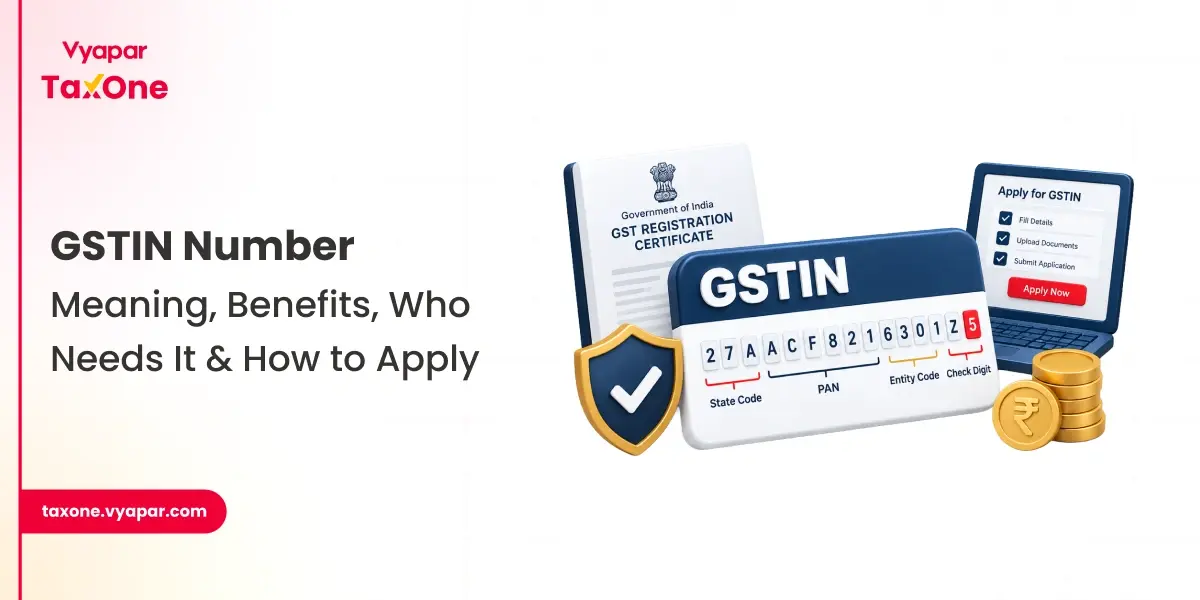
A GSTIN is a 15-character registration number. The structure is easy to understand:
Example: In a GSTIN such as 27ABCDE1234F1Z5, the 27 shows that the registration belongs to Maharashtra.
Below is the updated GST state code list for 2026:
| State / Union Territory | GST State Code |
|---|---|
| Jammu and Kashmir | 1 |
| Himachal Pradesh | 2 |
| Punjab | 3 |
| Chandigarh | 4 |
| Uttarakhand | 5 |
| Haryana | 6 |
| Delhi | 7 |
| Rajasthan | 8 |
| Uttar Pradesh | 9 |
| Bihar | 10 |
| Sikkim | 11 |
| Arunachal Pradesh | 12 |
| Nagaland | 13 |
| Manipur | 14 |
| Mizoram | 15 |
| Tripura | 16 |
| Meghalaya | 17 |
| Assam | 18 |
| West Bengal | 19 |
| Jharkhand | 20 |
| Odisha | 21 |
| Chhattisgarh | 22 |
| Madhya Pradesh | 23 |
| Gujarat | 24 |
| Dadra and Nagar Haveli and Daman and Diu | 26 |
| Maharashtra | 27 |
| Karnataka | 29 |
| Goa | 30 |
| Lakshadweep | 31 |
| Kerala | 32 |
| Tamil Nadu | 33 |
| Puducherry | 34 |
| Andaman and Nicobar Islands | 35 |
| Telangana | 36 |
| Andhra Pradesh | 37 |
| Ladakh | 38 |
| Special Entry | Code |
|---|---|
| Other Country | 96 |
| Other Territory | 97 |
Important Note on Legacy and Reference Codes
You may still come across some older or reference-only codes in legacy documents or historical GST records. For example:
GST state codes are used in several practical situations:
GST registration: Since GST registration is state-wise, the state code helps identify the exact state or union territory of registration.
Invoice review and validation: The first two digits of the GSTIN help businesses confirm whether the supplier or customer registration belongs to the expected state.
Return filing and reconciliation: Correct state-code mapping helps reduce mismatches in outward-supply and inward-supply reporting.
e-Invoice and related compliance workflows: State codes are part of the broader data structure used across GST systems, including invoice-related reporting.
Vendor onboarding and master-data checks: Finance and tax teams often use the state code as a first-level validation check before processing invoices or onboarding a supplier.
These two terms are related, but they are not the same.
| Term | Meaning |
|---|---|
| GST state code | A two-digit code that identifies the state or union territory of a GST registration |
| GST jurisdiction | The State and Centre tax authorities assigned to the taxpayer for administrative purposes |
A state code answers the question, “Where is this GST registration held?”
A jurisdiction answers the question, “Which tax authority handles this registration?”
GST jurisdiction refers to the administrative authority assigned to a taxpayer under GST. A registered business can have both State and Centre jurisdictions for administration, verification, notices, and related tax processes.
In practice, jurisdiction is linked to your registered place of business and its mapped area. On the GST portal, the State and Centre jurisdiction are displayed based on the PIN code entered in the Principal Place of Business section during registration.
Knowing your GST jurisdiction helps in practical compliance situations, such as:
GST jurisdiction is divided into two primary types:
Central Jurisdiction: Transactions between various states or union territories fall under this jurisdiction. For instance, if a manufacturer in Gujarat sells goods to a vendor in Madhya Pradesh, the transaction would fall under Central Jurisdiction and be subject to Integrated GST (IGST).
State Jurisdiction: This pertains to transactions conducted within the same state. For example, an eatery in Delhi catering only to local customers would fall under State Jurisdiction and be liable for State GST (SGST), dealing with Delhi's tax authorities.
Follow these steps to identify your GST jurisdiction:
Go to the GST Portal: Visit www.gst.gov.in to access the official GST portal.
Navigate to 'Search Taxpayer': On the portal’s homepage, click on the "Search Taxpayer" option.
 3. Search Using GSTIN or UIN: Enter your GSTIN (Goods and Services Tax Identification Number) or UIN (Unique Identification Number) in the search bar.

Pro Tip: Always verify your jurisdiction when updating your GST details or expanding your business to a new location.
They represent the GST state code of the state or union territory where the registration is held.
No. The state code identifies the location of registration. GST jurisdiction identifies the State and Centre tax authorities assigned to that registration.
Yes. Legacy or historical records may still contain older codes. However, current reference tables should clearly separate active codes from historical ones.
Use the official Search Taxpayer function on the GST portal and enter the supplier’s GSTIN. The first two characters also identify the state code.
GST jurisdiction is displayed based on the PIN code entered in the Principal Place of Business section and the mapped administrative area on the GST system.
The wrong code can cause invoice-level confusion, vendor data mismatches, return filing errors, and extra correction work during reconciliation.
GST state codes and GST jurisdiction are basic but important parts of GST compliance. The state code helps identify where a registration belongs, while jurisdiction helps identify which tax authority manages that registration.
For accurate GST registration, invoicing, return filing, and vendor validation, always use the latest active state-code list, separate current codes from legacy references, and verify jurisdiction details carefully from official GST sources whenever needed.
Bonus Tip: Consider using Vyapar TaxOne’s automated GST tools to simplify your invoicing, reconciliation, and reporting tasks.
Also Read:


Get started today and simplify your accounting process!