 Is Now Vyapar TaxOne | Same Trust, New Name!
 AI Weapon for Financial Soldiers


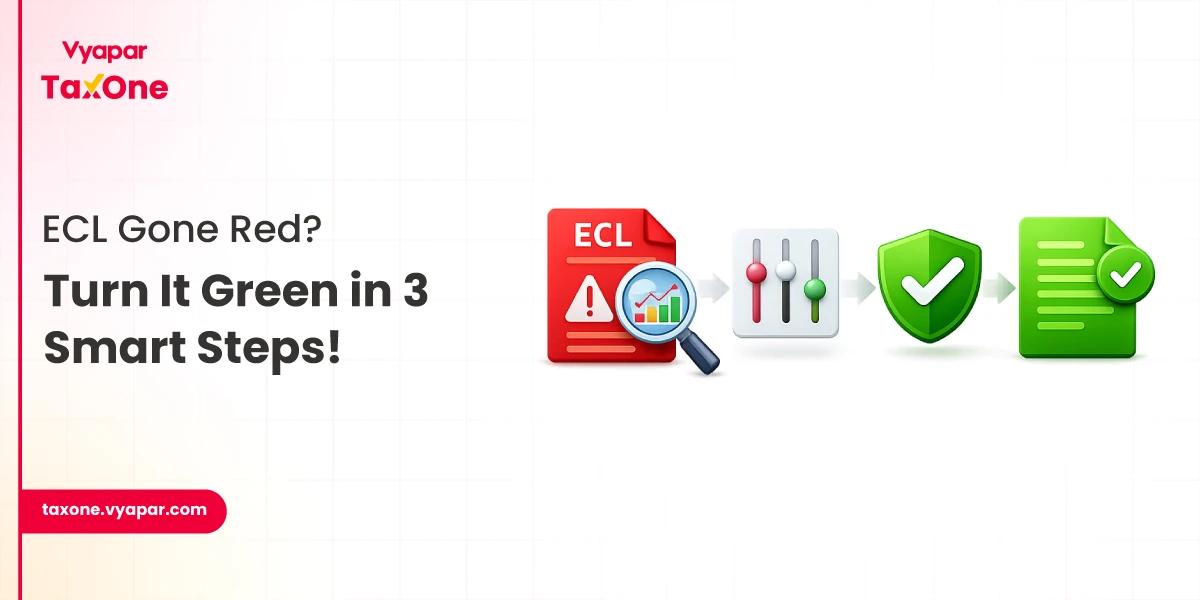
Negative balances in the Electronic Credit Ledger (ECL) under GST disrupt compliance for Indian tax professionals, often stemming from ITC mismatches or system errors.
This complete guide on negative credit ledger resolution delivers actionable strategies for excess ITC identification, electronic ledger mismatch correction, credit error correction, and cumulative ITC fix in 2026.
A negative ECL indicates that debits exceed available Input Tax Credit (ITC), halting GSTR-3B filings under the 2026 GST updates. Tax professionals encounter this amid tightened validations, where even minor discrepancies trigger blocks.
These issues compound with cumulative reversals in the Reversal/Reclaim ledger, risking permanent ITC loss after the three-year limitation period.
From January 2026, negative ECL auto-blocks GSTR-3B submissions, enforcing stricter identification of excess ITC. Professionals report that 30-40% of cases are tied to vendor non-filing or IMS discrepancies, heightening audit scrutiny under Sections 65/66.
Unresolved negatives delay refunds, accrue interest at 18%, and invite DRC-01 notices. Credit error-correction delays can escalate to penalties under Section 122, with litigation burdens arising from invalid Rule 86A holds.
Small firms lose 10-15% working capital due to blocked credits, forcing cash crunches during peak seasons like quarter-ends. Larger entities grapple with the complexities of GSTR-9C reconciliation, where cumulative ITC fix errors can be amplified into multi-crore demands during annual audits.
Client relationships suffer as delayed filings erode trust, prompting clients to switch to competitors. Professionals face personal liability risks under extended Section 74 timelines for ITC fraud suspicions, even if technical in nature.
Compliance workload surges by 25-30%, diverting time from advisory services to firefighting on portal glitches. Under the 2026 automated block regime, repeated negative flags identify high-risk taxpayers, triggering intensive scrutiny and potential business disruptions.
Cash flow paralysis compounds with vendor payment delays, creating a vicious cycle of non-compliance across the supply chain.
Proactive negative credit ledger resolution is now mission-critical for financial stability and reputation management.
Follow this structured workflow for efficient negative credit ledger resolution. Each step integrates diagnostics, rectification, and documentation, minimizing downtime and penalties.
Begin with portal-ledger scrutiny to isolate electronic ledger mismatch.
Diagnostic Checklist:
Tools like Vyapar TaxOne automate this with 30+ smart validations, generating instant reports for deeper analysis.
Pinpoint excess ITC identification through granular reconciliation.
Reverse ineligible credits in GSTR-3B Table 4(B)(2).
For example, if GSTR-2B shows ₹5 lakh ITC but ₹6 lakh was availed, debit ₹1 lakh of excess immediately via cash or by adjusting credits.
Correction Methods:
1. Manual Adjustment: Update next GSTR-3B; pay shortfalls via cash ledger to unlock filings. 2. Amended Returns: File under Section 39(9) within quarterly limits; attach reconciliation proofs. 3. Rule 86A Relief: Submit detailed representations with invoice-wise evidence; escalate to HC if provisional attachment exceeds available ITC. 4. Bulk Reversal: For cumulative errors, use GSTR-3B Table 4(B)(1) for interest-bearing reversals. Vyapar TaxOne's AI extracts invoice data from PDFs/photos, enabling precise credit error correction and audit trails in minutes.
Achieve cumulative ITC fix by comprehensive matching.
Automated workflows in Vyapar TaxOne sync IMS data in real time, slashing reconciliation time by 70% and preventing recurrence.
If portal fixes fail within 48 hours:
Maintain chronological documentation of all interactions to strengthen future defences.
Vyapar TaxOne revolutionizes negative credit ledger resolution with its GST reconciliation feature, tailored for 2026 challenges. This tool auto matches GSTR-1, 2A/2B, and IMS, directly addressing excess ITC identification and electronic ledger mismatches.
| Feature | How It Solves Negative ECL Issues | Time Savings |
|---|---|---|
| GSTR-2B Auto-Recon | Flags excess ITC identification instantly | 70% |
| Ledger Alerts | Real-time electronic ledger mismatch detection | 50% |
| Smart Validations | Automates credit error correction | 60% |
| IMS Sync | Ensures cumulative ITC fix accuracy | 80% |
Tax professionals using Vyapar TaxOne report 2x faster filings and zero negative ledger surprises. Integrate viaVyapar TaxOne's GST for seamless compliance.
User Scenario: A CA handling 500+ clients reconciles monthly in 2 hours vs. 10, spotting a ₹2 lakh electronic ledger mismatch before GSTR-3B block.
Avoid recurrence with these proactive measures:
Monthly Routines:
Tech Stack Recommendations:
Adopt automation for scale; Vyapar TaxOne's dashboard provides audit-ready reports.
2026 Compliance Tips:
CBIC's 2026 reforms emphasize ledger accuracy, including auto-blocking of negative entries and enhanced GSTR-3B validations.
Key rulings affirm that no debit beyond available ITC is permitted under Rule 86A. Stay updated via GSTN advisories for cumulative ITC fix deadlines.
Next Steps for Tax Pros
Master negative credit ledger resolution through diagnosis, credit error correction, and tools like Vyapar TaxOne, ensuring zero blocks and optimal ITC in 2026. Implement these steps today for resilient compliance; try Vyapar TaxOne for free for a week!
Negative balances arise from excess ITC identification, electronic ledger mismatch between GSTR-2B/3B, Rule 86A blocks, or RCM shortfalls, common in 2026 due to auto-validation glitches.
Clear via reconciliation and cash payments within 7-10 days; the portal reflects changes post-refiling. Use Vyapar TaxOne for instant credit error correction to avoid blocks.
Yes, but courts rule that excessive blocking is illegal beyond the scope of the available ITC. Escalate with evidence for negative credit ledger resolution.
It automates GSTR-2B matching, flags mismatches, and syncs IMS, reducing resolution time by 70% via AI validations.
File GST grievances, escalate to officers, and reference CBIC circulars. Document for audits to ensure compliance in 2026.


Get started today and simplify your accounting process!