 Is Now Vyapar TaxOne | Same Trust, New Name!
 AI Weapon for Financial Soldiers


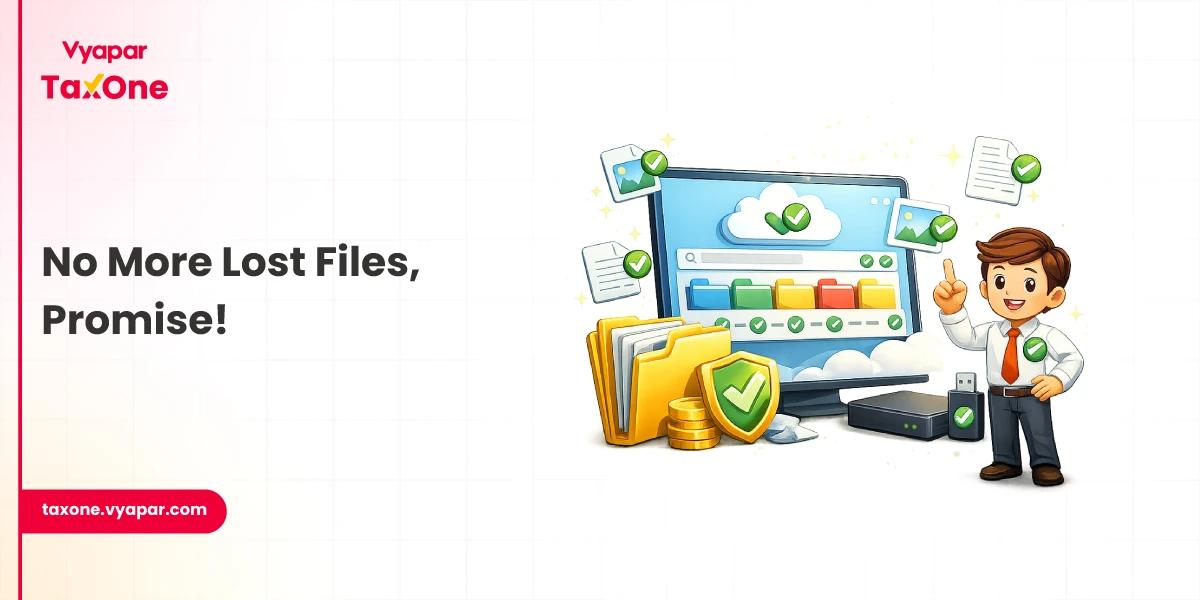
Accountants handle some of the most sensitive client documents, including PAN details, GST data, bank statements, invoices, payroll files, audit reports, tax working papers, and financial statements.
Sharing these files via regular email attachments, WhatsApp, USB drives, or open cloud folders may seem convenient. Still, it can pose serious risks: wrong-recipient sharing, lost documents, unauthorized access, missing audit trails, and compliance gaps.
That is why secure file sharing for accountants is no longer optional for modern CA firms. It helps firms collect, share, store, and track client documents in a controlled environment where access, permissions, security, and accountability are built into the workflow.
In this guide, you will learn what secure file sharing means for accounting firms, which features matter most, how to implement it in your CA practice, and how it supports better client trust, smoother GST and tax workflows, and stronger data protection practices.
For CA firms, document sharing is not just an admin task. It directly affects client confidentiality, compliance, turnaround time, team productivity, and the quality of financial work. A single misplaced file or unsecured attachment can expose sensitive client information and damage years of trust.
Secure file sharing for accountants solves this by providing firms with a safer, more organized way to manage client documents across tax filing, GST reconciliation, audit support, bookkeeping, payroll, ROC work, and advisory services.
It helps accounting firms:
In short, secure sharing is not only about avoiding risk. It also helps your firm work faster, look more professional, and deliver a better client experience.
The good news? Modern secure file sharing solutions are designed to crush these problems and boost your firm’s efficiency and reputation.
Secure file sharing for accountants means exchanging client documents through a protected system that allows only authorized users to access the right files at the right time.
It is different from simply sending a password-protected ZIP file or sharing a public cloud folder. A proper secure file-sharing process includes security, visibility, and workflow control.
At a minimum, it should include:
For CA firms, secure file sharing is not only a technology upgrade. It is a better way to manage client confidentiality, deadline pressure, and document-heavy accounting workflows.
When choosing your secure file-sharing platform, keep an eye out for these must-haves:
| Feature | Why It Matters for Accountants |
|---|---|
| Encryption in transit and at rest | Helps protect sensitive client files during upload, download, and storage |
| Role-based permissions | Ensures staff, partners, and clients only access relevant documents |
| Multi-factor authentication | Adds an extra login protection layer for firm users and clients |
| Client portal | Gives each client a secure place to upload and download documents |
| Audit trail | Tracks document activity for accountability and compliance readiness |
| Expiring links | Reduces the risk of old shared links being misused |
| Version control | Helps teams avoid working on outdated tax, GST, or audit files |
| Automated reminders | Reduces manual follow-ups for missing documents |
| Document request lists | Helps clients clearly understand what needs to be uploaded |
| Search and folder structure | Makes it easier to locate files during filing, audit, or review |
| Backup and recovery | Helps reduce disruption from accidental deletion or data loss |
| Integration with accounting workflows | Saves time by connecting document collection with GST, tax, bookkeeping, or reconciliation tasks |
Identify where you’re sharing documents insecurely, email, WhatsApp, USBs?
Pick a secure file-sharing tool that fits your firm’s size, client needs, and compliance requirements.
Define who in your team and the client side can access which documents.
Security is only as strong as its weakest link; train your team on best practices and compliance to stay protected.
Guide your clients through the new secure portal with clear instructions and reliable support.
Regularly check access logs and update permissions as needed.
Be prepared with a clear action plan in case of any security incident.
India’s Digital Personal Data Protection Act (DPDPA) is a game changer. It requires firms to:
Ignoring these can lead to fines and serious reputational damage. Secure file-sharing platforms help you tick these boxes effortlessly by design.
Choose what fits your firm’s size, budget, and client profile, but don’t compromise on security!
Sharing client documents securely isn’t just about better technology; it’s about building trust. It protects your clients, your firm, and your future. By adopting secure file sharing, you’ll save time, reduce risks, stay compliant, and build stronger client relationships.
So, Indian CAs, it’s time to ditch those risky email attachments and WhatsApp forwards. Level up your document-sharing game with secure, modern solutions that work as hard as you do.
Your clients trust you with their financial lives. Trust your tools to keep that promise.
Secure file sharing for accountants is the process of collecting, sharing, storing, and tracking client documents through a protected system with access controls, encryption, audit logs, and permission management.
Accountants should securely share PAN documents, GST returns, invoices, bank statements, tax computations, audit reports, payroll files, financial statements, TDS records, ROC documents, and any file containing personal or financial information.
Important features include encryption, role-based access, multi-factor authentication, client portals, audit trails, version control, expiring links, document request lists, automated reminders, backup, and retention controls.
An audit trail shows who uploaded, viewed, downloaded, edited, or deleted a document. This improves accountability and helps the firm investigate errors, delays, or suspicious activity.
Yes. When clients see that your firm uses a professional system to protect their sensitive documents, it improves confidence and shows that your firm takes confidentiality seriously.
Secure file sharing can support better data protection practices by helping firms manage access, consent records, audit logs, document retention, and deletion workflows. However, firms should also seek legal or compliance advice tailored to their specific obligations.
Start by mapping your current document flow, identifying risky sharing methods, creating client-wise folders, setting access permissions, enabling MFA, and training both your team and clients on the new process.
AI for CA Professionals: Best Tools, Trends & Practical Use Cases
Can Accounting Professionals Use One System for Both Bookkeeping and Tax Filings?


Get started today and simplify your accounting process!