 Is Now Vyapar TaxOne | Same Trust, New Name!
 AI Weapon for Financial Soldiers
Chartered Accountant


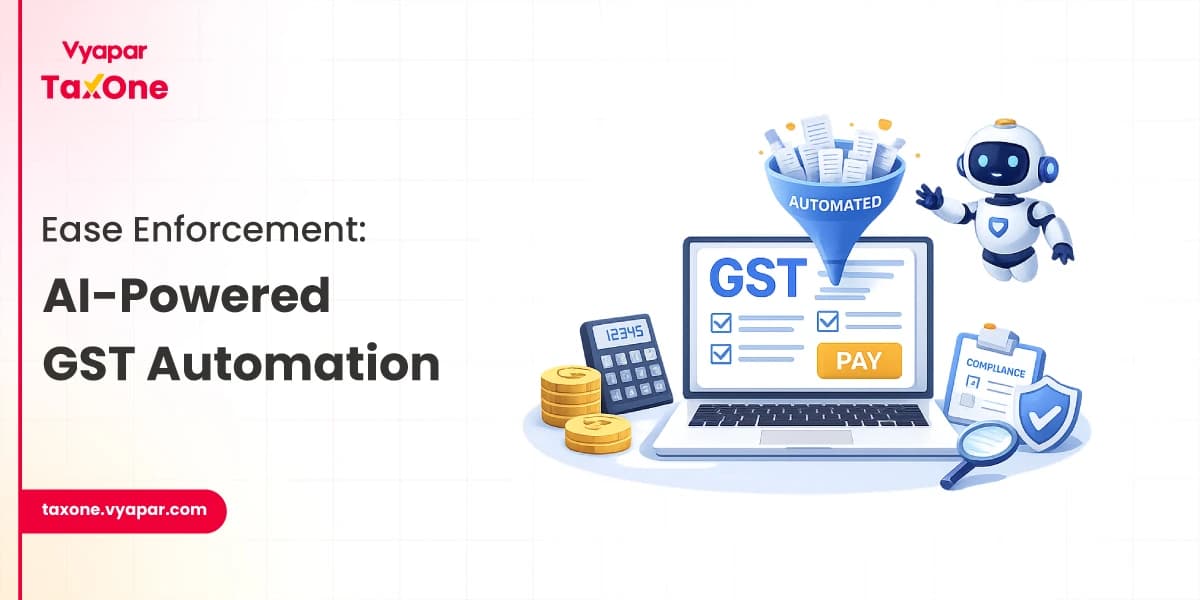
GST enforcement pressures in India have escalated dramatically in 2026, driven by advanced analytics, real-time monitoring, and stricter compliance mandates from GST authorities.
For tax professionals and businesses, especially MSMEs, this means mounting challenges in reconciliation, ITC claims, and filings.
Automation tools like Vyapar TaxOne's GST reconciliation features provide a lifeline, slashing manual workloads by up to 70-80% while ensuring accuracy and audit readiness.
GST authorities have shifted to technology-driven enforcement, using AI and data analytics to detect anomalies such as ITC mismatches, circular trading, and invoice fraud.
Businesses now receive automated notices for even minor discrepancies in GSTR-1, 2A/2B, and IMS data, leading to increased litigation and penalties.
This proactive approach, highlighted in Budget 2026 discussions, prioritizes high-risk cases but overwhelms small firms without robust systems.
Manual reconciliation across multiple sources, Tally ledgers, Excel sheets, e-invoices, and GST portals consumes excessive time.
Tax professionals juggle high-volume data entry, mismatch resolution, and client follow-ups, often leading to errors, delayed returns, and missed ITC opportunities.
MSMEs, in particular, demand eased compliance in 2026, as e-invoicing thresholds are lowered and real-time reporting intensifies the pressure.
These challenges not only strain resources but also erode client trust when filings falter under the heat of enforcement.
Automation revolutionizes GST compliance by integrating disparate data sources, performing intelligent checks, and generating audit-ready reports. It reduces human error, accelerates filings, and empowers professionals to focus on strategic advice rather than rote tasks.
Key benefits include:
By bridging gaps between Tally, GST portals, and client documents, automation directly counters enforcement pressures, turning compliance into a competitive edge.
Vyapar TaxOne stands out as an all-in-one platform tailored for Indian tax professionals, automating end-to-end GST workflows with seamless integrations.
At its core, Vyapar TaxOne automates the reconciliation of GSTR-1 against GSTR-2A, GSTR-2 B, and IMS data. Over 30 smart checks flag mismatches, track ITC eligibility, and generate discrepancy reports instantly.
This feature pulls data from Tally, Vyapar, Excel, and eCommerce files, consolidating it into a unified dashboard for effortless verification.
For instance, if a client's purchase invoice doesn't match the supplier's GSTR-1, the tool highlights the discrepancy with suggested actions, preventing ITC denials during audits.
Upload PDFs, images, or bank statements; Vyapar TaxOne's AI extracts details such as invoice numbers, amounts, and GSTINs, then auto-creates Tally vouchers. No more manual typing errors or delays. It syncs bidirectionally with Tally, updating ledgers in real-time while suggesting ledger mappings for faster approvals.
This integration shines for practices handling diverse client data, saving up to 80% on entry time and ensuring portals reflect accurate IMS records.
Communication bottlenecks vanish with WhatsApp-integrated chats for document collection, automated reminders, and status tracking. Assign tasks to team members, monitor conversations in a central dashboard, and send follow-ups without app-switching. This streamlines client onboarding and compliance cycles.
Centralize notices from GST portals with built-in validations. Track statuses, prepare responses, and resolve issues swiftly to reduce the risk of repeated deficiency memos.
| Feature | Core Functionality | Key Benefit | Time Savings |
|---|---|---|---|
| AI Reconciliation | GSTR-1, 2A/2B, IMS matching + 30+ checks | Maximizes ITC, flags errors | 70% |
| Data Extraction | PDFs/images to Tally vouchers | Eliminates manual entry | 80% |
| Tally Sync | Bi-directional ledger updates | Real-time accuracy | 2x faster filings |
| Client Chat Dashboard | WhatsApp reminders, team tracking | Reduces follow-ups | Workflow boost |
| Notice Management | Status tracking + validations | Quick resolutions | Audit-ready |
Evaluate your practice's pain points, reconciliation delays, ITC losses, or notice volumes and pilot Vyapar TaxOne. Begin with GST reconciliation features at Vyapar TaxOne for Tally-heavy workflows. Over 5000 workspaces trust it for proven results.
Schedule monthly automated reconciliations to preempt portal flags. Use Vyapar TaxOne's IMS integration for real-time invoice verification, ensuring clients claim every eligible rupee amid enforcement efforts to curb fraud.
Invest in 1-2 hour sessions on bank statement conversion, ledger suggestions, and chat modules. This upskills juniors, distributes workloads, and scales your practice while meeting MSME compliance requirements.
Stay ahead of Budget 2026 changes, such as potential MSME reliefs, by automating scenario testing. Tools like Vyapar TaxOne adapt to evolving rules, keeping you compliant.
In 2026's landscape of intensified GST enforcement, manual processes are unsustainable. Vyapar TaxOne's features, from AI reconciliation to client chats, deliver measurable ROI: reduced errors, faster filings, and happier clients.
Tax professionals who automate not only ease pressures but position themselves as indispensable advisors.
Transition today: Explore Vyapar TaxOne's free trial and reclaim hours for growth. With enforcement only tightening, automation isn't optional; it's your strategic advantage.
GST authorities use AI analytics for automated audits on ITC mismatches, circular trading, and GSTR discrepancies, issuing frequent notices that burden MSMEs and tax professionals with manual reconciliations.
It automates GSTR-1, 2A/2B, and IMS matching with 30+ AI checks, pulls data from Tally/Excel, extracts data from PDFs/images, and maximizes ITC claims, saving up to 70% of time.
Yes, it offers seamless bi-directional Tally sync, AI-generated vouchers from scans, and WhatsApp-based Vyapar TaxOne Chat for document collection and reminders.
Up to 70–80% on data entry and reconciliation, 2x faster filings, and reduced follow-ups via dashboards, trusted by 5000+ workspaces.
Visit Vyapar TaxOne for a free trial and pilot reconciliation features to address your practice's enforcement pressures immediately.

Tax Professional & Business Finance Expert
Tax Professional & Business Finance Expert
Tax Professional & Business Finance Expert