 Is Now Vyapar TaxOne | Same Trust, New Name!
 AI Weapon for Financial Soldiers
Vyapar TaxOne


Every GST Filing Period Creates The Same Problem.
Invoices are missing.
Suppliers upload returns late.
GSTR-2A shows one thing.
GSTR-2B shows another.
And accounting teams still spend hours comparing reports manually before finalizing ITC claims.
In many accounting firms, GST reconciliation becomes stressful not because of GST itself, but because invoice matching and ITC validation still depend heavily on manual checking.
This is exactly why understanding GSTR-2A and GSTR-2B properly matters.
Using the right report at the right stage helps reduce reconciliation confusion, ITC mismatches, and unnecessary compliance pressure.
GSTR-2A is a dynamic report that keeps updating whenever suppliers upload or modify invoices.
GSTR-2B is a fixed monthly statement used for final ITC claims.
In simple terms:
Both reports are important, but they serve different purposes in GST reconciliation workflows.
GSTR-2A is mainly useful during ongoing reconciliation activities.
Accounting teams usually use it for:
Since the report updates continuously, it helps teams catch reconciliation issues before final GST filing.
GSTR-2B is generally used during final GST return filing.
Since the report remains fixed for a tax period, it helps accounting teams:
In most workflows, GSTR-2B becomes the final reference point for ITC claims.
| Feature | GSTR-2A | GSTR-2B |
|---|---|---|
| Nature | Dynamic | Static |
| Updates | Real-time updates | Fixed monthly statement |
| Main Use | Ongoing reconciliation | Final ITC claim |
| Changes After Generation | Data from supplier filings | Consolidated supplier data |
| Best Used For | Invoice tracking | Invoice tracking |
In high-volume accounting environments, reconciliation delays usually happen because of:
And during GST filing periods, these small mismatches often create major operational pressure. This is one of the main reasons accounting teams are gradually moving toward automated GST reconciliation workflows.
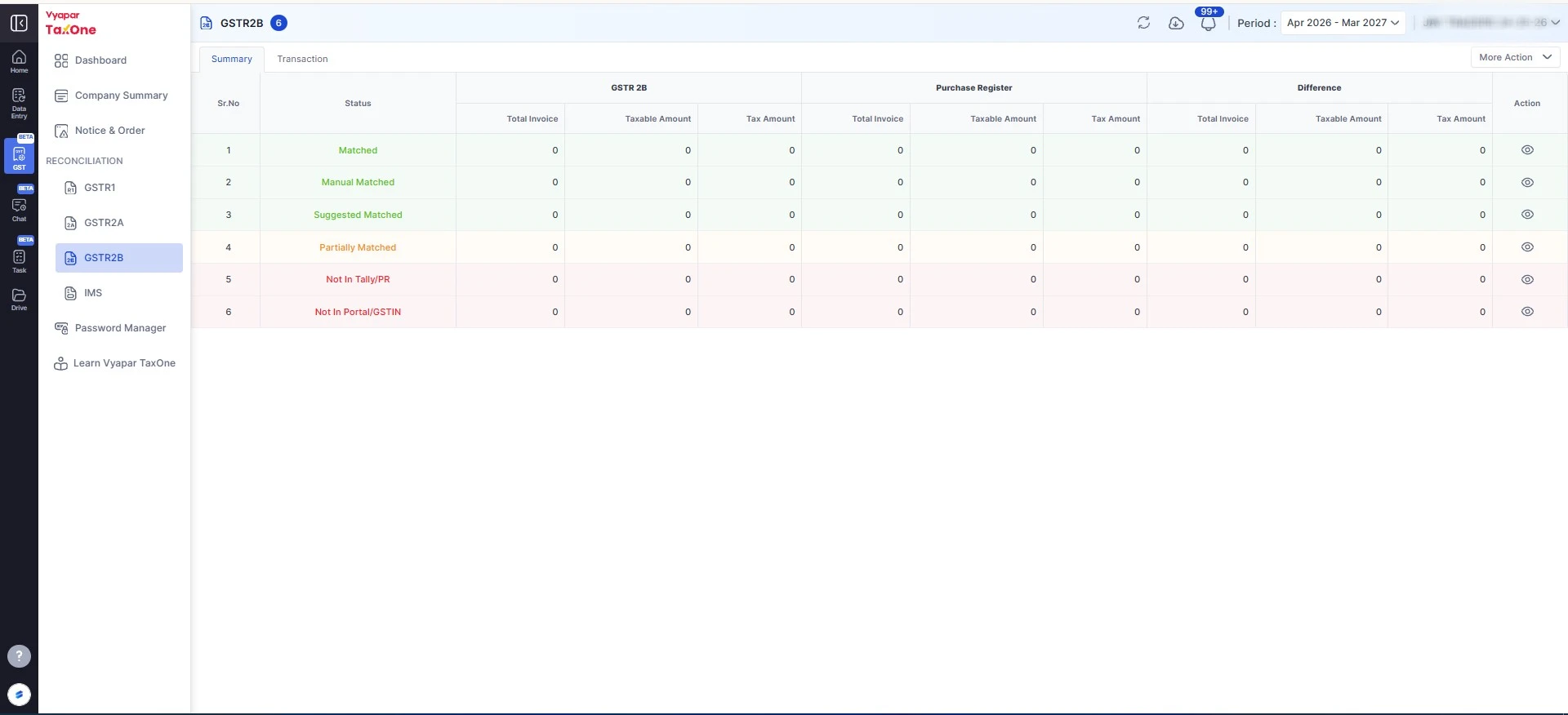
Manual reconciliation becomes difficult when invoice volumes increase across multiple vendors and GST periods.
We help accounting teams reduce repetitive checking efforts by simplifying:
This helps teams process reconciliation faster while improving accuracy during GST filing periods.
You can explore our GST reconciliation workflow here: https://taxone.vyapar.com/gst-reconciliation-feature
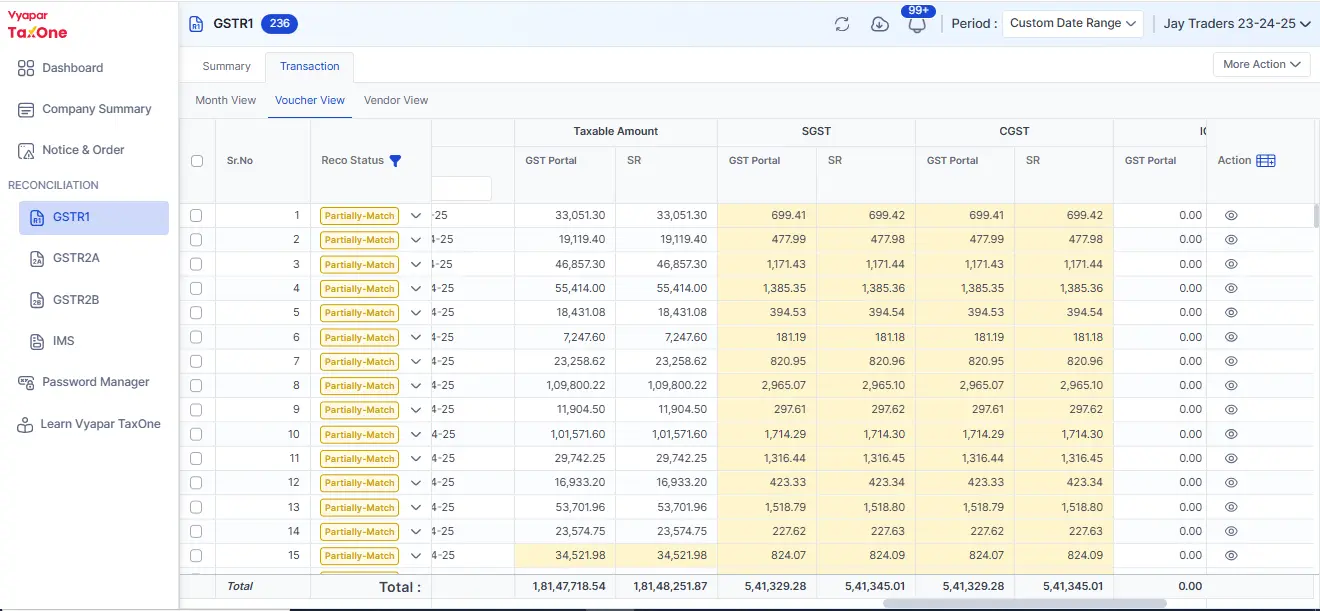
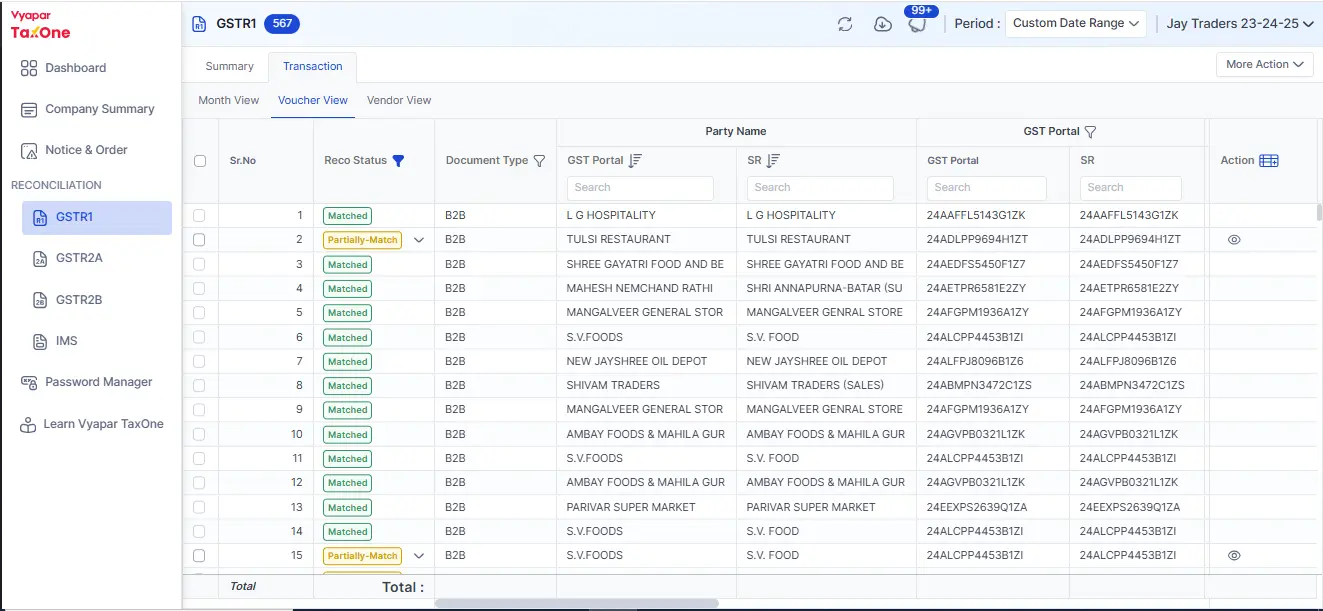
For more insights, check out our guide on performing a perfect GSTR 2A reconciliation within Tally in 7 simple steps.
In many accounting teams, GST reconciliation still depends heavily on Excel comparisons, manual invoice checking, and repeated vendor follow-ups.
As transaction volumes increase, these workflows become difficult to manage efficiently during filing periods.
We built our GST reconciliation workflows to help accounting teams reduce repetitive checking efforts, identify mismatches faster, and process ITC validation more accurately across GSTR-2A, GSTR-2B, and purchase data.
With automated reconciliation, invoice matching, and real-time mismatch visibility, teams can spend less time managing spreadsheets and more time focusing on compliance accuracy.
If your team is still spending hours manually validating GST data every month, this is the right time to simplify the workflow.
Experience how Vyapar TaxOne simplifies your workflow by signing up for a free 7-day trial of our GST Reconciliation feature.
This usually happens when suppliers upload or amend invoices after the cut-off period used for generating GSTR-2B. Since GSTR-2A updates continuously and GSTR-2B remains fixed for a tax period, both reports may temporarily show different invoice data.
In most GST workflows, accounting teams rely more on GSTR-2B because it provides a fixed monthly view of eligible ITC. This helps reduce last-minute reconciliation changes during GST filing.
Yes. Supplier delays are one of the most common reasons for GST reconciliation mismatches. If invoices are uploaded late, they may appear in GSTR-2A but not in the current GSTR-2B period.
In many accounting environments, reconciliation still depends heavily on Excel comparisons, manual invoice checking, and vendor follow-ups. As invoice volumes increase, these workflows become difficult to manage manually.
Most accounting teams spend significant time:
No. GSTR-2A is useful for ongoing invoice tracking and reconciliation, but accounting teams generally use GSTR-2B as the final reference for ITC claims because it is static for the tax period.
Mismatches usually happen because:
Many accounting teams are gradually moving toward automated reconciliation workflows that help identify mismatches faster, compare invoices automatically, and simplify ITC validation across GSTR-2A, GSTR-2B, and purchase records.
As transaction volumes grow, manual spreadsheet-based reconciliation becomes harder to track accurately. Multiple invoice versions, supplier amendments, and large GST datasets usually increase the chances of human error and reconciliation delays.
In most workflows, accounting teams also reconcile:

Tax Professional & Business Finance Expert
Tax Professional & Business Finance Expert
Tax Professional & Business Finance Expert