 Is Now Vyapar TaxOne | Same Trust, New Name!
 AI Weapon for Financial Soldiers


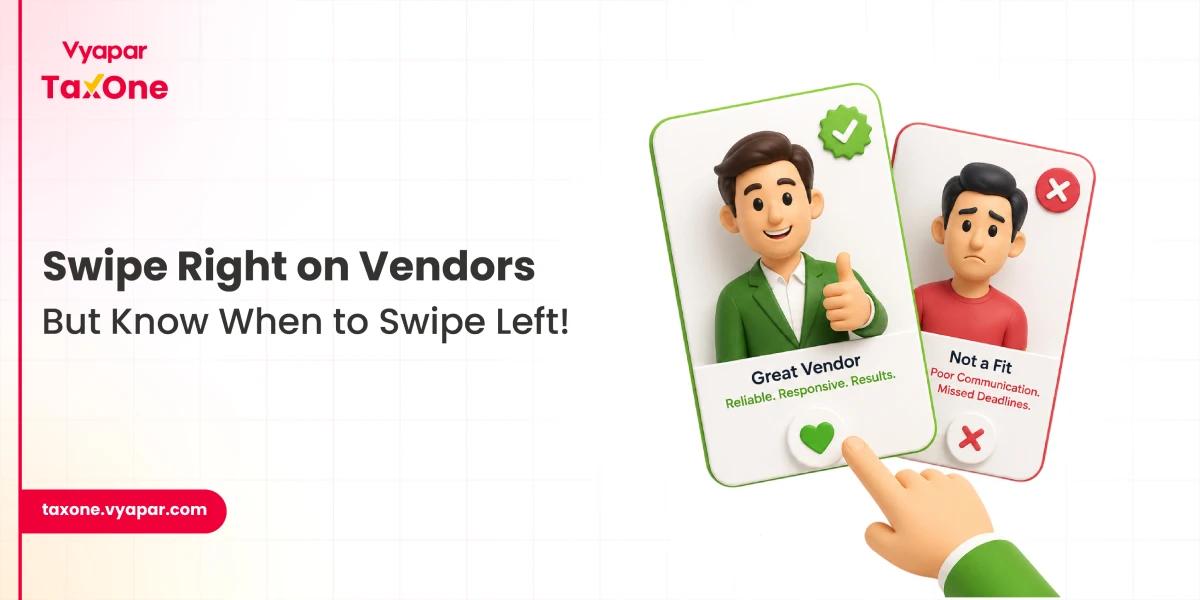
Vendor management is not just about choosing suppliers or service providers. It is a structured process that starts with vendor onboarding and ends with a secure, well-documented vendor offboarding process.
A weak onboarding process can lead to payment errors, compliance gaps, poor service quality, duplicate vendor records, GST or TDS issues, and data security risks. Similarly, an unplanned vendor exit can cause business disruption, pending invoices, unclear document ownership, and unauthorized access to sensitive information.
This guide explains how businesses, CA firms, finance teams, and operations teams can onboard vendors correctly, monitor them consistently, and offboard them safely when the relationship ends.
Vendor onboarding is the process of collecting, verifying, approving, and storing all important details of a new vendor before allowing them to work with your business or receive payments.
A proper vendor onboarding process usually includes:
The goal is simple: onboard only reliable, compliant, and verified vendors so your business can reduce fraud, avoid tax mistakes, and maintain smooth operations.
A good vendor onboarding process should be clear, repeatable, and documented. Instead of collecting vendor information informally over email or calls, businesses should follow a checklist that covers identity, tax, finance, legal, and data security requirements.
Start by collecting the vendor’s official business details. This helps your team create accurate vendor master data and avoid duplicate or incorrect records.
Collect:
Make sure the vendor name matches across PAN, GST, bank account, contract, and invoices.
Before activating a vendor, verify their tax and business documents. This is especially important for businesses in India, as incorrect vendor data can affect GST input tax credit, TDS deductions, accounting records, and audit readiness.
Ask for and verify:
Do not treat document collection as a formality. The details should be checked before the vendor is approved.
ALSO READ: Why Knowing Your Vendor(KYV) is the Key to Building Strong, Risk-Free Partnerships
Not every vendor carries the same level of risk. A small stationery supplier may not need the same review as a software vendor with access to customer data or financial records.
Classify vendors based on risk level:
For high-risk vendors, add additional checks, such as background verification, cybersecurity reviews, reference checks, financial stability reviews, and stronger contract clauses.
Payment confusion is one of the most common causes of vendor disputes. During vendor onboarding, define payment terms in writing.
Mention:
Clear payment terms help both parties avoid misunderstandings and support smoother accounting.
A verbal agreement is not enough for a professional vendor relationship. Before starting work, make sure all important terms are documented.
Include:
For vendors handling sensitive business, customer, financial, or employee data, an NDA and data confidentiality clause should be mandatory.
Now, let’s talk about compliance. In today’s world, regulations are getting stricter, and businesses need to be careful about whom they partner with. If your vendor isn’t following the rules, you could end up paying the price too.
For example, if your vendor handles sensitive data, you need to make sure they comply with data privacy laws like the DPDPA and GDPR. The same goes for industry-specific regulations. Ignoring this can lead to hefty fines, damaged reputations, and, frankly, a whole lot of stress.
So, before onboarding a vendor, always make sure they comply with any regulations that could affect your business.
Ask for certifications, perform audits, or require legal checks—it’s a little extra effort that could save you big in the long run.
Ending a vendor relationship is tricky. It’s like a breakup—you want it to be as smooth as possible, but it can get messy. Let’s go over the essentials for handling this situation with care.
Remember that contract we talked about earlier? This is where it becomes super important. Before you make any move to terminate a vendor, review the terms you both agreed to.
Are there penalties for early termination? Do you need to provide a notice period? By following the contract, you’re not only protecting yourself legally but also showing professionalism.
So, you’ve decided to end things. How do you let the vendor know? Honestly, it’s all about clear, straightforward communication. No one likes being left in the dark, and dragging things out will just cause unnecessary tension.
Be respectful, state your reasons clearly, and give the vendor a chance to wrap things up in a professional manner. Trust me, the smoother this goes, the less likely you are to burn bridges.
Once you’ve informed the vendor about the termination, you need to think about what comes next. Who’s going to replace them? How will you manage the work that’s left?
Having a transition plan in place ensures that your business keeps running smoothly even as you switch vendors. Don’t wait until the last minute to figure this out.
Just because you’ve decided to terminate a vendor doesn’t mean the relationship ends with a simple “goodbye.” You should take some time to evaluate their overall performance. Why? Because this will help you make better choices next time.
Here are some questions you should ask yourself:
A post-termination review is like an internal debrief. It helps you figure out what went right and what didn’t. Plus, it gives you insights into how to improve your vendor management process for future partnerships. It’s a little reflection that goes a long way.
Here’s the thing—vendor management doesn’t end with onboarding or termination. In fact, even after you’ve onboarded a vendor, you should be regularly checking in.
Are they meeting your expectations?
Are there any red flags popping up?
By keeping a close eye on your vendor’s performance, you can catch potential issues before they snowball into bigger problems.
In today’s digital age, data is everything. And when you onboard a vendor, they might get access to sensitive information—whether it’s customer data, financial details, or trade secrets. So, ensuring data security and confidentiality should be at the top of your checklist.
Before onboarding, ask the vendor:
Also, make sure this is laid out in your contract. You wouldn’t want to find out the hard way that your vendor is careless with your business-critical information.
Having a vendor who prioritizes data security is essential—because a data breach doesn’t just affect them, it affects you too. So, take it seriously!
Keep These Vendor Lessons Handy
So, there you have it. Managing vendors is all about being proactive—whether you’re bringing someone new on board or saying goodbye to a long-time partner. The key takeaway here? Don’t rush the process.
Do your due diligence, set clear expectations, and make sure you have a solid plan whether you're onboarding or terminating a vendor.
At Vyapar TaxOne, we understand how important vendor management is for businesses of all sizes. That's why we’re passionate about helping you navigate these complex processes with ease. By simplifying vendor onboarding and termination, you can focus on what matters—growing your business smoothly.
It’s all about making sure your operations run efficiently, and if things ever go sideways, at least you’ll have a solid contract and a clear plan to fall back on.
Vendor onboarding is the process of collecting, verifying, approving, and storing vendor details before allowing a vendor to provide goods or services or receive payments from a business.
Vendor onboarding is important because it helps businesses verify vendor identity, reduce fraud, avoid tax and compliance mistakes, set clear payment terms, and build reliable vendor relationships.
Common documents include PAN, GSTIN, bank proof, MSME or Udyam certificate, business registration proof, address proof, cancelled cheque, contract, NDA, and any industry-specific licences.
The vendor offboarding process is the structured method for ending a vendor relationship, including reviewing the contract, giving notice, completing the handover, settling payments, removing access, and deactivating the vendor record.
A vendor may be offboarded when the contract ends, service quality drops, pricing is no longer suitable, compliance issues arise, business requirements change, or a better vendor is selected.
Businesses can reduce vendor onboarding risks by verifying documents, checking tax compliance, assessing risk level, signing proper contracts, defining payment terms, and maintaining a centralized vendor database.

Get started today and simplify your accounting process!