 Is Now Vyapar TaxOne | Same Trust, New Name!
 AI Weapon for Financial Soldiers


India's accounting landscape is on the brink of a significant transformation.
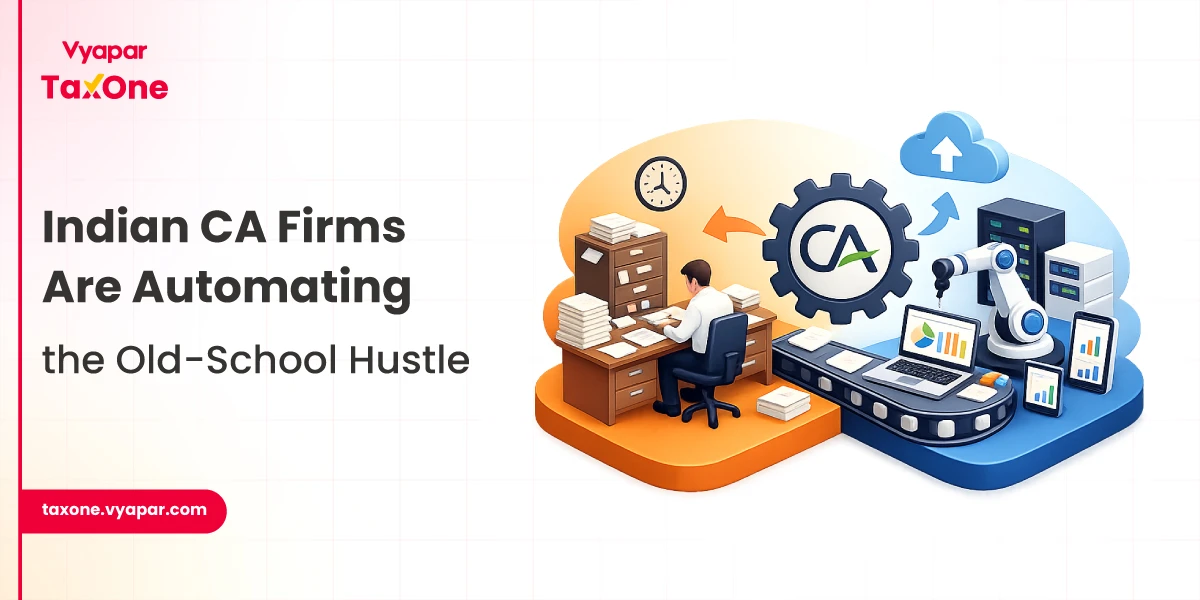
With the rapid rise of GST-led digitization, e-invoicing, AI-powered accounting platforms, and enterprise-grade automation tools, the nation is moving toward a future where automation becomes the backbone of financial operations.
By 2026, the adoption of AI-driven accounting automation in India will not merely streamline workflows; it will redefine them.
This blog examines how automation will reshape accounting functions, strengthen compliance, and elevate finance teams into strategic partners for business growth.
Digital transformation across Indian businesses is no longer optional. Several factors are driving this shift:
Together, these developments have set the stage for intelligent accounting workflows.
While digital tools are widely available, traditional accounting teams continue to face significant hurdles.
These challenges highlight the urgent need for scalable automation.
AI-driven data extraction will automate invoice processing, vendor records, expense receipts, and ledger updates. Instead of spending hours categorizing transactions, teams will rely on:
By 2026, this shift alone will reduce manual workload by 60–80% for most Indian accounting teams.
Automation will enhance the strategic value of finance teams through predictive insights.
This marks a shift from reactive reporting to proactive financial planning.
Indian businesses face a dynamic regulatory ecosystem. Automation will play a defining role in simplifying it.
As regulations evolve, automated systems will update instantly, removing the need for manual interpretation.
Reconciliation is one of the most time-consuming accounting activities. Automation will change this dramatically.
What once took days will soon take minutes.
Beyond data automation, workflows themselves will become intelligent.
Finance teams will operate with greater clarity and predictability across cycles.
Improved Accuracy and Reliability
Automation significantly reduces human error, enabling accounting teams to generate accurate reports and maintain consistent financial records.
Lower Operational Costs and Faster Closures Optimized workflows reduce manual labour, accelerate turnaround times, and support timely month-end and year-end financial closures.
Intelligent Decision-Making with Real-Time Insights CFOs and founders will have access to up-to-the-minute data, enabling tighter financial control and better planning across procurement, operations, and revenue teams.
Scalability for Growing Enterprises Automation enables businesses to expand across states, GST numbers, and business units without proportionally increasing the workforce.
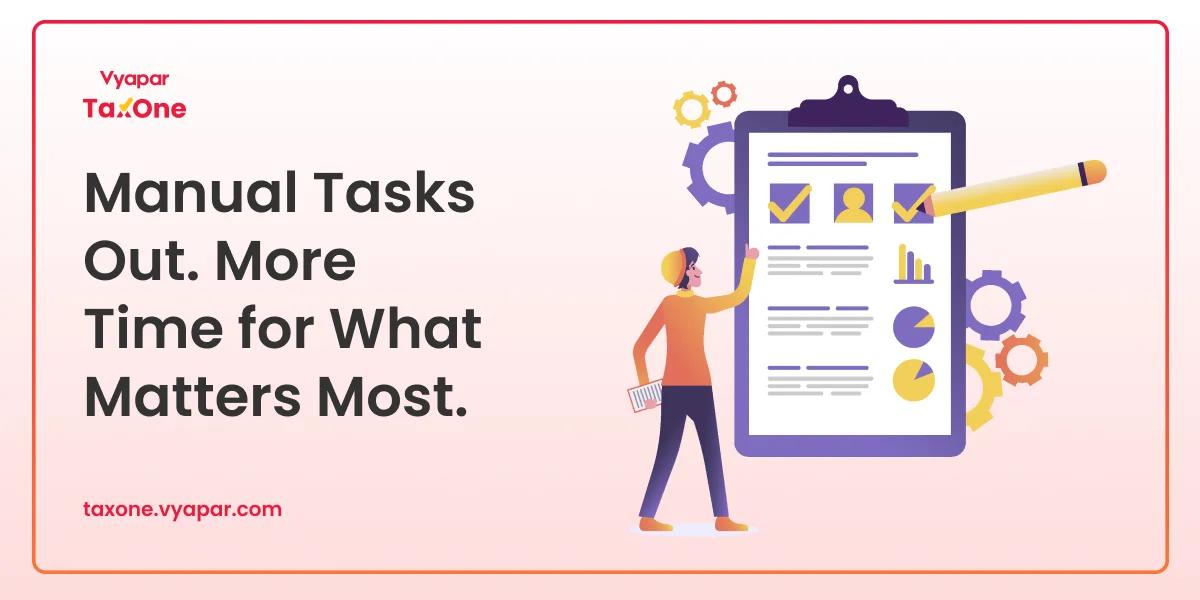
As automated systems handle routine tasks, accountants will spend more time on analysis, advisory, and cross-functional collaboration.
Professionals will need to strengthen competencies in:
These skills will elevate accountants to strategic decision-making roles.
With fewer repetitive tasks, finance teams will work more closely with operations, HR, procurement, and leadership, contributing to organization-wide performance.
Phase 1: Process Discovery and Assessment Organizations must identify repetitive, high-volume processes, such as invoice management, reconciliation, and compliance, to determine automation readiness.
Phase 2: Technology Integration The next step is integrating AI-driven accounting automation tools with existing ERPs, GST systems, banking platforms, and reporting dashboards.
Phase 3: Training and Skill Development Ensuring team readiness is critical. Structured training, digital familiarisation, and change management programs will support adoption.
Phase 4: Continuous Monitoring and Governance Organizations must monitor KPIs, refine workflows, and maintain governance structures that ensure automation remains efficient and scalable.
By 2026, automation will reshape India's accounting workflows into efficient, predictive, and strategically aligned systems.
Businesses that adopt AI-driven accounting early will benefit from stronger compliance, faster operations, real-time visibility, and more empowered finance teams. The future of accounting in India is not just digital; it is intelligent, automated, and strategically transformative.
Automation will streamline data entry, reconciliation, compliance, and reporting through AI and machine learning. By 2026, most repetitive accounting tasks will be fully automated, enabling faster, more accurate, and cost-effective workflows.
Key benefits include reduced manual errors, real-time financial insights, faster month-end closures, improved compliance with GST/TDS regulations, and greater scalability for multi-branch organizations.
Yes. Modern automation tools can automatically generate GST returns, reconcile invoices, validate data, instantly update for regulatory changes, and maintain audit-ready documentation with high accuracy.
Automation will not replace accountants but will redefine their roles. Routine tasks will be automated, allowing accountants to focus on strategic analysis, financial planning, and cross-functional decision-making.
Businesses should start by identifying repetitive tasks, integrating automation tools with their ERP/GST systems, upskilling teams, and gradually expanding automation across workflows through a phased roadmap.



Get started today and simplify your accounting process!