 Is Now Vyapar TaxOne | Same Trust, New Name!
 AI Weapon for Financial Soldiers


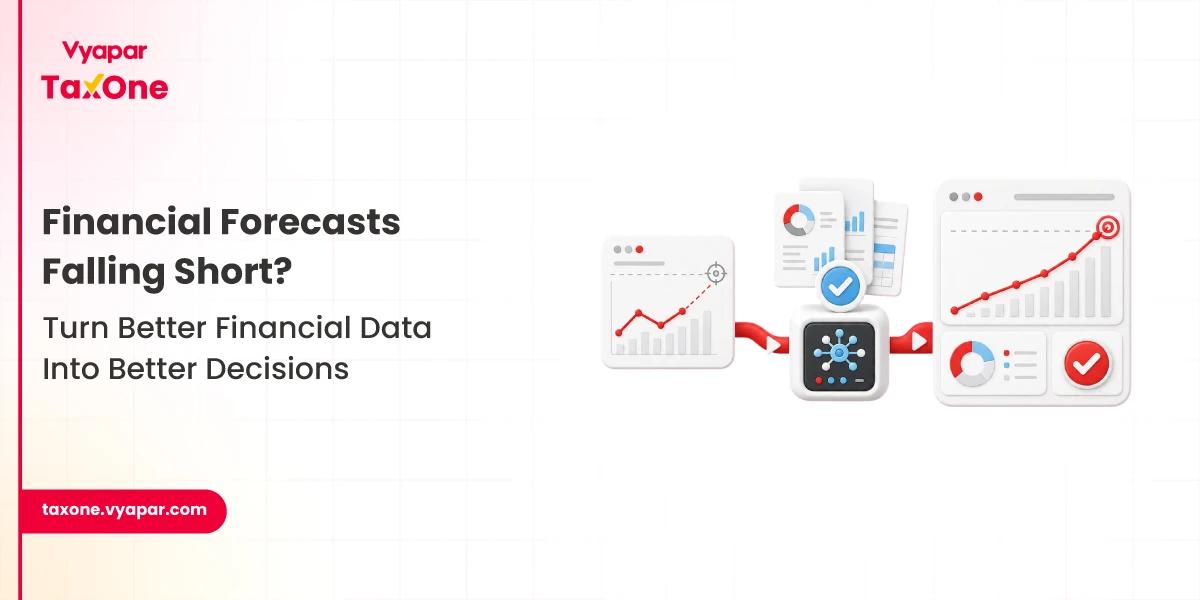
Financial analysis has always relied on numbers, but today, the challenge is no longer finding data; it's making sense of it quickly enough to support business decisions.
Finance teams are expected to prepare forecasts, analyze profitability, monitor cash flow, and provide management with timely insights. At the same time, they're working with growing transaction volumes, multiple data sources, changing business conditions, and increasingly shorter reporting cycles.
This is where AI is starting to make a meaningful difference.
Rather than replacing finance professionals, AI helps them process large volumes of financial information faster, identify unusual patterns, highlight exceptions, and support more informed forecasting. However, the quality of those insights still depends on one thing: reliable financial data.
Let's look at how AI is changing financial analysis, where it adds real value, and what finance teams should consider before depending on AI-driven insights.
Preparing financial reports today involves much more than reviewing an income statement or comparing monthly expenses.
Finance teams often work with information coming from multiple business systems, branches, departments, and accounting software. Before any meaningful analysis begins, data usually goes through several validation steps to ensure transactions are complete, correctly classified, and consistent across reports.
As transaction volumes increase, manual review becomes more time-consuming. A single missing journal entry, duplicate posting, or incorrect ledger mapping can influence profitability reports, cash flow projections, or budget comparisons.
We often see this becoming more noticeable during month-end reporting when finance teams are balancing reporting deadlines with data validation. Forecasts prepared using incomplete or inconsistent information can quickly lose their value, regardless of how sophisticated the analytical tools are.
The increasing use of AI across finance functions reflects a much broader shift in the profession. The rapid AI growth in accounting highlights how firms are investing in intelligent technologies to improve reporting quality, forecasting, and financial decision-making.
AI is not a replacement for financial expertise. Instead, it helps finance teams process information more efficiently and identify patterns that would otherwise take much longer to detect manually.
For example, AI can assist with:
Instead of reviewing thousands of records one by one, finance professionals can focus their attention on exceptions, unusual movements, or significant changes that require business judgment.
This allows more time for analysis rather than data compilation.
One common misconception is that AI automatically produces accurate forecasts.
In reality, forecasting models are only as reliable as the financial information they're built on.
If accounting entries are delayed, expenses are categorized incorrectly, or balances remain unreconciled, even advanced AI models can produce misleading results.
This is why finance teams still spend considerable time validating financial information before using it for planning or forecasting.
We've often seen forecasting discussions shift from "Why did the prediction change?" to "Was the underlying accounting data complete before the forecast was generated?"
Clean financial records continue to be the foundation of meaningful AI-driven analysis.
Consider a manufacturing business processing more than 4,000 invoices every month across multiple business units.
During the monthly reporting cycle, the finance team notices that expense trends appear unusually high compared to previous months. After reviewing the records, they discover several transactions were mapped to incorrect expense ledgers during data consolidation.
Instead of immediately preparing management reports, the team spends several days validating ledger classifications before financial analysis can begin.
With AI-assisted anomaly detection, unusual expense movements can be highlighted earlier, allowing finance teams to investigate exceptions sooner instead of discovering them after reports are prepared.
A growing trading company prepares quarterly cash flow projections based on historical collections and payment cycles.
However, several customer receipts were recorded later than expected, while supplier payments remained pending approval at the time forecasts were generated.
Although the forecasting model followed historical trends correctly, the underlying accounting data did not fully represent the company's current financial position.
As a result, management had to revise working capital plans within a week.
Situations like these remind finance teams that forecasting accuracy depends just as much on disciplined accounting processes as it does on analytical technology.
Building reliable forecasts also requires a clear understanding of cash flow analysis and forecasting, since AI models become significantly more useful when they are supported by accurate cash movement patterns and timely financial records.
Financial analysis isn't limited to predicting future revenue.
Finance teams also rely on timely analysis to answer everyday operational questions such as:
AI can support these activities by reviewing large datasets much faster than manual analysis, allowing finance professionals to spend more time understanding business performance rather than searching for information.
We've seen this become particularly useful as reporting volumes increase and management expects faster financial insights without compromising accuracy.
Once AI identifies financial trends, finance leaders often rely on FP&A dashboard insights to monitor business performance, compare key metrics, and support strategic planning with greater confidence.
AI can improve financial analysis, but it should never replace basic accounting controls.
Before relying on AI-generated forecasts or financial insights, finance teams should verify:
These checks help ensure that AI works with reliable information instead of amplifying existing data quality issues.
The quality of financial analysis depends on more than adopting AI. It starts with how consistently financial data is captured, validated, and maintained throughout the accounting cycle.
In many organizations, forecasting challenges can often be traced back to operational issues such as delayed accounting entries, inconsistent ledger classifications, unreconciled balances, or data consolidated from multiple systems. When these gaps exist, AI can process the information faster, but it cannot correct underlying inaccuracies in the financial records.
We've seen many finance and accounting teams gradually move toward more structured workflows as transaction volumes increase and reporting cycles become more demanding. Standardized accounting processes, timely reconciliations, and reliable financial data provide a much stronger foundation for AI-powered analysis, helping teams identify trends, monitor business performance, and prepare forecasts with greater confidence.
This is the kind of operational challenge that structured accounting platforms like Vyapar TaxOne are designed to support. By helping teams maintain organized and consistent financial data before it reaches the reporting stage, structured workflows make it easier to generate dependable financial insights and forecasts.
As businesses continue to rely on AI for financial analysis, success will depend not only on the intelligence of the technology but also on the quality of the accounting processes behind it. Reliable data, disciplined financial workflows, and timely reconciliations remain the foundation for accurate forecasting and informed business decisions.
No. AI can process information and identify trends quickly, but interpreting financial results and making business decisions still requires professional judgment.
Not necessarily. Forecast quality depends heavily on the accuracy and completeness of the underlying financial data.
Organizations of different sizes can benefit from AI, although the value generally becomes more noticeable as transaction volumes and reporting complexity increase.
AI can identify patterns, but it cannot always determine whether accounting records accurately reflect business activity. Data validation remains an essential part of financial reporting.
For many organizations, the challenge isn't the technology itself but maintaining consistent, reliable financial data across different systems and reporting periods.



Get started today and simplify your accounting process!