 Is Now Vyapar TaxOne | Same Trust, New Name!
 AI Weapon for Financial Soldiers


It started innocently enough. A few macros here, a couple of formulas there. But soon, accounting tasks that once required hours of human effort were being done in seconds—without error, without fatigue, and without coffee breaks.
Welcome to the era of automation in accounting.
The question now isn’t whether automation will affect accountants. It already has. The real question is: will automation make accountants obsolete, or will it elevate their roles to something more strategic and value-driven?
This blog tackles that very debate—with differences, facts, and a lens focused on what it means for CA firms and accounting professionals in India.
The shift toward automation in accounting isn’t a disruption—it’s an evolution. A slow, calculated progression that's reshaping how accountants work, layer by layer. Let’s break it down by decades:
This was the age of Excel dominance. Accountants juggled massive spreadsheets, manually entered journal entries, and relied heavily on on-premise software like Tally ERP (desktop version). Tasks were time-consuming, prone to human error, and heavily dependent on individual effort and local machines.
As cloud computing matured, accounting software took to the skies. Tools like Xero, QuickBooks Online, Zoho Books, and Tally ERP 9 introduced features that automated repetitive tasks—think invoice generation, payroll processing, and GST return filing. For many firms, this marked the beginning of reduced dependency on paper trails and physical ledgers.
The real transformation began when AI and machine learning entered the accounting chat. No longer just tools for automation, platforms began “thinking”:
This wasn’t just about saving time—it was about elevating insights, improving compliance, and minimizing risk.
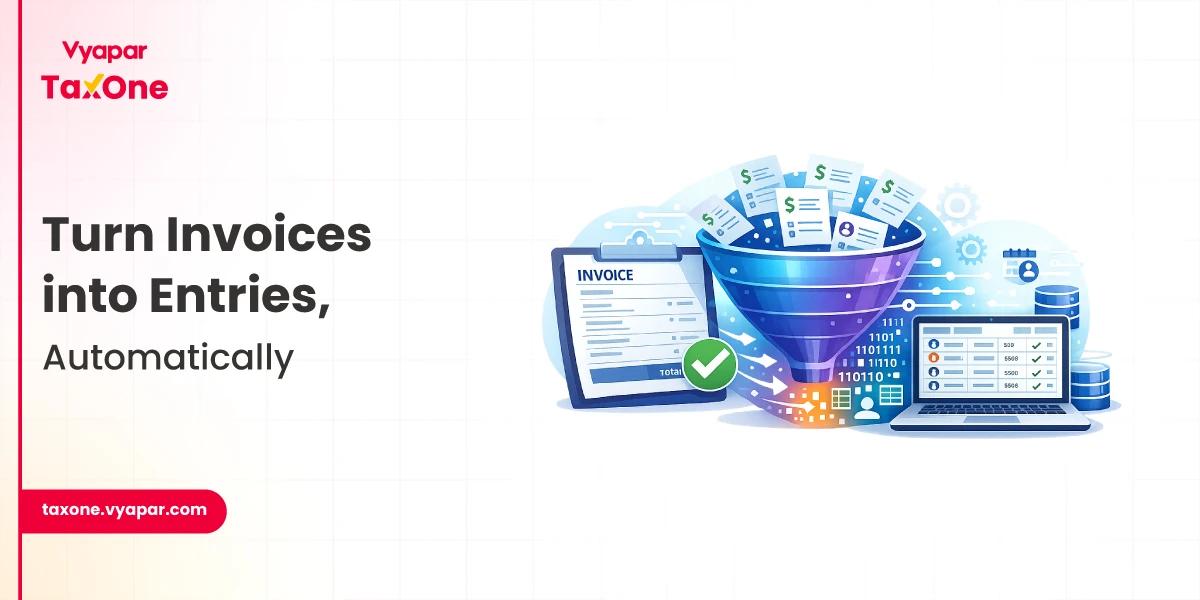
Now, we’re witnessing automation extend to the very first step of the accounting process: pre-accounting. Platforms like Vyapar TaxOne allow accountants to upload scanned invoices, images, PDFs, and Excel files—and let AI do the rest. The system extracts, validates, and organizes data, ready to push it into Tally or other accounting systems. No manual typing. No copy-paste fatigue. Just faster, cleaner, smarter inputs.
The low-hanging fruit of the accounting world is already automated:
A typical mid-sized CA firm using automation tools saves 30–50% of manual effort, while also reducing errors and improving client turnaround time.
Let’s address the elephant in the room. Yes, some roles are at risk. Not accountants!
According to a World Economic Forum report, up to 40% of transactional accounting jobs could be automated by 2030. And this isn’t limited to India. Globally, bookkeepers and data entry clerks are feeling the squeeze.
But here’s the catch: while automation may phase out certain tasks, it also creates opportunities for roles that never existed before.
"Automation is not about man vs. machine. It's about man with machine."
Even the smartest AI can't:
These tasks require emotional intelligence, industry insight, and strategic vision—all human strengths.
To stay relevant (and indispensable), accountants are evolving into tech-savvy financial advisors.
| Traditional Role | Evolving Role |
|---|---|
| Data entry | Data interpretation |
| Compliance | Advisory & consulting |
| Manual audits | Risk analytics |
| Tally input operators | Workflow automation leads |
Upskilling is the moat. Courses in data analytics, cloud accounting, and AI-based finance tools are becoming must-haves, not nice-to-haves.
The best firms aren’t firing accountants. They’re retooling them.
Take firms that use Vyapar TaxOne, for instance. Instead of spending hours reconciling GSTR-2A vs 2B or manually mapping ledger entries, accountants now:
Automation reduces grunt work and frees up bandwidth for smarter tasks. This shift boosts revenue, retention, and reputation.
In India, the CA designation still carries weight. But in an automated world, CAs who speak both numbers and code are the real MVPs.
Learning platforms like ICAI's Digital Learning Hub, Coursera, or even in-tool learning from software like Zoho or Vyapar TaxOne can bridge this gap.
"Your spreadsheet can't talk to clients. But you can."
Let’s get real. Accounting roles aren’t disappearing. They’re upgrading.
Automation is like having a turbocharged assistant who never sleeps. It takes care of the 9-to-5 grunt work so accountants can shift to 10X thinking: growth, strategy, impact.
Accountants who embrace automation aren’t being replaced. They’re being repurposed for better things. Yes, automation will keep evolving. But so can we.
Automation in accounting isn’t wiping out jobs—it’s reshaping them. While routine tasks like data entry and reconciliation are now automated, accountants are evolving into strategic advisors focused on analytics, compliance, and financial planning. The firms and professionals who adapt—not resist—will thrive in the new age of augmented accounting.
Not all. While routine and repetitive jobs like data entry or basic bookkeeping are at risk, roles requiring critical thinking, analysis, and client management will evolve—not disappear.
Tasks such as invoice data extraction, bank reconciliations, GST return prep, and journal entries are widely automated using software like Vyapar TaxOne, Tally, Zoho Books, and others.
By learning automation tools, upskilling in financial analytics, and pivoting towards consulting and strategic advisory roles.
No. Even small and mid-sized CA firms in India are adopting automation to improve efficiency, reduce errors, and serve more clients with leaner teams.
Absolutely. With less time spent on mundane tasks, accountants can focus more on client communication, strategic planning, and delivering higher-value services.


Get started today and simplify your accounting process!