 Is Now Vyapar TaxOne | Same Trust, New Name!
 AI Weapon for Financial Soldiers
Chartered Accountant



When it comes to GST filing, GSTR 1 Reconciliation is one of the most important steps for businesses to ensure compliance and avoid penalties.
Accurate reconciliation helps businesses stay in line with legal requirements and facilitates the smooth functioning of the GST system.
This step-by-step guide will walk you through the entire process of GSTR 1 reconciliation, provide actionable insights, and explain how using automation tools like Vyapar TaxOne can help simplify the task.
GSTR 1 is a monthly or quarterly GST return that businesses must file with the GST portal. This return includes details of outward supplies, such as sales invoices, debit notes, credit notes, exports, and other transactions. Filing GSTR 1 is essential to ensure that the GST paid on sales is accurately reported and matched with the buyer’s GST returns (GSTR 2A).
While filing GSTR 1 is mandatory for businesses with a turnover exceeding Rs 5 crores, smaller businesses with a turnover below Rs 5 crores may file quarterly returns.
Reconciliation of GSTR 1 ensures that the data reported in your return matches the details submitted by your recipients in their GSTR 2A (purchase return). This helps maintain data integrity, avoiding discrepancies and ensuring no mismatches between the sales and purchase records.
Here’s why reconciliation matters:
Before diving into the reconciliation process, let’s cover some basics.
GSTR 1 includes:
GSTR 1 reconciliation involves comparing your filed GSTR 1 data with the information in your recipient’s GSTR 2A (the buyer’s purchase return). The goal is to ensure that:
Now, let's break down the process of GSTR 1 Reconciliation in a step-by-step manner.
Start by gathering all the necessary documents for reconciliation:
Ensure that the sales invoices entered in GSTR 1 match the invoices issued to customers. This includes:
Make sure that no transactions are missed, especially for export supplies, as these require zero-rated GST.
The next step is to compare the data in GSTR 1 with the buyer’s GSTR 2A. The buyer’s GST return should reflect your sale, as GSTR 2A automatically picks up sales made to the buyer.
If you find any discrepancies, you can rectify them in your next GSTR 1 filing. Common methods to correct errors include:
Using software tools can simplify the reconciliation process. Popular options include Tally, Zoho Books, and Vyapar TaxOne. These tools allow you to:
Sometimes, the taxable values reported in GSTR 1 may not match GSTR 2A due to discrepancies in invoice entries. To resolve this, ensure both parties have accurate records and update invoices as necessary.
Missing or unreported invoices are a common problem. Double-check all transactions and ensure every sale is accounted for in GSTR 1.
Late reporting of transactions can lead to mismatches between your GSTR 1 and GSTR 2A. Always ensure timely reporting of all invoices and payments.
Sales returns and adjustments should be carefully managed in your GSTR 1 filings. Use credit notes or adjustments to update the records accordingly.
Ensure that your sales records are updated regularly to avoid last-minute errors. This also helps to ensure the data is always up-to-date.
Automating your GSTR 1 reconciliation using software like Vyapar TaxOne will save you time and reduce human errors. Automation ensures data accuracy and timely filing.
Maintain detailed records of all reconciled entries, including amendments and adjustments. This will help during audits and give you a complete trail of your filings.
It’s always helpful to consult with GST professionals or consultants for complex reconciliations. Their expertise can help resolve any challenging discrepancies and ensure compliance.
Vyapar TaxOne is an advanced GST reconciliation tool that simplifies the GSTR 1 filing and reconciliation process. Here’s how it can assist:
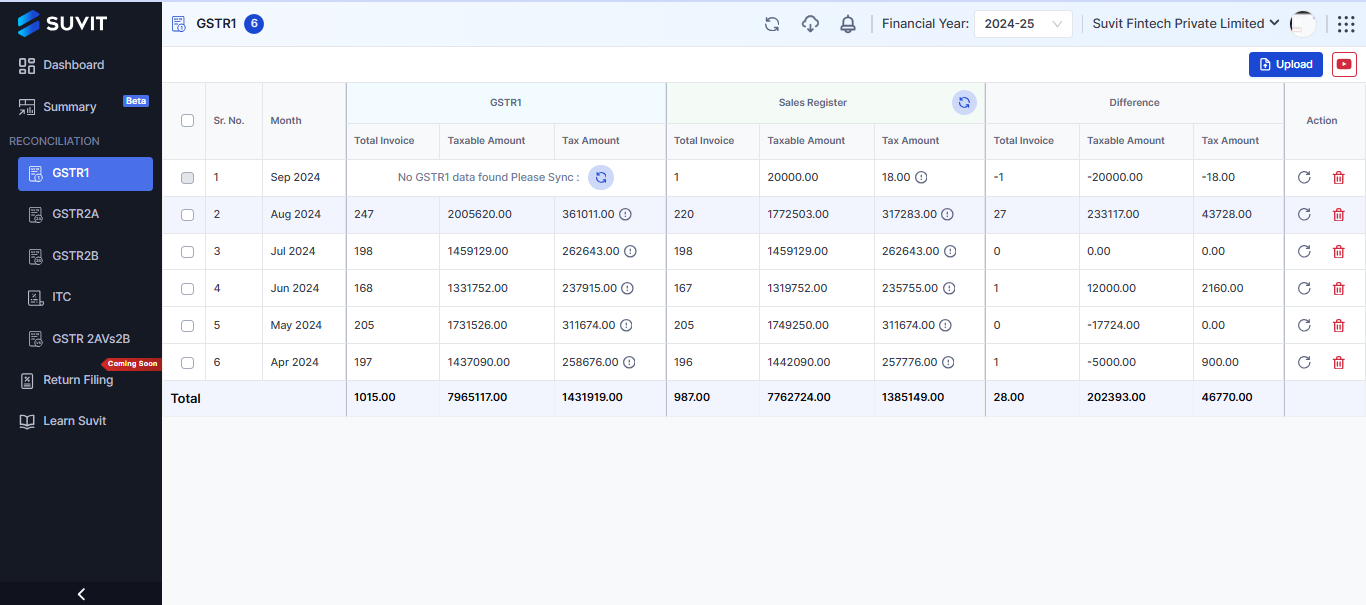
Vyapar TaxOne automatically collects and compiles data from your accounting software, minimizing manual errors.
It syncs data with the GSTN portal in real time, ensuring that all your details are accurate and up-to-date.
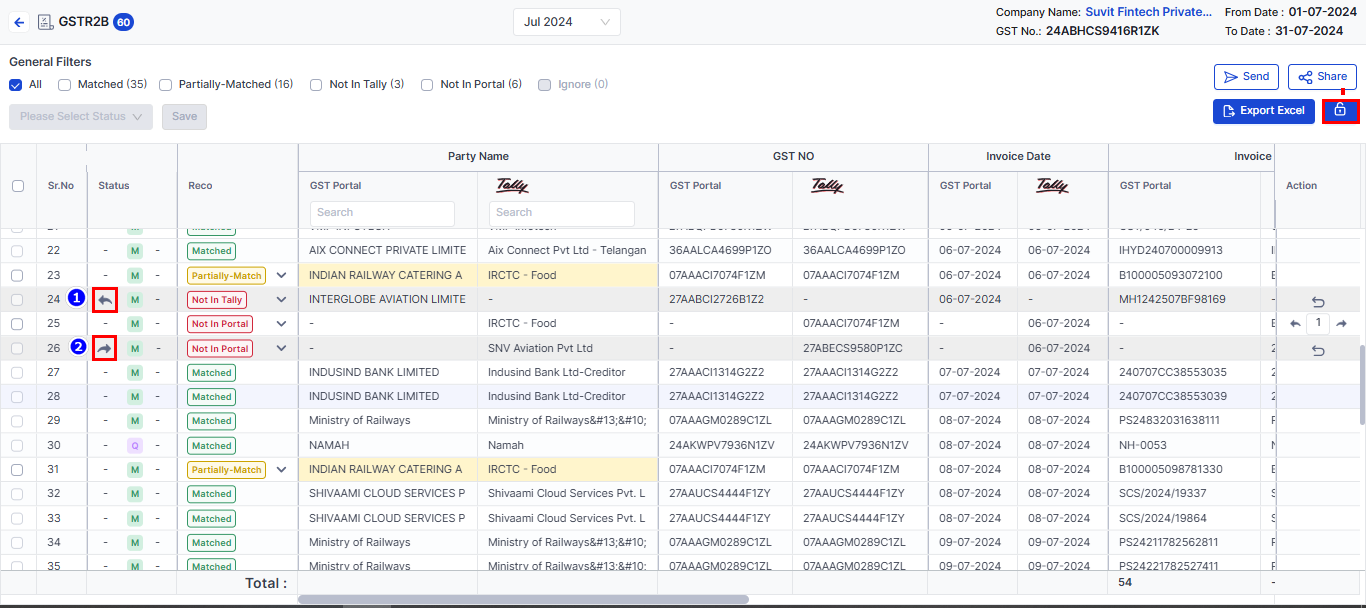
Vyapar TaxOne identifies discrepancies between your GSTR 1 and the recipient’s GSTR 2A and provides statuses like Not in Tally, Partially-Match and Matched.
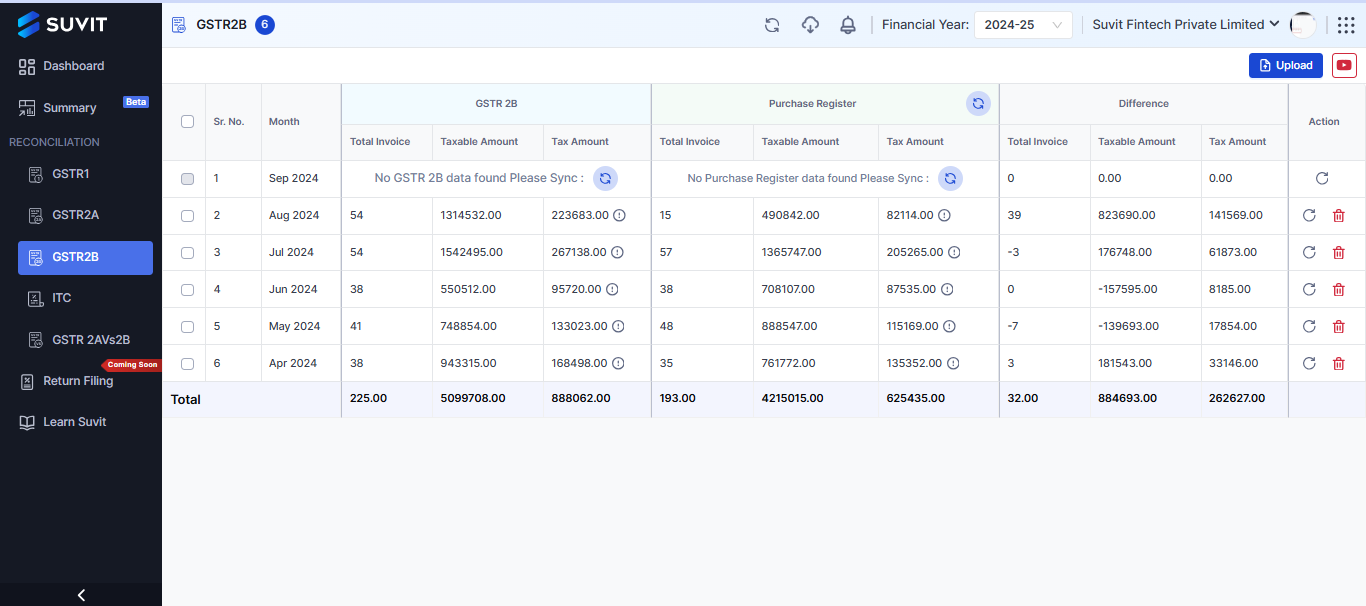
With an intuitive interface, Vyapar TaxOne helps you easily review, amend, and reconcile GSTR 1.
Vyapar TaxOne generates reports that offer insights into your sales, taxes, and compliance status.
You can get complete details here!
Incorrect reconciliation can lead to audits by tax authorities and the imposition of penalties. Timely and accurate reconciliation helps you avoid such complications.
Incorrect data can affect your GST returns and refunds. Discrepancies in GSTR 1 can cause delays in claiming input tax credits or receiving refunds.
GSTR 1 Reconciliation matches the details in your GSTR 1 (outward supplies) with the data in GSTR 2A (purchases) submitted by your recipients. This ensures data accuracy and compliance and prevents discrepancies.
Steps include gathering documents, cross-checking invoices, matching data with GSTR 2A, correcting errors, and using tools like Vyapar TaxOne to automate the process. Regular reconciliation can help businesses avoid penalties, ensure timely refunds, and maintain smooth GST operations.
GSTR 1 reconciliation ensures that the details of your sales and outward supplies reported in GSTR 1 match with the corresponding information in the recipient’s GSTR 2A (purchase return). This helps to avoid discrepancies and penalties and ensure compliance with GST regulations.
Reconciliation ensures that the sales data in your GSTR 1 is accurate and consistent with the purchase details reported by your recipients. It helps maintain the integrity of the GST filing process and prevents mismatches that could result in penalties or audit scrutiny.
Common issues include mismatched tax amounts, missing invoices, incorrect HSN/SAC codes, and discrepancies in customer details (such as GSTIN). These issues can lead to incorrect filings and delays in refunds or input tax credit claims.
Incorrect reconciliation can lead to penalties, audit notices, and delays in receiving input tax credits or refunds. Mismatched data can also cause discrepancies in the recipient’s records, leading to complications in the overall GST process.
Yes, GSTR 1 reconciliation can be done manually by comparing the details in GSTR 1 with GSTR 2A. However, this can be time-consuming and prone to errors. Tools like Vyapar TaxOne can automate the process, reducing the risk of mistakes and saving time.

Tax Professional & Business Finance Expert
Tax Professional & Business Finance Expert
Tax Professional & Business Finance Expert