 Is Now Vyapar TaxOne | Same Trust, New Name!
 AI Weapon for Financial Soldiers


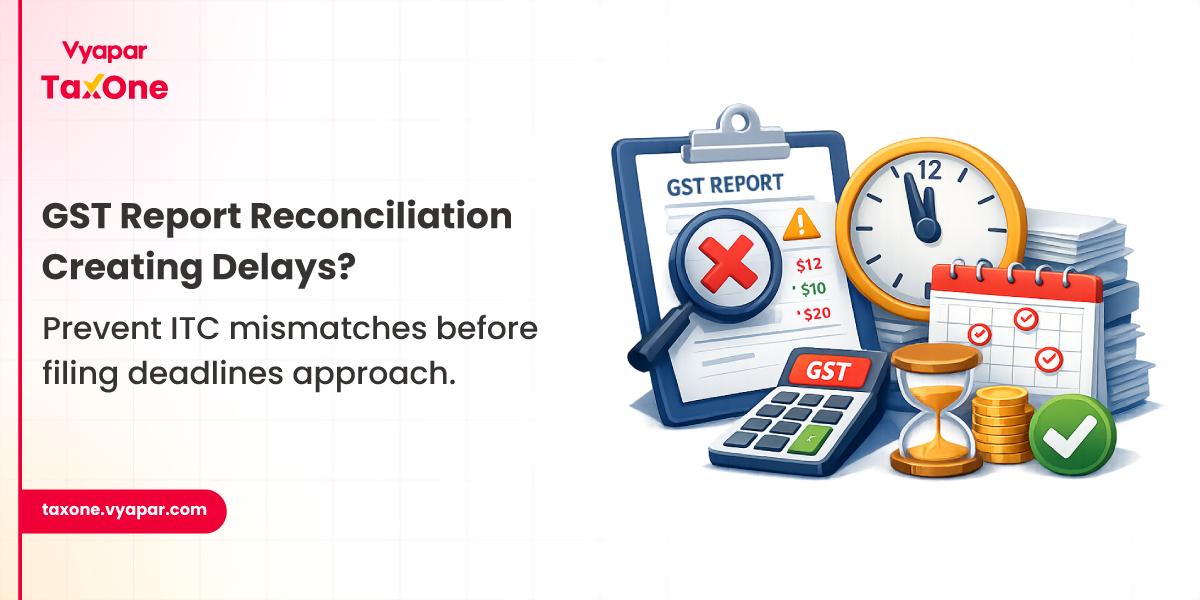
For most accounting teams, GST compliance activity involving GSTR 2A, GSTR 2B and GSTR 3B begins long before the actual return filing date.
The actual process usually starts much earlier when teams begin reviewing supplier invoices, validating eligible Input Tax Credit, checking purchase records, and preparing final tax liability before filing cycles begin.
During this process, three GST reports usually become central to monthly compliance workflows.
Teams regularly work with GSTR 2A, GSTR 2B, and GSTR 3B while reviewing whether reported invoices, eligible ITC, and final return values remain properly aligned.
As filing volume increases, understanding how these three reports work together becomes critical for maintaining smooth compliance cycles.
While most teams work with GSTR 2A, GSTR 2B, and GSTR 3B regularly, each one serves a different purpose in the compliance workflow.
From an operational perspective:
In actual accounting workflows, these three reports are usually reviewed in sequence.
Teams first verify supplier-reported invoices through GSTR 2A.
Then they validate the eligible ITC available inside GSTR 2B.
Finally, the verified ITC moves into GSTR 3B during return preparation.
The challenge begins when values across all three reports stop aligning during this workflow.
Although teams work with both reports regularly, GSTR 2A and GSTR 2B behave differently during invoice review and ITC validation workflows.
During most monthly filing cycles, accounting teams usually follow a simple workflow.
Step 1: Supplier invoices start appearing inside GSTR 2A.
Step 2: Teams compare supplier-reported invoices with internal purchase registers.
Step 3: Eligible ITC is validated through GSTR 2B.
Step 4: Final tax liability and ITC values are prepared for GSTR 3B filing.
This process usually works smoothly until invoice mismatches or supplier reporting delays begin affecting reconciliation review.
In most accounting workflows, reconciliation itself is part of the regular GST filing process.
However, teams usually need to pay closer attention when supplier filings, purchase records, and ITC validation happen across separate systems or are reviewed at different stages during compliance cycles.
This is usually where inconsistencies begin appearing before final filing preparation.
Common causes include:
The filing process itself is rarely the problem.
The reconciliation process before filing usually creates a delay.
In most accounting teams, these are the issues we usually see during reconciliation cycles.
GSTR 2A and Purchase Register Mismatch
Teams often identify invoices appearing inside GST records that do not match internal purchase registers because:
This creates immediate ITC verification problems.
GSTR 2B Showing Lower ITC Availability
Since GSTR 2B is a fixed statement generated monthly, teams often notice lower ITC availability because:
This creates uncertainty before final filing.
GSTR 3B Filed With Incorrect ITC Values
This usually happens when teams:
This is why regular GSTR 2B and GSTR 3B reconciliation becomes critical before the filing deadlines approach.
In CA firms managing GST compliance for multiple clients, accounting teams regularly work with GSTR 2A, GSTR 2B, and GSTR 3B together during month-end filing cycles.
For example, a firm managing 40 to 50 GST clients and reviewing nearly ₹2 crore worth of monthly purchase transactions usually starts compliance review by checking supplier invoices reflected inside GSTR 2A.
Once invoice records are reviewed, teams validate eligible ITC through GSTR 2B before preparing final tax liability values for GSTR 3B filing.
At this stage, teams often spend additional time checking:
As client volume increases, even small mismatches usually create additional review pressure before filing deadlines approach.
Businesses operating across multiple GST registrations usually process invoices independently across branches, while compliance review happens centrally.
For example, a business managing 6 to 8 GST registrations may process over 1,500 purchase invoices every month before GST filing cycles begin.
In this process, accounting teams usually validate:
The challenge usually appears when invoice reporting happens at different locations while the final compliance review happens centrally.
As transaction volume increases, teams often spend much more time validating records before filing.
In GST operations, certain workflow patterns repeat regularly.
We often see this during month-end compliance cycles.
Most accounting teams work with GSTR 2A, GSTR 2B and GSTR 3B continuously throughout the filing cycle rather than only during final return preparation.
The review process usually happens:
As transaction volume increases, managing these review cycles manually usually becomes much harder.
The workflow in most accounting teams typically looks like this.
Step 1: Download GST Reports
Teams download GSTR 2A and GSTR 2B from the GST portal.
Step 2: Extract Purchase Records
Internal purchase register data is exported from accounting systems.
Step 3: Reconciliation Review
Teams manually compare:
Step 4: Identify Mismatch Records
Teams isolate:
Step 5: Final Filing Preparation
After reconciliation review, final ITC values are reported in GSTR 3B.
This is usually where last-minute compliance pressure begins.
Before GST filing cycles begin, teams usually verify the following.
ITC Reconciliation Checklist
✔ Supplier invoices matched with the purchase register
✔ GSTIN details verified properly
✔ Missing invoices identified early
✔ Duplicate invoice records reviewed
GSTR 2B Validation Checklist
✔ Eligible ITC verified
✔ Ineligible ITC reviewed separately
✔ Supplier filing status checked
✔ Monthly statement values confirmed
GSTR 3B Filing Checklist
✔ Claimed ITC matched with GSTR 2B
✔ Tax liability reviewed before filing
✔ Reconciliation completed before submission
✔ Final mismatch review completed
Most accounting teams understand how GSTR 2A, GSTR 2B and GSTR 3B work individually.
The actual challenge usually comes when invoice verification, supplier reporting checks, ITC validation, and final return preparation all need to happen together within limited filing timelines.
As transaction volume increases, teams often spend significantly more time manually reviewing whether values across all three GST reports remain properly aligned before filing.
We often see accounting teams gradually shifting toward more structured compliance workflows once manual reconciliation and tracking begin slowing down month-end filing operations.
This is the kind of workflow gap structured systems like Vyapar TaxOne are built around in accounting environments where GST compliance volume starts becoming harder to manage manually.
Because supplier-reported invoices reflected in GSTR 2A usually need to be reviewed first before validating the eligible ITC available for the filing period.
Because GSTR 2B provides the fixed monthly ITC statement that teams usually rely on before finalizing the eligible tax credit.
The ITC values reported inside GSTR 3B are usually prepared only after supplier invoices and eligible credits have been reviewed across earlier GST reports.
Because supplier-reported invoices inside GST records need to be checked against internal purchase records before ITC is validated.
Most accounting teams review GSTR 2A, GSTR 2B, and GSTR 3B together during month-end compliance preparation before final return filing begins.
Because invoice verification, ITC validation, supplier reporting checks, and final return preparation all begin consuming more manual review time.


Get started today and simplify your accounting process!