Brand Update: s_logo Is Now Vyapar TaxOne | Same Trust, New Name!
AI in Accounting
Jan 6, 2026

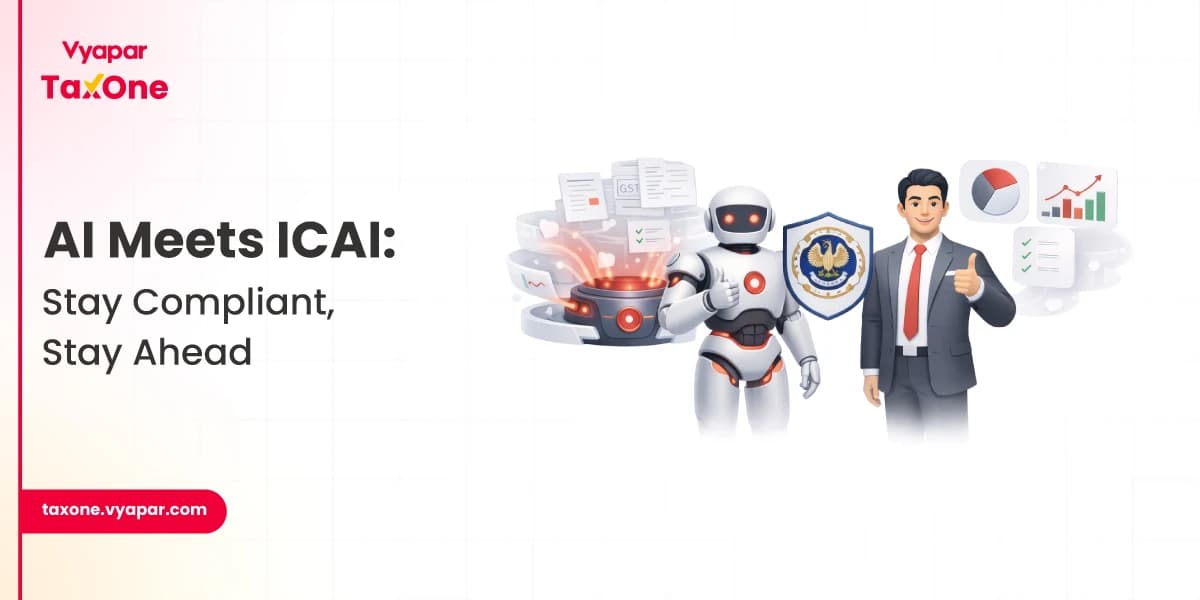
ICAI Guidelines & AI: What Indian CAs Should Watch Out For

s_av
Divyesh Gamit

Vyapar TaxOne

linkedinfacebookinstagramyoutubetwitter
s_blog-post

The rapid growth of Artificial Intelligence is transforming the landscape of accounting, tax preparation, and auditing in India.

As CAs in India increasingly adopt AI tools, understanding the intersection of these technologies with existing ICAI guidelines becomes vital for maintaining professional integrity, compliance, and efficiency.

This blog will guide Indian CAs on navigating ICAI's regulatory frameworks and on best practices for AI integration in their practices.

Understanding the Context

Regulatory Landscape in India

The Institute of Chartered Accountants of India is the governing body that sets the ethical and professional standards for CAs in India. Its guidelines focus on ensuring that CAs maintain integrity, confidentiality, and professional competence while offering services to clients.

  • ICAI's Role in Professional Standards: The ICAI's responsibility is to safeguard public trust and ensure that CAs' practices align with ethical principles.
  • Regulatory Relevance to AI: As AI tools become more prevalent, CAs must use them within the boundaries of ICAI's ethical and regulatory guidelines.

The Role of AI in the Accounting Profession

AI is revolutionizing the accounting profession by automating tedious tasks and offering greater data accuracy. AI tools can:

  • Automate data entry, tax calculations, and compliance processes.
  • Analyze large sets of financial data quickly.
  • Enhance decision-making with predictive analytics and machine learning.

However, with this transformation, the adoption of AI must be balanced with compliance with ICAI standards.

Key ICAI Guidelines Affecting AI Use

Ethical Standards and Professional Conduct

ICAI's Code of Ethics requires CAs to demonstrate integrity, objectivity, and confidentiality in all professional activities. With the adoption of AI, these ethical standards must be maintained, especially in areas of data management, client confidentiality, and decision-making.

  • Transparency in AI Outputs: It is essential to ensure that AI tools used in audits or tax preparation produce transparent, auditable results.
  • Professional Judgment: CAs must continue to apply professional judgment, as AI cannot replace human oversight in complex accounting tasks.

Ethical Considerations for AI in Accounting

  • Integrity: Ensuring AI tools are unbiased and transparent.
  • Objectivity: AI tools should not influence personal judgment or decision-making.
  • Confidentiality: Data privacy must be ensured, particularly when using third-party AI tools.

AI in Assurance and Auditing

ICAI guidelines on audit standards (AS/SA) stipulate that auditors are responsible for maintaining the integrity of audit processes, even when AI tools are used.

  • AI's Role in Audit Analytics: AI can help auditors identify anomalies, analyze patterns in financial data, and perform data analytics at scale. However, CAs must ensure that AI findings are reviewed, interpreted, and validated in accordance with ICAI standards.

  • Key points for auditors:

    • Ensure documented evidence of AI use.
    • Retain audit trails for transparency.
    • Review AI-generated insights before finalizing audit reports.

Quality Control and Risk Management

ICAI mandates firms to maintain high standards of quality control. As AI tools are integrated, they must adhere to the same quality assurance principles outlined by ICAI. CAs must:

  • Ensure proper oversight over AI tools.
  • Audit AI systems periodically for compliance.
  • Establish procedures for risk management associated with AI, such as data integrity and accuracy of AI-generated outputs.

Data Privacy and Security

AI systems require significant amounts of data to function. The use of AI in accounting and tax practice must comply with strict data privacy and security standards. ICAI guidelines require CAs to ensure the confidentiality of client data.

Considerations for Data Protection

  • Data Encryption: Ensuring that AI tools use secure encryption methods.
  • Third-Party Risk Management: Vetting AI vendors for their data protection practices.
  • Regulatory Compliance: Complying with the Personal Data Protection Bill and other data privacy regulations.

Practical Implications for Tax Professionals

Risk Identification and Mitigation

Using AI tools in tax practices presents both opportunities and risks. Indian CAs should address the following risks:

  • Bias in AI Models: AI tools can inadvertently introduce bias in tax assessments or audits.
  • Data Inaccuracy: Inaccurate data inputs can lead to erroneous AI results.
  • Compliance Risks: Failure to comply with ICAI guidelines when using AI can lead to professional liabilities.

Mitigating AI Risks

  • Human Oversight: Always validate AI results before presenting them to clients.
  • Regular Monitoring: Periodically audit the performance of AI tools.
  • Compliance Reviews: Ensure that AI solutions are regularly assessed for compliance with ICAI standards.

Documentation and Audit Trails

One of the most significant ICAI requirements is maintaining a proper audit trail for all professional activities. This includes AI-driven tasks such as tax preparation, financial analysis, and audits.

  • Document AI Methodology: Record how AI tools were used, the data they analyzed, and the results they produced.
  • Maintain Traceability: Ensure that each AI output is linked to its source data and the professional judgment that led to its approval.

Client Communication and Transparency

AI can automate many processes, but it is critical to communicate openly with clients about its use.

  • Setting Expectations: Be transparent with clients about how AI is used in their engagements.
  • Explaining Benefits and Limitations: Help clients understand the benefits AI offers for their tax and audit processes while also discussing potential limitations and risks.

Actionable Guidance for Indian CAs

Due Diligence Before Deployment

Before implementing AI tools, Indian CAs must ensure that the tools meet all regulatory requirements:

  • Evaluate Vendors: Ensure AI vendors are compliant with ICAI's ethical and data security standards.
  • Test AI Systems: Test AI tools on sample data before deploying them in real client work.

Training and Competence Development

AI tools require a certain level of technical understanding. CAs should prioritize:

  • Upskilling in AI: Training on AI applications in accounting and tax practice.
  • Data Governance Training: Ensuring that CAs are equipped to handle data security and privacy concerns.

Policy and Process Integration

Developing internal policies for the use of AI is essential for compliance:

  • Create Clear AI Policies: Outline acceptable use, risk management strategies, and compliance procedures.
  • Define Processes: Set transparent processes for selecting, testing, and using AI tools in client engagements.

Continuous Monitoring and Review

As AI tools evolve, so should the processes surrounding their use. CAs must:

  • Review AI Performance: Regularly assess the effectiveness and compliance of AI tools.
  • Stay Updated on Regulations: Keep up to date on any changes to ICAI guidelines that affect AI use.

Embracing AI in Line with ICAI Guidelines for a Future-Ready Profession

The integration of AI in Indian accounting and tax practices brings both opportunities and challenges. CAs must ensure they use AI tools in alignment with ICAI guidelines and uphold the highest standards of ethics, professionalism, and compliance.

As demand for efficient tax automation grows, tools like Vyapar TaxOne(formerly Suvit, recognised by ICAI under CMP benefits) are becoming increasingly valuable for Indian tax professionals. It helps streamline tax compliance and reporting, enabling CAs to deliver fast, accurate, and compliant tax services to clients.

By integrating AI tools like Vyapar TaxOne into their workflows, Indian CAs can optimize efficiency, mitigate risks, and maintain compliance with the latest regulations.

FAQs

Q1. How does AI impact ICAI guidelines for CAs in India?

AI tools must be used in accordance with ICAI's ethical standards, ensuring transparency, confidentiality, and professional judgment in all tasks, from auditing to tax compliance.

Q2. Are AI tools allowed for auditing and tax preparation under ICAI rules?

Yes, AI tools can be used for automation in auditing and tax preparation, but CAs must ensure they maintain professional oversight and comply with ICAI's documentation and audit-trail requirements.

Q3. What ethical considerations should CAs keep in mind when using AI?

CAs should ensure that AI tools do not compromise integrity, objectivity, or confidentiality. They must also document AI usage and maintain full professional responsibility for AI-driven decisions.

Q4. How can Indian CAs mitigate the risks of AI adoption?

To mitigate AI risks, CAs should conduct due diligence, regularly monitor AI systems, maintain human oversight, and ensure compliance with ICAI regulatory standards.

Q5. What is Vyapar TaxOne, and how can it help CAs?

Vyapar TaxOne is an AI-powered tool designed to streamline tax compliance and reporting, helping CAs offer efficient, accurate, and compliant tax services while aligning with ICAI's standards.


Recent Blogs

blog-img-AI, Big Data & Tax Intelligence: The New Frontier for CAs in India
AI, Big Data & Tax Intelligence: The New Frontier for CAs in India
s_av
Jayant Kulkarni

Vyapar TaxOne

blog-img-ICAI Guidelines & AI: What Indian CAs Should Watch Out For
ICAI Guidelines & AI: What Indian CAs Should Watch Out For
s_av
Divyesh Gamit

Vyapar TaxOne

blog-img-How AI Helps in Manage Multiple Client Tax Filings During Peak Season
How AI Helps in Manage Multiple Client Tax Filings During Peak Season
s_av
Shebi Sharma

Vyapar TaxOne