 Is Now Vyapar TaxOne | Same Trust, New Name!
 AI Weapon for Financial Soldiers


If you've worked through a month-end closing or helped clients prepare quarterly business reports, you've probably noticed one thing: it's rarely the forecasting itself that slows the process down.
More often, it's the amount of financial data that needs to be reviewed, validated, and organised before meaningful analysis can even begin.
Today, many CA firms handle dozens of clients, multiple GST registrations, ERP reports, banking records, and frequent revisions, all within the same reporting cycle. By the time the data is ready, the actual forecasting work often becomes the shortest part of the process.
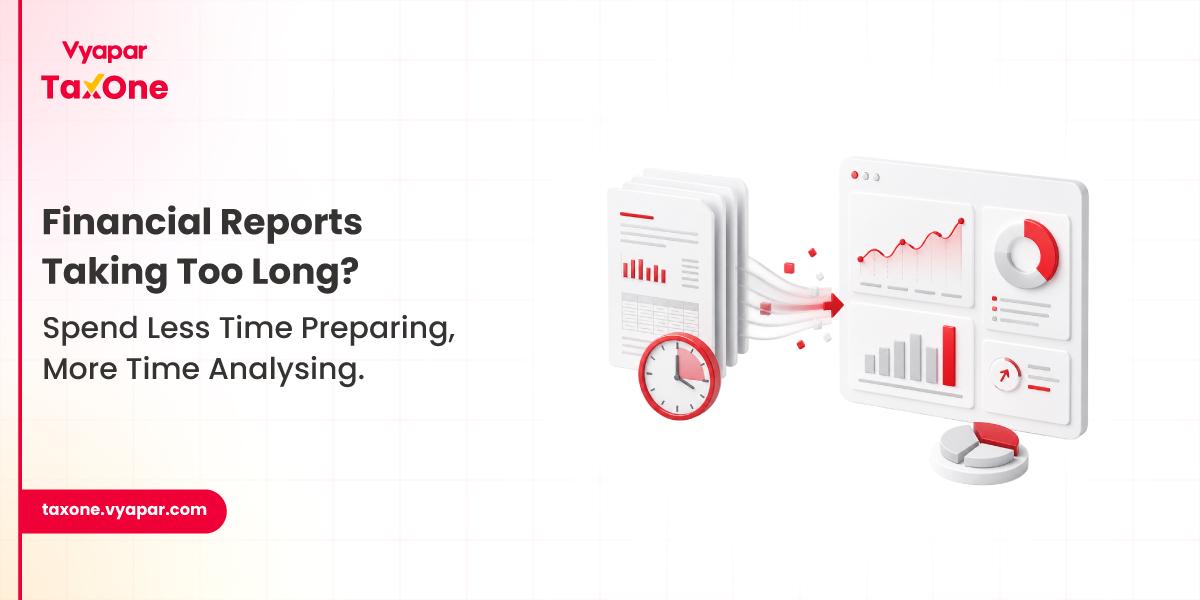
This is where AI is gradually supporting accounting firms by reducing the manual effort involved in preparing and reviewing financial information, allowing professionals to spend more time analysing data and advising clients.
Ask any accounting team where forecasting gets delayed, and the answer usually isn't the forecasting exercise itself.
Before preparing cash flow projections or profitability reports, teams often need to:
Only after these activities are completed can meaningful financial analysis begin.
We've often seen this during month-end and quarter-end reporting. As transaction volumes increase, preparing dependable financial information frequently requires more effort than analysing the numbers themselves.
Even after financial information has been collected, accounting teams often run into operational issues that delay analysis and forecasting. These are some of the situations we regularly see during reporting cycles.
One client shares a Tally export, another sends ERP reports, while others rely on Excel files. Before analysis can begin, accounting teams spend considerable time consolidating these reports into a consistent format.
It's common for revised journal entries, purchase records, or expense updates to arrive after financial analysis is already underway. That means reports need another round of validation before forecasts can be finalised.
Reconciling balances, resolving ledger differences, and validating unusual transactions often take longer than expected, especially during month-end closing. As a result, valuable time that could be spent analysing business performance goes into verifying financial data instead.
Most CA firms aren't looking to replace the accounting systems they already use. Tally, ERP platforms, banking portals, and GST systems continue to be the foundation of financial reporting.
Where AI starts making a difference is during the preparation stage, where accounting teams spend a large part of their time reviewing and organising financial information before they can actually analyse it.
Many firms are now adopting AI for financial analysis and forecasting to reduce preparation time while improving the quality and speed of business reporting.
For example, AI-assisted tools can help accounting teams:
The objective isn't to automate financial judgement, it's to reduce the manual effort required before that judgement can be applied.
The final analysis, forecasting decisions, and client recommendations still depend on the CA's professional judgement. AI simply reduces the time spent preparing and reviewing financial information, allowing teams to focus more on analysis, forecasting, and client advisory.
While professional judgement remains essential, AI-powered financial forecasting can help accounting teams analyse historical patterns and prepare data more efficiently before forecasts are created.
We've often seen these challenges become more noticeable during quarter-end reviews, when accounting teams are working against tight reporting timelines.
Take a CA firm managing accounting and compliance for around 40 clients.
As the quarter comes to a close, several clients request cash flow forecasts and profitability reports. The team starts gathering Tally exports, ERP reports, bank statements, and supporting schedules, expecting to move quickly into financial analysis.
But that's usually where the delays begin.
A few clients submit revised journal entries after the review has already started. Some bank reconciliations are still pending, while others share updated expense records at the last minute. Before anyone can begin analysing financial performance, the team has to validate balances, review revised data, and ensure everyone is working with the latest financial information.
Only after those checks are complete can forecasting begin.
We've seen this pattern repeatedly in busy reporting cycles. The forecasting itself may only take a few hours, but preparing reliable financial data often consumes several days. This is where AI-assisted tools can make a practical difference, by helping accounting teams organise financial information, identify exceptions more quickly, and spend less time preparing data before analysis begins.
Every CA firm has its own review process, but we've noticed that most financial analysis follows a similar pattern. The biggest delays usually don't happen during forecasting; they begin while teams are still preparing reliable financial information.
Teams collect reports from Tally, ERP systems, bank statements, GST records, and supporting documents received from clients.
Before analysis begins, reconciliations are completed, journal entries are verified, and outstanding adjustments are reviewed. In many firms, this stage takes the most time because the accuracy of every report depends on it.
Once the financial data has been validated, teams review key variances, compare historical performance, prepare cash flow projections, and develop management reports for clients.
The quality of any forecast depends less on the forecasting model itself and more on how thoroughly the underlying financial information has been prepared and reviewed.
When financial information is prepared faster and reviewed consistently, firms are better positioned to support real-time financial reporting and provide clients with timely business insights.
Before starting financial analysis, it's worth confirming a few essentials:
A few checks upfront can prevent multiple rounds of revisions later and make forecasting far more reliable.
For many CA firms, spreadsheets and manual reviews work well in the early stages. But as client portfolios grow, reporting cycles become more demanding, and transaction volumes increase, preparing reliable financial data often becomes the biggest challenge.
We've seen firms spend more time collecting, validating, and reconciling information than actually analysing financial performance. That's usually the point where teams start looking for more structured ways to manage their reporting workflows without changing the accounting systems they already use.
This is the kind of operational challenge that structured platforms like Vyapar TaxOne are designed to support. Rather than replacing existing accounting software, they help teams organise compliance and financial workflows more consistently as workloads grow.
As client expectations and reporting volumes continue to grow, firms that spend less time preparing financial data and more time analysing it are often better positioned to deliver timely, informed advice. AI supports that shift by making the preparation process more efficient while leaving the final decisions where they belong, with the accounting professional.
No. AI can support data analysis and highlight trends, but the assumptions behind a forecast and the final recommendations still rely on the judgement of the CA or finance team.
Most firms benefit during data preparation, exception identification, historical trend analysis, and report preparation, areas where manual review typically takes the most time.
In many cases, forecasting isn't the issue. Delays usually occur because financial records are still being validated, reconciliations are pending, or clients have submitted revised information after the review has started.
Yes. Even firms with a smaller client base can save time if they regularly prepare financial reports, analyse historical performance, or support clients with forecasting and business planning.



Get started today and simplify your accounting process!