 Is Now Vyapar TaxOne | Same Trust, New Name!
 AI Weapon for Financial Soldiers


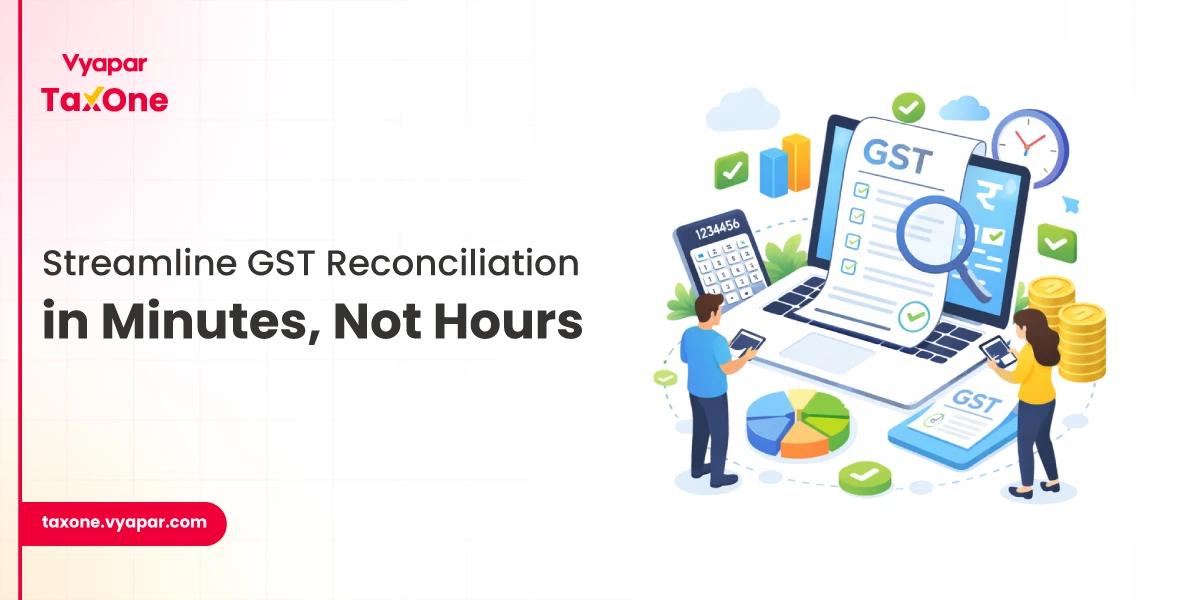
GST reconciliation is an essential yet time-consuming task for businesses in India. Matching purchase and sales records with data from the GST portal (GSTR-1, GSTR-2A/2B) is necessary for accurate tax filings and claiming Input Tax Credit (ITC).
However, manual reconciliation comes with several challenges, including human error, time delays, and compliance risks.
This blog explores how you can streamline your GST reconciliation process using automation, specifically through Vyapar TaxOne's GST automation feature.
We'll delve into the benefits, features, and actionable steps for tax professionals looking to optimize their workflow.
GST reconciliation is the process of matching the data from your business's accounting books with the data available on the GST portal. This is essential for ensuring that the Input Tax Credit (ITC) claimed is accurate and that your GST returns are filed correctly.
Here are the key challenges tax professionals face while doing manual GST reconciliation:
In the current tax landscape, automation is the only way to ensure accuracy, speed, and efficiency in GST reconciliation. Let's look at how automation can help businesses overcome the challenges mentioned above.
1. Increased Efficiency and Speed
2. Accuracy and Compliance
3. Optimized ITC Claims
4. Scalability
Vyapar TaxOne is designed to automate GST reconciliation seamlessly, making it an ideal solution for tax professionals. Let's break down how it works:

Vyapar TaxOne's intelligent reconciliation engine compares data from sources such as GSTR-1, GSTR-2A/2B, and Invoice Management Systems (IMS). It automatically matches invoices to GST records and flags discrepancies in real time.
Vyapar TaxOne integrates seamlessly with Tally, Vyapar, and Excel. This ensures that all your accounting data is synchronized, eliminating the need for manual data imports.
| Accounting System | Vyapar TaxOne Integration | Benefit |
|---|---|---|
| Tally | Syncs directly with Tally | Seamless data transfer |
| Vyapar | Automated sync with Vyapar | Real-time updates |
| Excel | Imports and exports Excel data | Streamlines reconciliation |
Vyapar TaxOne uses Artificial Intelligence (AI) to extract data from invoices (even in PDF or image format) and auto-populate it into the reconciliation tool.

It also performs over 30 smart validation checks, identifying common errors like mismatched tax amounts or incorrect HSN codes before filing.
Vyapar TaxOne includes built-in features for client communication and workflow tracking, enabling tax professionals to collaborate with clients and easily monitor reconciliation progress.
Getting started with Vyapar TaxOne's GST automation is simple. Here's a step-by-step guide to help you integrate this tool into your workflow:
Before deploying Vyapar TaxOne, take time to audit your existing processes. Assess your accounting data, invoice formats, and reconciliation practices. This will help you understand where automation can save the most time.
Once your data is prepared, integrate Vyapar TaxOne with Tally. Customize the reconciliation rules based on your business's needs, such as setting invoice tolerance for GST.
Initially, run Vyapar TaxOne in parallel with your existing manual workflow. This will allow you to compare results and adjust the tool's settings if needed.
Training your team on Vyapar TaxOne's features and functionality will ensure a smooth integration and practical use. Regular training will help your team get the most out of the tool.
To maximize the benefits of Vyapar TaxOne, follow these best practices:
Don't wait until the last minute to start the reconciliation process. Schedule weekly or monthly reconciliations to identify and correct errors early.
Monitor the exceptions flagged by Vyapar TaxOne and resolve discrepancies as soon as they arise. Delayed responses can lead to ITC blocking or compliance issues.
Always keep detailed logs of reconciliations, including actions taken on flagged exceptions. This documentation will be valuable in the event of future audits or compliance checks.
Incorporating Vyapar TaxOne's GST automation can significantly improve your reconciliation process by enhancing speed, accuracy, and compliance. The intelligent reconciliation engine, seamless integrations, and AI-enabled features will help you streamline GST reconciliation, optimize ITC claims, and stay ahead of deadlines.
Tax professionals who embrace automation will not only save valuable time but also ensure their clients' compliance with the ever-evolving GST regulations. By adopting Vyapar TaxOne, you're investing in a future-proof, scalable solution that adapts to your business's needs.
Take the first step toward streamlining your GST reconciliation workflow today. Try Vyapar TaxOne for free for a week and experience a hassle-free approach to tax compliance.
GST reconciliation is the process of matching your business's purchase and sales data with the GST portal to ensure accurate tax filing and claim eligible Input Tax Credit (ITC).
Automation speeds up the reconciliation process, reduces human errors, ensures compliance, and optimizes ITC claims by integrating accounting systems and performing real-time data validation.
Vyapar TaxOne offers features like intelligent reconciliation, AI-driven invoice processing, seamless integrations with accounting tools, and real-time discrepancy identification, ensuring accurate and timely GST filings.
Yes, Vyapar TaxOne integrates seamlessly with popular accounting tools like Tally & Vyapar, making it easy to synchronize data for efficient GST reconciliation.
It's recommended to schedule regular reconciliations, ideally weekly or monthly, to catch discrepancies early and avoid last-minute rushes before filing deadlines.

Get started today and simplify your accounting process!