 Is Now Vyapar TaxOne | Same Trust, New Name!
 AI Weapon for Financial Soldiers



Tally vendor mapping automation is revolutionizing GST compliance for tax professionals across India, tackling persistent party name reconciliation challenges head-on.
In 2026's stringent e-invoicing era, fuzzy matching Tally tools and robust vendor master matching strategies ensure seamless resolution of supplier name variations, safeguarding Input Tax Credit (ITC) claims and audit readiness.
Vendor name mismatches in Tally arise from subtle yet critical inconsistencies between accounting records and GST portal data. These include:
Supplier name variations often stem from manual data entry during high-volume invoice processing, amplified by India's diverse regional vendor naming conventions. Tax professionals report mismatch rates of 20-30% in mid-sized firms, per industry benchmarks.
Traditional reconciliation relies on exact string matches, ignoring the real-world fuzzy matching Tally needs. GSTN's strict validation rejects even minor deviations, triggering "Incomplete Information" exceptions in GSTR-1 filings.
This cascades into GSTR-3B delays, as unmatched invoices block ITC auto-population. In practice, a supplier name variation like "Shree Ganesh Enterprises" vs. "Sree Ganesh Ent." halts ledger-wise reconciliation, forcing Excel-based pivots.
Without Tally vendor-mapping automation, professionals spend 15-20 hours per week on manual audits, diverting focus from strategic advisory roles.
Unresolved mismatches erode profitability through:
A 2025 GSTN report highlighted that 40% of ITC disputes trace to vendor master matching failures, with small businesses hit hardest.
Manual party name reconciliation inflates compliance costs by 25-30%, per FICCI surveys. Tally Prime users face fragmented reports, and outstanding payables don't align with GSTR-2B, necessitating custom Excel formulas.
This inefficiency scales poorly for firms with 500+ vendors, where supplier name variation multiplies exponentially during quarter-ends.
From 2024 to 2026, Tally vendor mapping automation evolved via AI integration, shifting from rule-based scripts to machine learning models.
Fuzzy matching in Tally now uses the Levenshtein distance and Jaro-Winkler algorithms, achieving 90%+ accuracy across varied datasets.
Cloud platforms enable real-time GSTN API pulls and dynamically standardize vendor data. This addresses supplier name variation at scale, unlike legacy Tally add-ons, which are limited to basic deduplication.
Modern tools offer:
These features cut reconciliation time by 70%, empowering tax pros with actionable insights.
Vyapar TaxOne's GST reconciliation feature stands out for its automated Tally vendor mapping, seamlessly bridging Tally Prime/ERP9 with the GSTN.
Its AI engine performs intelligent party name reconciliation across GSTR-1, GSTR-2A/2B, and the Invoice Management System (IMS) data.
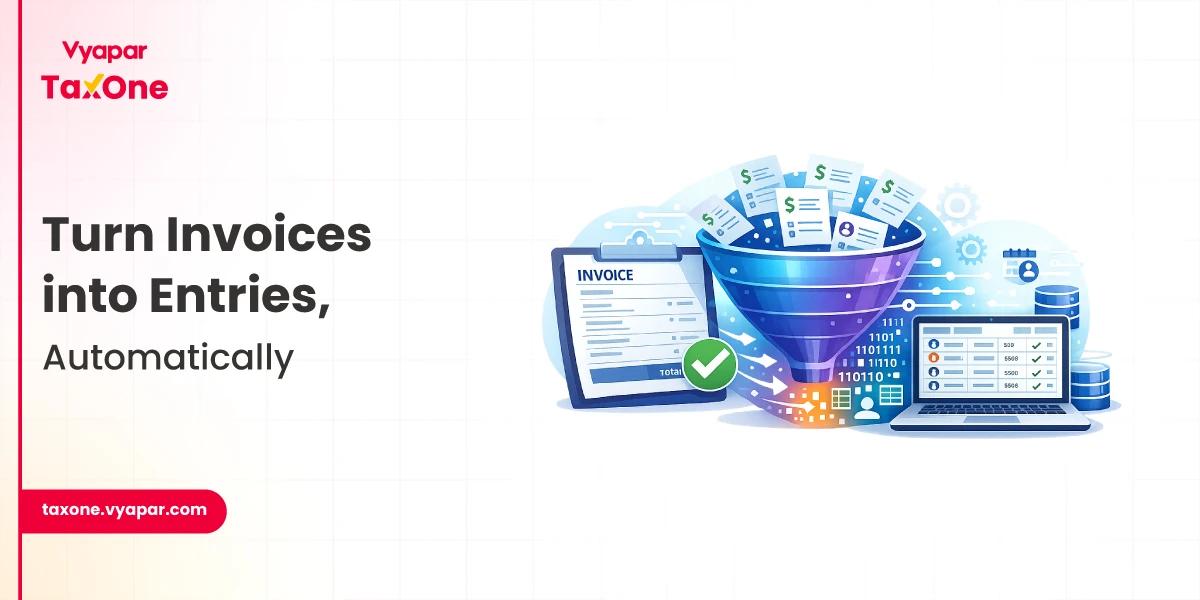
Upload Excel/PDF invoices, and TaxOne applies fuzzy matching Tally to resolve supplier name variation; over 30 validation checks ensure 95% match rates. Direct ledger pushes to Tally minimize data re-entry.
| Feature | Vyapar TaxOne Advantage | Manual Tally Process Impact | Efficiency Gain |
|---|---|---|---|
| Fuzzy Matching Algorithms | AI-powered, 90%+ accuracy | Exact-match only, 40% failure rate | 75% faster |
| Multi-Format Invoice Input | PDF/Image/Excel, OCR extraction | Manual typing prone to supplier name variation | 80% time savings |
| Real-Time GSTN Sync | GSTR-2B/IMS auto-import | Weekly manual downloads | Audit-ready instantly |
| Exception Dashboards | Visual alerts, bulk edits | Scattered Excel sheets | 60% fewer errors |
| Tally Ledger Integration | One-click push with audit trails | Copy-paste reconciliation | Seamless vendor master matching |
This vendor master-matching powerhouse supports 1,000+ vendor workflows and includes WhatsApp reminders for client data collection.
Begin with a clean slate:
Allocate 2-3 hours for initial cleanup. Tools like Vyapar TaxOne automate 80% of the process via bulk uploads.
This phase resolves 85% discrepancies automatically, per user benchmarks.
Ongoing: Train staff on fuzzy matching Tally nuances, ensuring sustained 95% accuracy.
2026 heralds predictive vendor master matching, where ML forecasts mismatches from transaction patterns. GSTN's real-time IMS expansion proactively minimizes supplier name variation.
Blockchain pilots verify vendor authenticity, while Tally-GSTN APIs deepen for zero-touch reconciliation.
MSMEs gain the most, scaling from manual ledgers to enterprise-grade Tally vendor-mapping automation.
Prioritize automating Tally vendor mapping to overcome party name reconciliation hurdles.
Vyapar TaxOne's GST feature delivers fuzzy matching that rivals Tally's excellence, ensuring supplier name variations never compromise compliance.
Implement today for error-free, future-ready GST workflows, reclaim hours, secure ITC, and elevate your practice.
Common issues include typographical errors, spacing variations, abbreviations, and unupdated GSTIN linkages between Tally ledgers and GST portal data, leading to supplier name variation failures.
Fuzzy matching uses AI algorithms, such as the Levenshtein distance, to identify likely vendor matches despite minor discrepancies, automating 80-90% of resolutions for faster vendor master matching.
Yes, Vyapar TaxOne's GST reconciliation feature connects via ODBC for seamless Tally vendor mapping automation, enabling one-click ledger updates and real-time GSTR-2B syncs.
Unresolved mismatches can block 10-15% of ITC claims, trigger audit penalties under GST Sections 73/74, and increase compliance costs by 25-30% due to manual rework.
Initial setup with tools like Vyapar TaxOne takes 2-4 hours for data prep and integration, with full automation achieving 95% accuracy after one reconciliation cycle.


Get started today and simplify your accounting process!