 Is Now Vyapar TaxOne | Same Trust, New Name!
 AI Weapon for Financial Soldiers


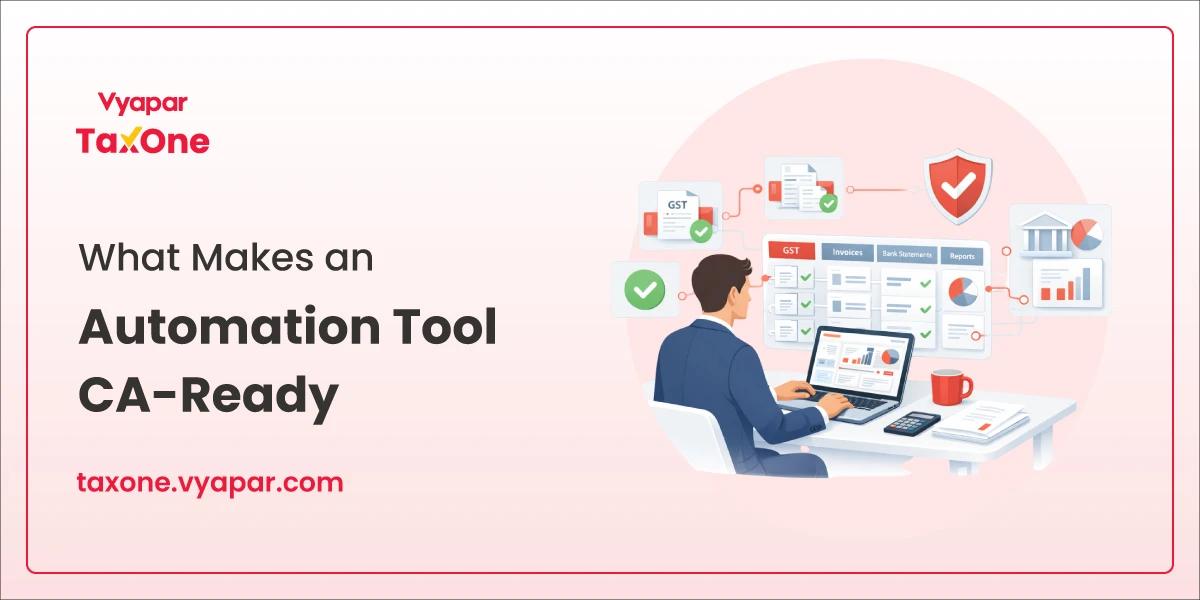
When choosing the right Accounting Automation Vendor, it's essential to select a solution that streamlines your workflows, ensures compliance, and manages financial data with precision.
The ideal vendor should not only automate mundane tasks but also integrate seamlessly with your existing systems, allowing you to focus on more strategic areas of your practice.
Selecting an Accounting Automation Vendor isn't always straightforward. Many tax professionals and Chartered Accountants (CAs) focus too much on price or the latest features without thoroughly evaluating the platform's actual value for their business.
These oversights can lead to impaired integration, poor user experience, or missed compliance updates.
The right vendor should be chosen based on long-term benefits, scalability, and reliability, rather than just a shiny interface or a budget price tag.
To make a more informed decision, evaluate vendors on the following essential criteria:
One of the most critical features of any Accounting Automation Vendor is how well it integrates with your existing systems. The automation software should enable seamless integration with tools such as ERP systems, CRMs, tax preparation software, and even banking systems.
Your accounting automation software must ensure that the data it processes is both accurate and compliant with local tax regulations. It should handle complex calculations, track deductions, and produce reports that meet regulatory standards.
Data security is paramount when dealing with sensitive financial information. The platform should offer robust encryption, secure login protocols (e.g., multi-factor authentication), and secure cloud storage.
As your business grows, your automation needs will evolve. A scalable platform will adapt as you expand your client base or service offerings. Whether it's handling increased transaction volume or integrating with new platforms, the system must grow with your firm.
Even the best automation systems can run into problems, especially during the initial onboarding phase. Excellent customer support and comprehensive training are vital for smooth operations.
| Feature | Vendor A | Vendor B | Vendor C |
|---|---|---|---|
| Integration with ERP | Yes | No | Yes |
| Scalability | High | Medium | High |
| Accuracy & Compliance | 100% compliance | 90% compliance | 95% compliance |
| Security | Advanced encryption | Basic encryption | Advanced encryption |
| Customer Support | 24/7 | Business hours | 24/7 |
To better understand the value of automation, here are some examples of how Accounting Automation Vendors improve workflow efficiency:
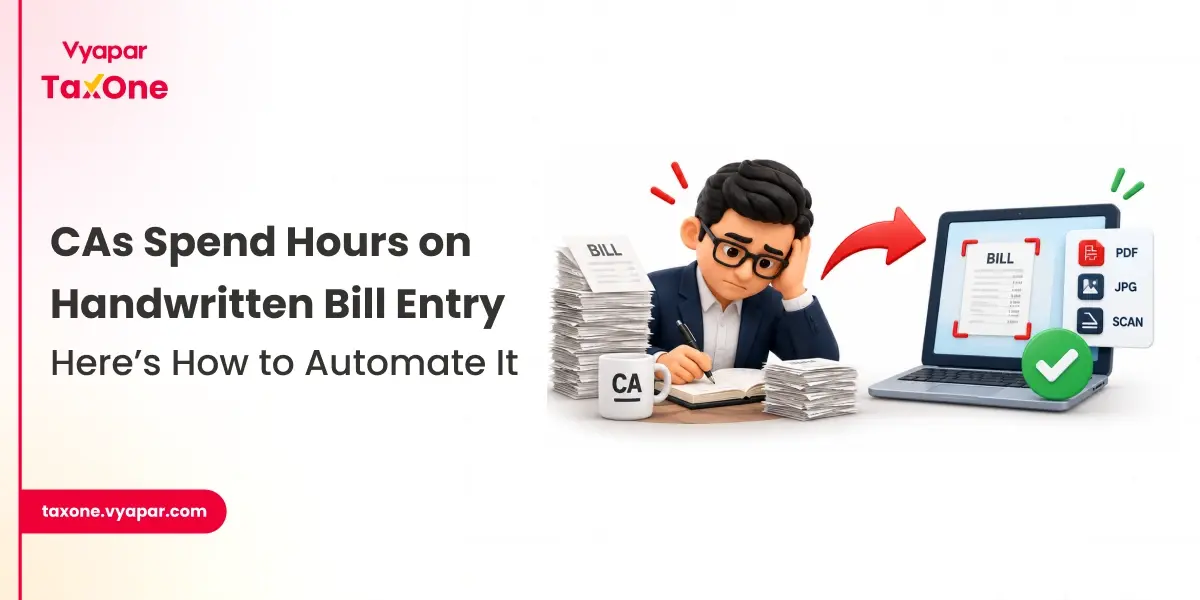
Imagine a firm that manually enters invoice data from PDFs into its accounting system. With automation, this process becomes a one-click task that extracts, validates, and enters data into the system with minimal human intervention, saving hours of manual work.
For tax professionals handling GST filings, automation ensures tax rates are applied correctly, invoices are matched to returns, and calculations are precise. With built-in updates, automation systems will reflect the latest tax changes without requiring manual intervention.
When evaluating Accounting Automation Vendors, Vyapar TaxOne offers a compelling solution for tax professionals, Chartered Accountants (CAs), and firms looking for an integrated platform that combines automation with compliance assurance.
Here's how Vyapar TaxOne ticks the boxes on key criteria:
In short, Vyapar TaxOne delivers the right combination of automation, compliance, security, and scalability for tax professionals, helping them save time while staying compliant.
Choosing an Accounting Automation Vendor should be based on your specific needs, the software's capabilities, and how well it integrates with your existing tools and workflows.
With the right platform, such as Vyapar TaxOne, your practice can eliminate manual tasks, improve compliance, and scale effortlessly as your business grows.
Look for vendors that support popular accounting platforms such as Tally and QuickBooks, as well as ERP systems. Ensure they offer APIs or pre-built integrations.
A robust vendor should offer end-to-end encryption, multi-factor authentication, and data backups to protect sensitive financial information.
Automation tools like Vyapar TaxOne automatically update tax rules and regulations, ensuring your filings remain accurate and compliant with local laws.
Yes, Vyapar TaxOne is scalable and can be tailored to meet the needs of both small and large firms, offering flexibility and room to grow.

Get started today and simplify your accounting process!