 Is Now Vyapar TaxOne | Same Trust, New Name!
 AI Weapon for Financial Soldiers


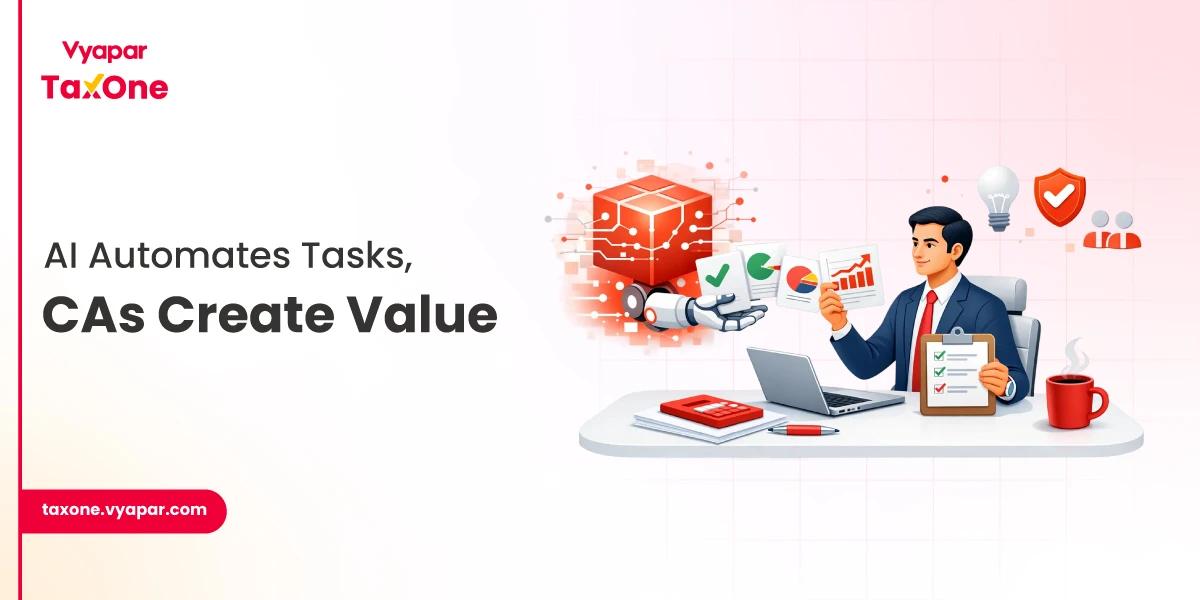
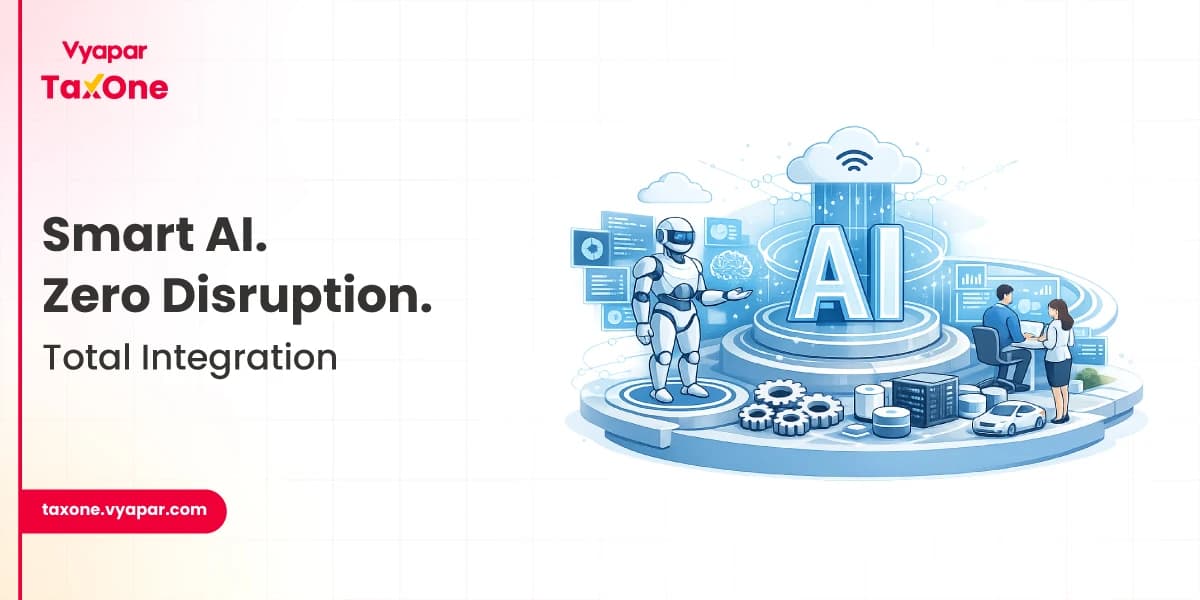
The integration of Artificial Intelligence (AI) into accounting and taxation is reshaping how Chartered Accountants work. From automated GST returns to real-time audit trails, AI has become integral to modern finance operations.
But even as automation accelerates, one truth remains clear: human judgment in accounting and taxation remains irreplaceable, particularly in contexts that require compliance interpretation, ethical reasoning, and strategic decision-making.
AI and machine learning have evolved from experimental technologies into reliable components of accounting platforms. In India, some tools already use AI-driven tax analytics, automated bookkeeping, and predictive error checks.
However, these tools operate best within structured, rule-based frameworks. Regulatory ambiguity, ethical decision-making, and interpretation of changing tax laws still demand experienced human oversight.
For instance, while AI can reconcile invoices for GST filing, it lacks the judgment to evaluate whether a transaction's nature aligns with tax intent or legal precedent.
1. Data Collection and Processing
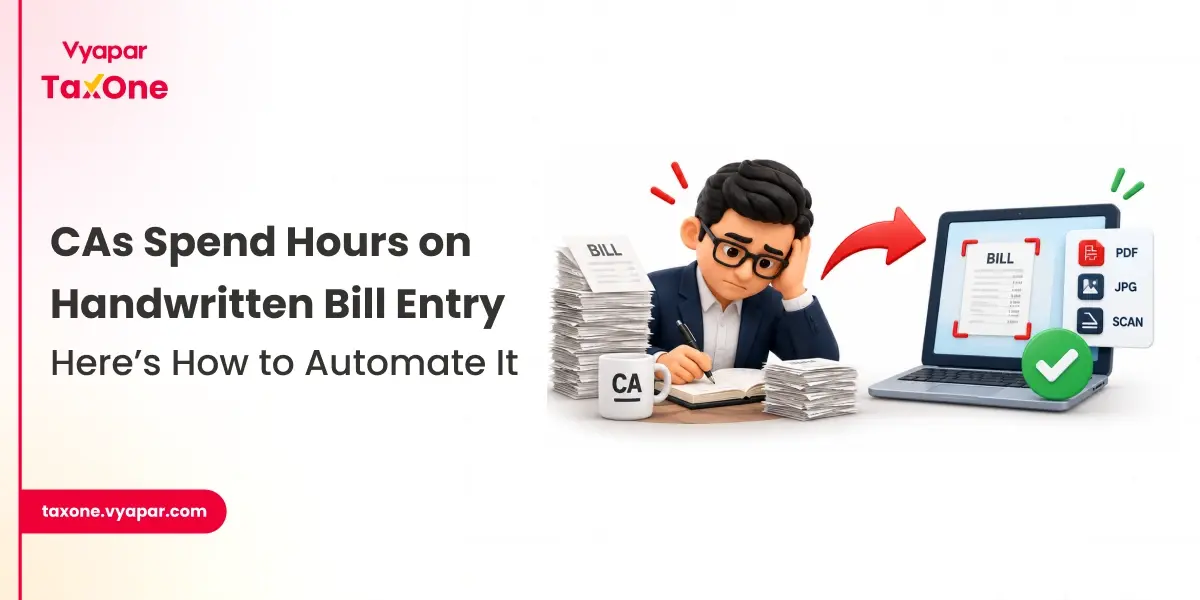
AI efficiently aggregates and cleans financial data from invoices, bank feeds, and e-way bills. Automated reconciliation saves hundreds of hours of manual work, especially for GST filing and TDS verification.
2. Routine Compliance and Reporting
Intelligent algorithms ensure timeliness and accuracy in recurring tasks, from income tax returns to statutory filings under the Companies Act. AI-based alerts minimize missed deadlines and penalties.
3. Real-Time Analytics and Insights
AI-driven dashboards can identify transaction anomalies, detect potential fraud, and forecast cash flow trends, adding proactive intelligence to routine accounting functions.
CAs play a decisive role in interpreting rapidly evolving Indian tax provisions. They can assess implications under GST, direct tax, and transfer pricing frameworks, areas where a subtle understanding surpasses algorithmic logic.
AI can generate data patterns, but only human professionals can weigh business context, risk appetite, and legal interpretation. Strategic restructuring, capital gains planning, and tax optimization rely on professional judgment and experience-based insight.
Human oversight ensures AI output validation. Chartered Accountants audit models, identify red flags, and confirm compliance consistency, upholding professional standards under ICAI guidelines.
CAs safeguard client trust. They enforce confidentiality, manage data-sharing limits, and ensure compliance with professional ethics, all beyond automation's current scope.
A future-ready firm integrates technology with CA expertise through structured workflows:
| Task Category | AI Strengths | Human Judgment Strengths | Best Use Case for Indian CAs |
|---|---|---|---|
| Data Entry & Reconciliation (e.g., GST invoices, e-way bills) | 90% faster processing; OCR for bank statements; auto-matching | Handles ambiguous or incomplete data; verifies intent | Automate routine GST-2A/2B reconciliation, escalate discrepancies |
| Routine Compliance (GSTR-1/3B, TDS filing) | Rule-based automation; deadline alerts; error detection | Interprets amendments (e.g., Budget 2025 changes) | AI drafts returns; CA reviews for regulatory nuances |
| Anomaly Detection (fraud, misclassification) | Real-time pattern recognition; predictive analytics | Applies professional skepticism; assesses context/risk | AI flags issues; CA investigates high-stakes cases like transfer pricing |
| Tax Planning & Advisory (capital gains, incentives) | Scenario modeling; basic forecasts | Strategic structuring; client persuasion; ethical evaluation | AI provides data inputs; CA delivers customized advice |
| Audit & Reporting (statutory filings, ICAI standards) | Generates standardized reports; audit trails | Quality assurance; complex interpretations | AI compiles data; CA ensures compliance and narrative |
| Regulatory Adaptation (new tax laws, FAQs) | Limited to trained data | Nuanced analysis of CBDT/ICAI circulars | Human-led entirely; AI supports research summaries |
This hybrid approach can reduce CA workload by 60-70% on repetitive tasks while amplifying value in advisory services. Tools like Vyapar TaxOne(Formerly Suvit), ClearTax, and Zoho Books exemplify AI automation tailored for Indian taxation. Integrate via human-in-the-loop for optimal results.
GST Compliance AI simplifies return preparation, input reconciliation, and refund claim processing. Yet, judgment is critical in assessing ambiguous transactions or industry-specific exemptions.
Corporate Taxation Transfer pricing and cross-border taxation involve interpretive analysis. While AI assists with predictive benchmarking, CAs ensure regulatory alignment and disclosure integrity.
SME and Startup Ecosystem For early-stage firms, AI can generate compliance calendars and manage incentives. A CA's value lies in contextualizing these outputs to customize tax strategy and ensure sustainable scaling.
A future-ready accounting firm can follow this phased framework:
Identify top repetitive tasks: invoice processing, GST matching, or expense tracking, and automate them using cloud-based AI tools.
Implement human-review checkpoints and periodic audits of automated reports to ensure compliance accuracy.
Expand automation into analytics and advisory domains. Use insights from AI models to enhance client strategy discussions, not replace them.
Data Privacy and Cyber Risk
Adopt secure cloud hosting compliant with Indian data protection norms. Implement encryption, role-based access, and compliance training.
Regulatory Volatility
Ensure human involvement in regulatory tracking, interpretation, and policy response. Automate data adjustments only after expert validation.
Organizational Change Use gradual integration to gain team acceptance. Train staff in both AI literacy and regulatory interpretation to balance innovation with governance.
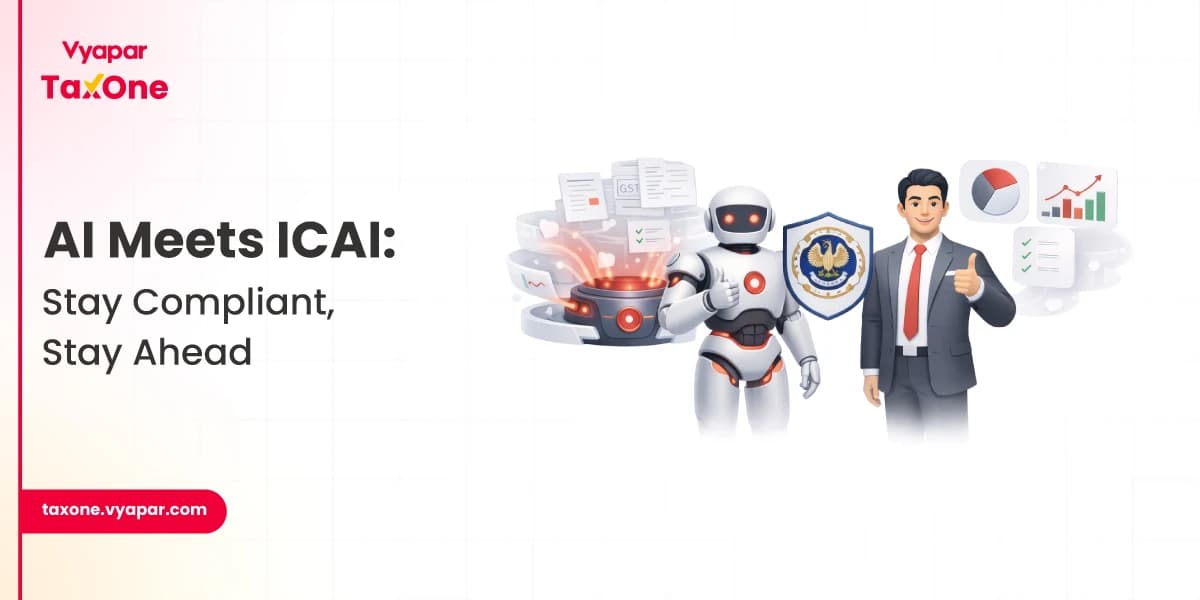
AI has streamlined accounting processes in India: enhancing efficiency, accuracy, and timeliness. But Chartered Accountants remain irreplaceable as custodians of trust, integrity, and interpretation. The ideal practice blends automation's precision with a CA's professional insight.
In this evolving era of digital taxation, the future of accounting is not AI vs human judgment; it is AI empowered by human expertise.
No, AI excels at routine GST and income tax filings but requires CA oversight to interpret regulatory changes and ensure compliance accuracy.
Popular options include ClearTax, Zoho Books, Suvit, and Quicko for GST automation, reconciliation, and anomaly detection tailored to Indian taxation.
CAs provide strategic structuring, risk assessment, and client-specific advice that AI cannot contextualize, especially in transfer pricing and incentives.
Key risks include data privacy breaches, model biases, and failure to adapt to Budget amendments, mitigated by CA validation and governance.
Start with pilots for repetitive tasks like invoice processing, add human review controls, and scale to advisory insights for 60-70% efficiency gains.

Get started today and simplify your accounting process!