 Is Now Vyapar TaxOne | Same Trust, New Name!
 AI Weapon for Financial Soldiers


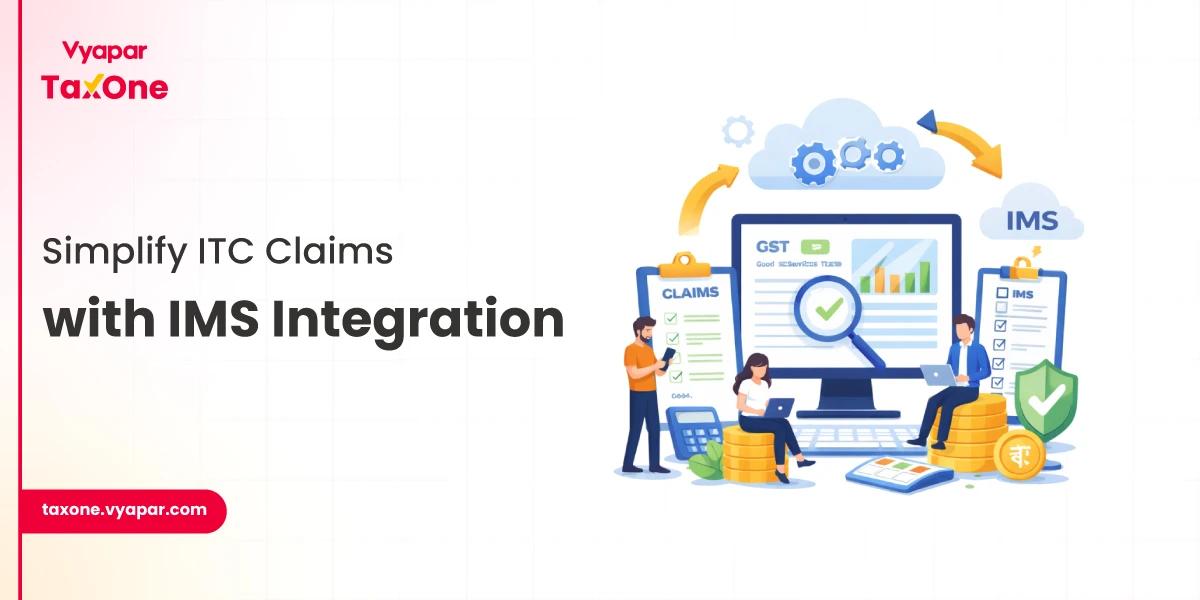
As GST compliance in India becomes more complex, tax professionals must adapt to evolving tools such as the Invoice Management System (IMS).
This system streamlines the Input Tax Credit (ITC) process, reducing errors and improving efficiency. ITC allows businesses to offset tax paid on inputs against tax collected on outputs, but managing vast amounts of invoice data can lead to mismatches and errors.
IMS simplifies this by helping professionals manage invoices accurately. In this article, we'll explore how IMS works, its benefits, and how Vyapar TaxOne (formerly Suvit) integrates IMS to enhance tax compliance.
The Invoice Management System (IMS) is an essential tool integrated into the GST portal that allows taxpayers to manage their inward invoices. This system gives businesses and tax professionals complete control over the invoices they receive from suppliers and the ITC they wish to claim.
The IMS system works by allowing the recipient taxpayer to:
Once action is taken, the invoices are updated in the GST portal for the recipient's GSTR-2B. This step is vital in ensuring that only verified invoices contribute to ITC claims.
The introduction of IMS addresses common challenges tax professionals face when reconciling ITC claims. By enhancing transparency and streamlining invoice validation, IMS ensures that only eligible invoices are considered for tax credit.
IMS offers an automated system for reviewing invoices, ensuring only validated invoices are accepted for ITC. This automation prevents errors caused by incorrect entries and minimizes the risk of tax authorities raising objections. Here's a breakdown of the IMS process:
| Action | Result |
|---|---|
| Accept | Invoice is considered for ITC claim and added to GSTR-2B. |
| Reject | Invoice is excluded from ITC; reconciliation initiated. |
| Pending | Invoice status is held until further clarification is made. |
| No Action | Invoice is deemed accepted by default, and added to GSTR-2B |
One of the main pain points for tax professionals is reconciling invoices between the supplier's GSTR-1 and the recipient's GSTR-2B. With IMS, this process becomes much simpler.
Tax professionals can review the status of each invoice, whether accepted, rejected, or pending, and reconcile data directly from the portal, which saves a significant amount of time.
Reconciliation Process with IMS:
This system streamlines reconciliation, enabling faster, more accurate data matching.
By taking timely action on invoices and proactively rejecting incorrect ones, IMS helps businesses ensure they claim only eligible ITC. This enhances overall compliance and reduces the risk of penalties due to errors in tax filings.
Key Compliance Benefits of IMS:
Vyapar TaxOne (formerly Suvit) is a comprehensive GST compliance and accounting software designed to simplify tax management for professionals. The integration of IMS into Vyapar TaxOne makes it easier for tax professionals to track, review, and manage invoices in real time.
Vyapar TaxOne provides a unified platform for managing invoice matching, reconciliation, and ITC claims, reducing manual effort and improving accuracy.
Vyapar TaxOne's IMS module enables seamless invoice matching and reconciliation between:
This integration significantly reduces the risk of manual reconciliation errors and provides real-time visibility into invoice status. Here's how the process works:
Vyapar TaxOne provides a live feed of actions taken within IMS. This feature ensures that any updates to invoice status (such as accept, reject, or pending) are instantly reflected across all related modules, including tax filings.
Vyapar TaxOne uses AI-powered data extraction and OCR technology to automate invoice capture and matching. This eliminates manual entry errors and ensures that only accurate and relevant data is processed.
To make the most out of IMS, tax professionals should follow these best practices:
1. Regularly Review Invoice Status Make it a habit to review invoices at least once a week to prevent a backlog and to keep your ITC claims up to date. This is particularly important as the due date for GST filings approaches.
2. Collaborate with Suppliers for Quick Resolutions Always maintain open lines of communication with suppliers to resolve any discrepancies regarding rejected invoices.
3. Ensure Accurate Data Entry When accepting or rejecting invoices in IMS, ensure that the data matches your internal records. Discrepancies could lead to denied claims.
4. Use Integrated Platforms like Vyapar TaxOne To simplify the workflow, integrate IMS with platforms such as Vyapar TaxOne to enable real-time data synchronization and automated reconciliation.
The Invoice Management System (IMS) simplifies ITC claims for tax professionals by automating invoice validation, rejection, and reconciliation, reducing errors and compliance risks.
Platforms like Vyapar TaxOne further enhance this with AI-driven automation and a unified dashboard for seamless tax management. By integrating IMS and Vyapar TaxOne, tax professionals can streamline workflows, improve accuracy, and ensure smoother GST filings.
IMS (Invoice Management System) is a tool on the GST portal that allows tax professionals to manage and review inward invoices, helping to ensure accurate ITC claims.
IMS streamlines the ITC process by allowing tax professionals to accept, reject, or hold invoices, reducing errors and ensuring that only valid invoices contribute to ITC claims.
Vyapar TaxOne (formerly Suvit) is a GST compliance platform that integrates IMS for seamless invoice management, reconciliation, and tax filing.
Vyapar TaxOne automates invoice reconciliation, leverages AI for data extraction, and provides real-time updates, enabling faster, more accurate GST compliance.
Yes, Vyapar TaxOne helps match invoices from the GST portal with your internal records, simplifying the reconciliation process and ensuring accurate ITC claims.

Get started today and simplify your accounting process!