 Is Now Vyapar TaxOne | Same Trust, New Name!
 AI Weapon for Financial Soldiers


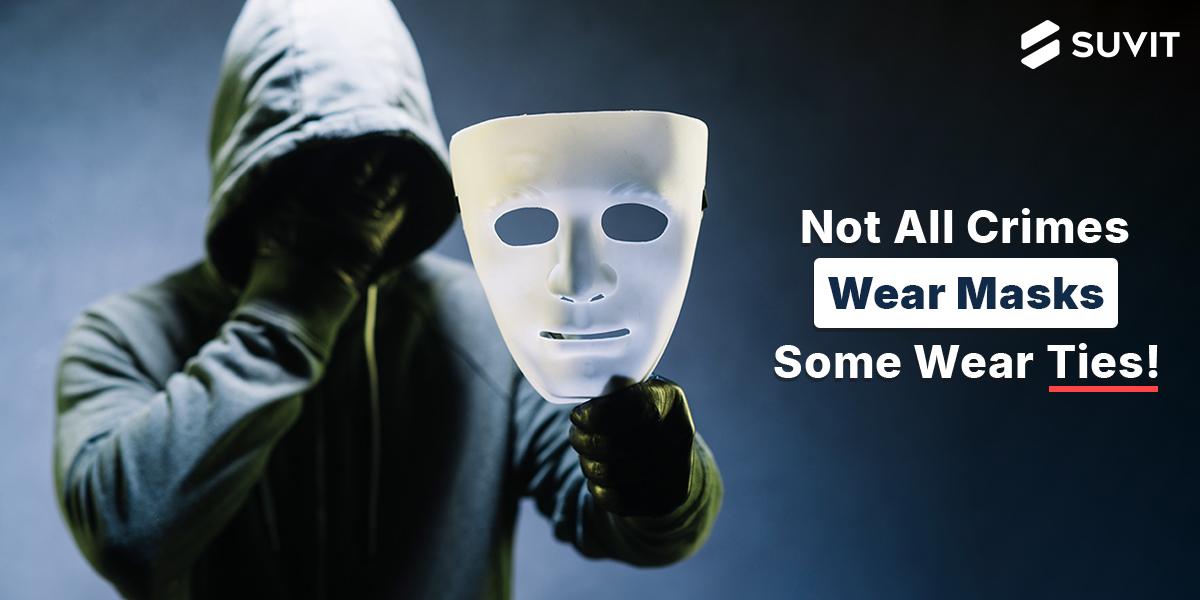
Let’s talk about something that doesn’t get much attention in our daily news feeds but affects us more than we realize—white-collar crime.
You’ve probably heard the term, but what does it really mean? More importantly, what impact does it have on me and you? Let’s break it down together.
Imagine, instead of breaking into a house or robbing a bank, someone in a business suit quietly manipulates the books, creates fake accounts, or commits fraud from the comfort of an air-conditioned office.
That’s essentially what white-collar crime is. It’s a non-violent crime, usually committed by professionals—think company executives or government officials—for financial gain.
What sets white-collar crimes apart is their complexity. These aren’t your typical “grab and go” crimes. Instead, they involve elaborate schemes like fraud, insider trading, and embezzlement.
And often, they’re hard to detect because they’re committed by people we wouldn’t expect to break the law.
Ever wonder why it's called white-collar crime? It’s because of the type of people who usually commit these crimes—business professionals who typically wear white-collared shirts to work.
Think CEOs, accountants, or bankers—people who work in offices rather than on the streets. The term was first coined by Edwin Sutherland in 1939 to describe crimes committed by people in positions of power and trust.
Alright, now that we know what it is, let’s look at the most common types of white-collar crimes.
Fraud is a broad term that covers various activities where someone tricks another person or company to gain something valuable, usually money.
Ever heard of Ponzi schemes or online scams? Yep, those are frauds too.
This is when someone trusted to manage money or property (think a company’s accountant or a financial officer) secretly takes it for personal gain.
It’s like having someone in charge of your savings and them sneaking some away for themselves.
You’ve probably come across this term in movies or finance news. It’s when someone with access to confidential company information buys or sells stocks based on that inside scoop.
For example, knowing a company is about to release bad financial results and selling your shares before everyone else finds out.
Money laundering is like washing “dirty” money to make it look clean.
People involved in illegal activities, like drug trafficking, run their illegal money through legitimate businesses to hide where it originally came from.
This happens when someone gives or receives something of value to influence someone else’s actions.
Picture a contractor paying a government official under the table to win a big contract, or someone giving a handsome sum to secure a job in an MNC!
ALSO READ: Why Every Chartered Accountant (CA) Needs a Well-Crafted Signature
Now, you might be thinking, “This doesn’t affect me directly, right?” Well, not quite. White-collar crimes can have a huge ripple effect on society, businesses, and even us as individuals.
Let’s look at a few ways:
When big corporations commit fraud or embezzlement, they often go bankrupt, taking down employees, investors, and customers with them.
The collapse of Satyam Computers is a prime example. Often referred to as "India's Enron," Satyam's accounting scandal shook the nation. The company’s founder, Ramalinga Raju, was found guilty of inflating company profits and falsifying accounts, leading to one of the largest corporate frauds in Indian history.
This scandal not only impacted thousands of employees and investors but also eroded trust in India's corporate governance.
Businesses often pass on the cost of fraud and other white-collar crimes to consumers, which means we end up paying more for goods and services.
Think about it: When a company gets caught in a bribery scandal, doesn’t it make you question its integrity? White-collar crimes damage trust, not just in businesses but also in government and public institutions.
When a major financial scandal happens, it can shake up entire economies. The 2008 global financial crisis was largely due to reckless white-collar crimes in the banking and financial sectors. We’re still feeling the aftershocks of that one.
So, why do people commit white-collar crimes? It usually boils down to greed and opportunity.
Many of these criminals are already in positions of power or trust, so they know how to manipulate the system.
Plus, they’re often convinced they won’t get caught because they think they’re smarter than everyone else.
You’re probably wondering: Can anything be done to stop these crimes?
Absolutely, but it’s not easy. Here are a few ways white-collar crimes can be tackled:
Governments and financial authorities play a huge role here. By enforcing stricter regulations, they can prevent professionals from misusing their power for personal gain. That’s why we have bodies like SEBI in India keeping an eye on things.
Companies can protect themselves by conducting regular audits. This helps catch discrepancies early and ensures no one is skimming off the top.
Many white-collar crimes go unnoticed because employees are afraid to speak up. Companies that encourage whistleblowing and protect whistleblowers can uncover wrongdoings before they spiral out of control.
The more employees and the general public know about white-collar crimes, the easier it is to spot and stop them. Awareness campaigns can go a long way in deterring potential criminals.
ALSO READ: Lock It Down: Essential Data Security Practices for Your Accounting Systems
So, next time you hear the term white-collar crime, remember it’s not just a crime of the rich or powerful—it affects us all.
Corporate crime’s impact can be seen in higher prices, economic instability, and damaged trust. While these crimes don’t involve physical violence, their effects are deeply felt, often leading to financial losses and long-term economic consequences.
Stay Informed and Alert: Understanding these hidden costs is crucial. The more you know, the better equipped you are to spot red flags and take action. And who knows? By staying vigilant, you might just help prevent the next big corporate scandal!



Get started today and simplify your accounting process!