 Is Now Vyapar TaxOne | Same Trust, New Name!
 AI Weapon for Financial Soldiers


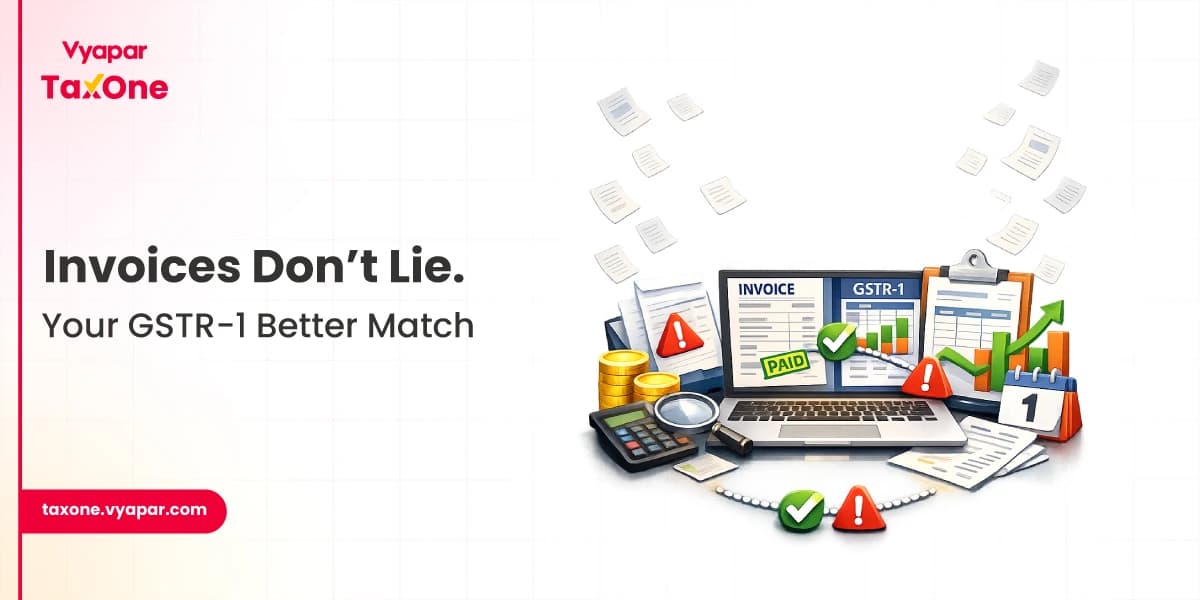
For many CA firms, GST filing is not the most stressful part anymore.
The real pressure starts before filing.
Invoices coming late from clients. Mismatches between GSTR-1 and GSTR-3B. Missing ITC entries. Multiple GSTINs. Last-minute amendments. Endless Excel sheets before due dates.
As client volume grows, reconciliation slowly becomes one of the biggest operational bottlenecks inside a CA firm.
And most firms realise this only when:
This is why advanced GSTR-1 reconciliation is no longer just a compliance activity.
It has become an operational workflow problem that directly impacts:
In this guide, we’ll understand where reconciliation usually breaks, how modern CA firms are solving it, and how automation is helping firms reduce workload significantly.
Manual reconciliation works when invoice volume is low.
But once firms start handling:
the process starts becoming difficult to control manually.
Most reconciliation issues happen because teams depend on disconnected workflows like:
This creates unnecessary pressure every filing cycle.
And even a small mismatch can later create:
One of the most common issues is mismatch between outward supplies reported in GSTR-1 and liability filed in GSTR-3B.
This usually happens because of:
These mismatches later increase notice risks and additional compliance workload.
Many firms still manually compare purchase registers with GSTR-2B data.
The challenge becomes bigger when:
This not only slows down reconciliation but also increases chances of ITC leakage.
Excel is still the default reconciliation system for many firms.
But once invoice count increases, teams start facing:
Eventually, reconciliation becomes difficult to scale operationally.
A major part of reconciliation workload is client coordination.
Teams often receive:
This creates unnecessary filing pressure every month.
Modern CA firms are now shifting toward automation-first reconciliation workflows.
Instead of manually checking every invoice, firms now use systems that automatically:
This reduces repetitive manual work and improves filing accuracy.
Instead of matching returns separately, firms now reconcile:
within one workflow.
This helps identify mismatches much faster and reduces manual comparison effort.
Modern reconciliation systems can identify invoice matches even when:
For example:
INV-1001 vs INV1001
Manual Excel workflows often miss these small differences.
Advanced reconciliation workflows now validate:
This helps reduce future correction workload significantly.
Managing amendments manually across multiple periods becomes difficult very quickly.
Modern reconciliation systems now help firms:
Instead of managing multiple reconciliation files separately, firms are moving toward centralized workflows where teams can:
This improves visibility across the entire GST filing process.
| Area | Manual Workflow | Automated Workflow |
|---|---|---|
| Invoice Matching | Excel Formulas | Auto Matching |
| GSTIN Validation | Manual Checking | Instant Validation |
| ITC Reconciliation | Multiple Comparisons | Auto GSTR-2B Matching |
| Amendment Tracking | Separate Sheets | Centralized Workflow |
| Multi-GSTIN Handling | Time Consuming | Bulk Reconciliation |
| Notice Preparation | Manual Reports | Ready Reports |
We closely work with CA firms handling large GST reconciliation workloads every month.
One thing we consistently noticed was this:
Most firms were not struggling with filing.
They were struggling with preparing data before filing.
This included:
Vyapar TaxOne is built to simplify these reconciliation workflows.
With Vyapar TaxOne, firms can:
This helps firms reduce reconciliation workload significantly while improving filing accuracy across clients.
If your team is still spending hours checking invoices manually, maintaining multiple reconciliation sheets, and handling repeated follow-ups before every GST due date, the process eventually becomes difficult to scale.
Modern CA firms are now moving toward:
Vyapar TaxOne helps firms simplify reconciliation across GSTR-1, GSTR-3B, and GSTR-2B while reducing filing pressure on teams.
Because reconciliation should support growth, not slow it down.
Refined from your original uploaded draft and restructuring request.
Start reducing reconciliation workload and filing pressure with Vyapar TaxOne. Sign up now.
Honestly, most firms don’t face problems because they don’t understand GST. The actual problem starts when client volume increases. At that stage, teams are handling multiple GSTINs, amendments, revised invoices, vendor mismatches, and last-minute client changes together. Most firms still try to manage all of this through Excel sheets and manual matching, which slowly becomes difficult to control during filing periods. We’ve seen many firms spend more time preparing reconciliation data than actually filing returns.
In most cases, these mismatches happen because of small operational gaps.
A missed invoice, duplicate upload, amendment entry, delayed accounting update, or incorrect tax value is enough to create differences between returns.The bigger challenge is that these mismatches are often identified very late, usually close to filing deadlines or during notice handling. That’s why many firms are now moving toward reconciliation workflows where mismatches get identified much earlier.
Excel works well initially.
But once firms start handling large invoice volumes across multiple clients, reconciliation through formulas and separate sheets becomes difficult to manage consistently.
Most teams eventually face issues like:
We built Vyapar TaxOne after seeing how much manual effort firms were spending on reconciliation every month.
Instead of maintaining multiple sheets and doing repeated comparisons manually, firms can reconcile GSTR-1, GSTR-3B, GSTR-2B, and books together from a centralized workflow.
The idea is simple: reduce repetitive manual work so teams can focus more on review, compliance, and client handling instead of endless matching.
Yes.
This is actually one of the biggest operational problems we wanted to solve. Many firms manage reconciliation separately for every GSTIN, which creates scattered workflows and duplicate effort. Vyapar TaxOne helps teams centrally manage reconciliation, mismatches, validations, and reporting across multiple clients together. This becomes specially useful during peak filing periods.
That’s one of the major reasons firms use reconciliation software today. Most notices happen because mismatches stay unnoticed before filing. Vyapar TaxOne helps teams identify mismatch issues earlier through automated validations, invoice matching, GSTIN checks, and reconciliation workflows so correction workload can be reduced before returns are filed.

Get started today and simplify your accounting process!