Is Now Vyapar TaxOne | Same Trust, New Name!
 AI Weapon for Financial Soldiers


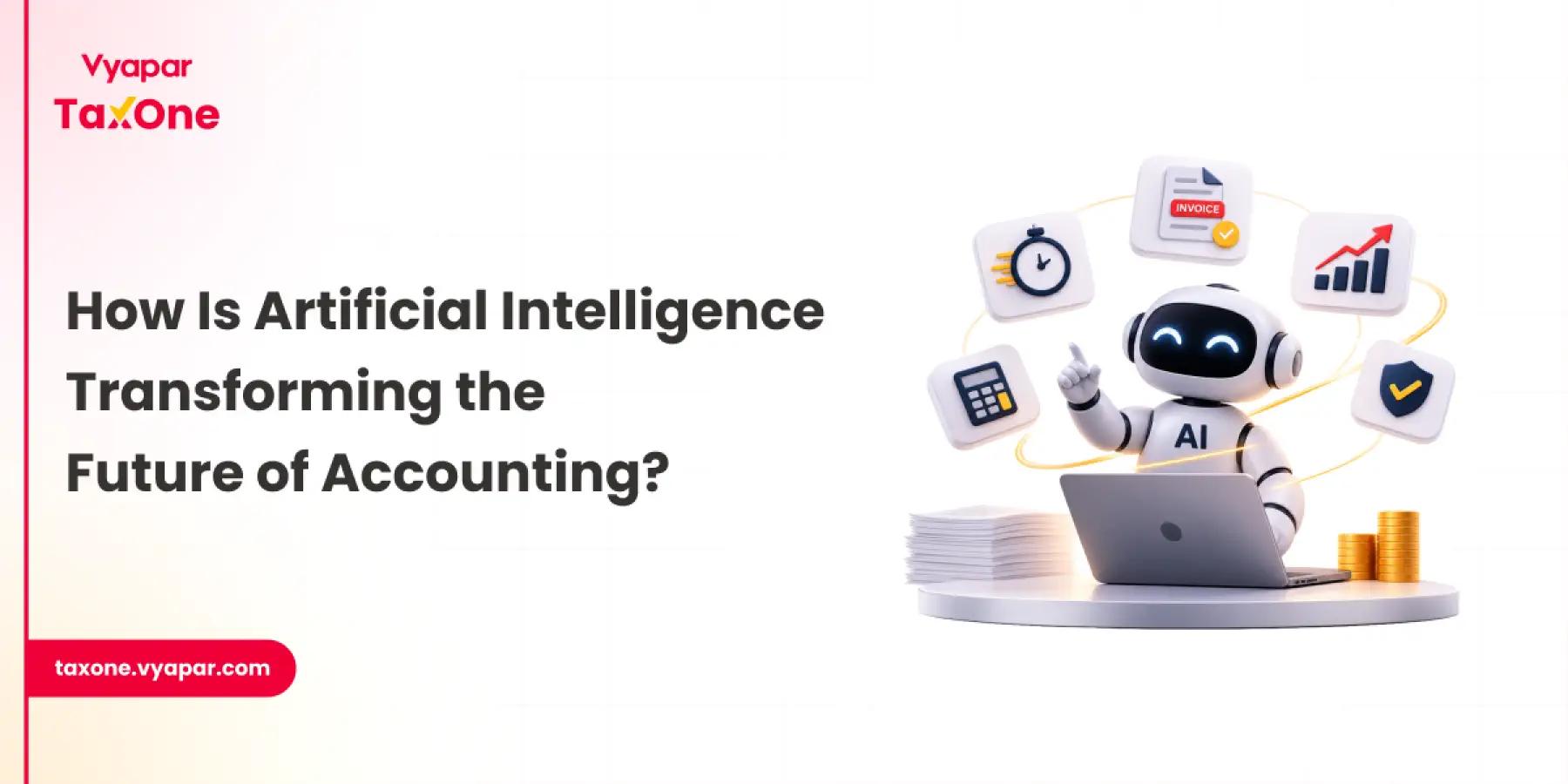
Artificial intelligence is transforming accounting by taking over repetitive reading, matching and drafting work, while accountants keep responsibility for judgement, review and advice. AI in accounting already helps teams extract invoice data, reconcile transactions, flag unusual entries and forecast cash. It does not remove the need for a qualified professional to check and sign off the result.
According to an ICAI survey of approximately 1,100 members, 82.8% of respondents believed AI would play a transformative and essential role in the Chartered Accountancy profession. The survey also identified applications such as data entry, forecasting, and document analysis.
Artificial intelligence in accounting refers to technologies that enable computers to analyse financial information, recognise patterns, and perform tasks that traditionally require human input. AI accounting automation software uses these capabilities to support processes such as document handling, transaction analysis, and financial reporting.
Four key technologies and concepts:
AI is transforming accounting workflows across bookkeeping, invoice processing, financial reporting, auditing, and tax management.
Automate invoice processing with OCR and machine learning to extract invoice numbers, vendor details, GSTINs, and tax amounts from financial documents. The software reduces manual data entry and flags incorrect or missing information for review. Data entry automation software helps streamline this process.
AI matches bank transactions with accounting records using amounts, dates, and payment descriptions. It identifies unmatched transactions and possible discrepancies for accountants to investigate.
AI extracts receipt details, categorises expenses, and flags duplicate or unusual claims. This helps businesses manage employee expenses and approval workflows.
AI analyses financial data, summarises business performance, and drafts explanations for changes in revenue, expenses, and profit margins. Accountants verify the figures before publishing reports.
AI scans financial transactions to identify unusual patterns, duplicate payments and suspicious entries. These alerts help auditors investigate potential errors and fraud risks.
AI analyses historical transactions, customer payments, and expenses to forecast cash flow. Businesses use these insights for budgeting and financial planning.
Compare purchase records with GST portal data, including GSTR-2B, to identify missing invoices and differences in tax amounts. Accountants can review these mismatches and decide the necessary action under GST rules. GST reconciliation software helps simplify this process.
AI automates supplier invoice processing, detects duplicate bills, monitors pending payments, and sends payment reminders to customers. This helps businesses manage payments efficiently and improve collections.
AI analyses sales, expenses, and profit margins to identify financial trends. Accountants can use these insights to investigate business performance and support better decisions.
The benefits of AI in accounting come mainly from removing friction, not from replacing people.
| Accounting Area | Traditional Accounting | AI-Powered Accounting |
|---|---|---|
| Data Entry | Manual data entry | Automatically extracts invoice details |
| Reconciliation | Manual transaction matching | Identifies potential transaction matches |
| Financial Reporting | Manually prepares reports | Analyses data and drafts summaries |
| Fraud Detection | Manual checks and sampling | Flags unusual transaction patterns |
| Human Role | Handles routine accounting tasks | Focuses on reviewing results and decision-making |
Small and medium-sized enterprises (SMEs) can use AI accounting automation software to simplify bookkeeping, invoice processing, expense tracking and financial reporting. These tools help reduce manual work and make financial information easier to manage.
According to an August 2026 Moneycontrol report, an analysis of more than 2,400 business product demonstrations found that 69.6% identified invoice and accounts payable processing as their biggest accounting challenge. AI-based accounting tools like Vyapar TaxOne can help address these challenges by automating document processing, transaction matching, and routine financial tasks.
Artificial intelligence is transforming the accounting industry by automating routine tasks, improving financial analysis, and supporting better business decisions. AI in accounting allows professionals to spend more time on strategic planning, financial insights, and advisory services.
As AI accounting automation software continues to evolve, human judgement, data accuracy, and regulatory knowledge will remain essential. Businesses can start by automating one accounting process, measuring the results, and expanding AI adoption gradually.
AI is used for invoice processing, bookkeeping, bank reconciliation, expense management, financial reporting, fraud detection, cash flow forecasting, and GST reconciliation. These applications help accountants manage routine tasks more efficiently.
Yes. AI can automate tasks such as invoice data extraction, expense categorisation, and bank transaction matching. Accountants still need to review unusual entries and verify financial records.
AI analyses financial data, identifies trends, and generates report summaries. It helps accountants prepare reports faster and focus on interpreting business performance.
Yes. AI-assisted accounting tools can identify differences in invoice numbers, GSTINs, and tax amounts by comparing financial records with GST data. Accountants must review the results and determine the required corrections.
CA professionals can use AI-powered accounting tools for invoice processing, bookkeeping, expense management, GST reconciliation, and financial reporting. These tools help reduce routine manual work, allowing CAs to focus more on financial analysis, compliance, client advisory, and decision-making.

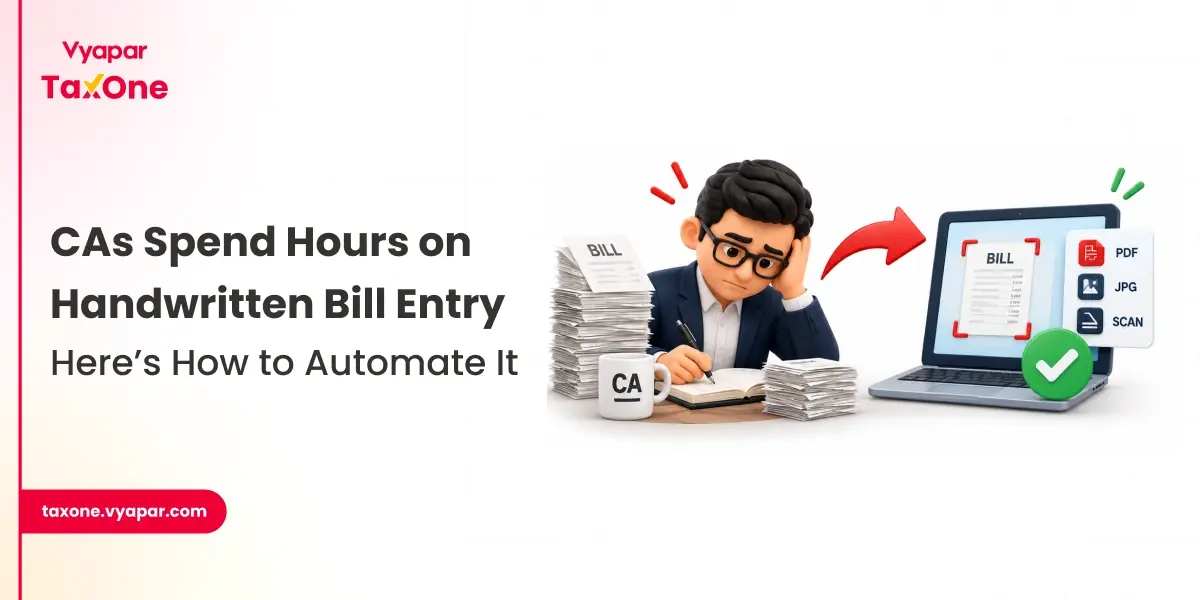
Get started today and simplify your accounting process!