Is Now Vyapar TaxOne | Same Trust, New Name!
 AI Weapon for Financial Soldiers


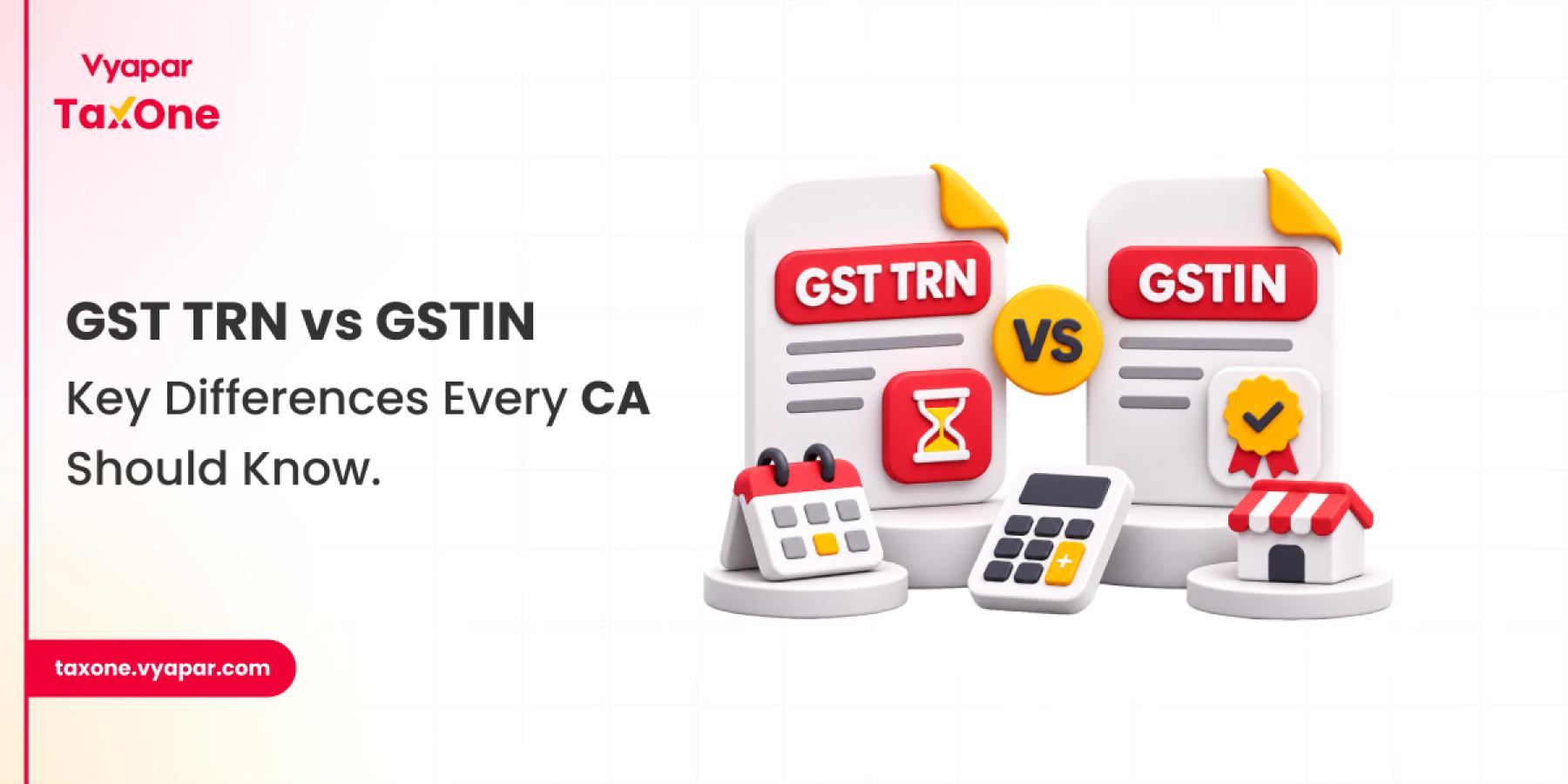
GST TRN and GSTIN are two different numbers used during GST registration in India. A Temporary Reference Number (TRN) is a 15-digit number generated after Part A of the registration application, allowing applicants to complete Part B within 15 days. A Goods and Services Tax Identification Number (GSTIN) is a 15-character identification number assigned after GST registration is granted.
The key difference is simple: TRN is used to complete a GST registration application, while GSTIN identifies a registered taxpayer and is used for GST compliance.
| Point | GST TRN | GSTIN |
|---|---|---|
| Full form | Temporary Reference Number | Goods and Services Tax Identification Number |
| Purpose | Save and resume a GST registration application | Identify a registered taxpayer under GST |
| Issued at which stage | After successful Part A OTP verification | After GST registration is granted |
| Format | 15-digit number | 15-character alphanumeric number |
| Validity | 15 days to complete the registration application | No fixed expiry for regular registration; may be suspended or cancelled |
| Registration status | Does not confirm GST registration | Identifies a registered taxpayer |
| Application tracking | Used to access the saved registration application | Used to identify and verify the registered taxpayer |
| Business identification | Not a permanent taxpayer identification number | Identifies the taxpayer state-wise and PAN-wise |
| Invoicing | Cannot substitute for a GSTIN on tax invoices | Used on applicable GST tax invoices |
| GST return filing | Cannot be used to file GST returns | Used for GST compliance and return filing |
| Compliance use | Limited to accessing the saved application | Used for returns, ITC, e-way bills and other GST compliance activities |
GST registration involves three important reference numbers: TRN, ARN, and GSTIN. Each is used at a different stage.
| Reference Number | When It Is Generated | Purpose |
|---|---|---|
| TRN | After Part A verification | Complete the registration application |
| ARN | After successful submission and required verification | Track application status |
| GSTIN | After registration is granted | Identify the registered taxpayer |
A TRN (Temporary Reference Number) is a reference number the GST portal generates at the end of Part A of a new registration application, after the OTPs sent to the authorised signatory's mobile and email are verified. It is also sent by email and SMS.
What it does:
A GST TRN remains valid for 15 days from generation. If the applicant does not complete and submit the registration application within this period, the GST portal removes the saved draft and the applicant must restart from Part A.
Where Aadhaar authentication is applicable, the applicant must also complete the required verification within the prescribed period. The GST portal indicates that Aadhaar authentication links are valid for 15 days. Applicants should monitor the displayed deadlines to avoid delays in ARN generation.
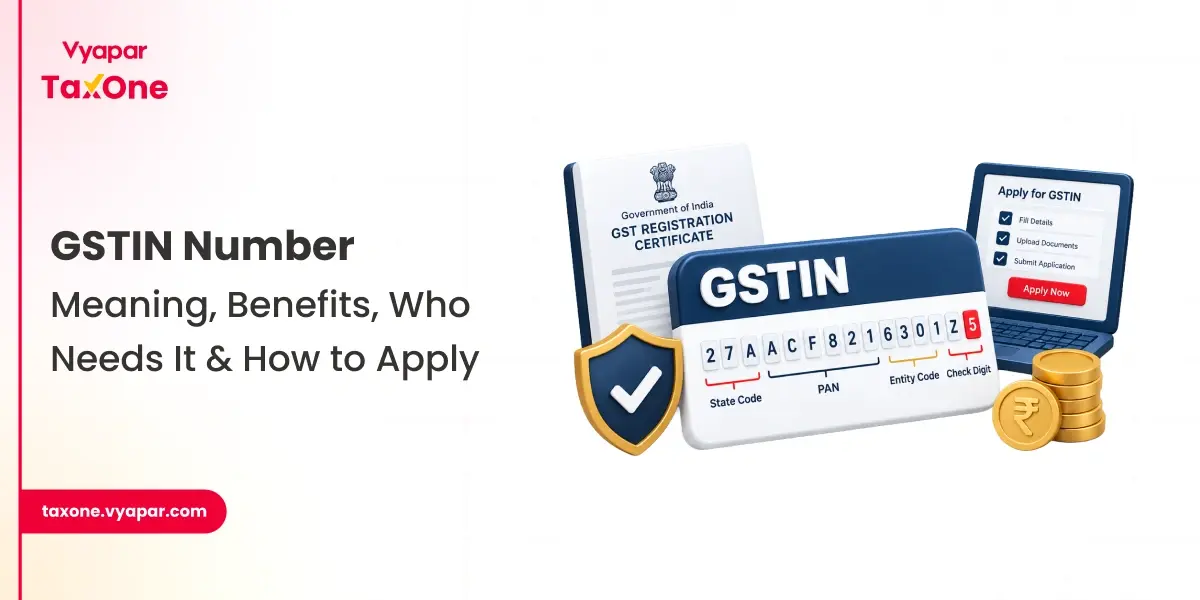
A GSTIN (Goods and Services Tax Identification Number) is the 15-character number allotted when the officer approves the application and issues the certificate in Form REG-06. It is state-wise and PAN-based, so each state registration carries its own GSTIN.
| Position | Meaning |
|---|---|
| First 2 characters | State code, such as 29 for Karnataka |
| Next 10 characters | PAN of the registered taxpayer |
| 13th character | Registration/entity number under the PAN in that state |
| 14th character | Usually Z |
| 15th character | Checksum character |
Note: GSTINs are state-specific. A business registered in multiple states may have multiple GSTINs linked to the same PAN. The GSTIN can be verified through the official GST portal.
Before generating a TRN, applicants should collect the necessary documents and details to avoid delays during GST registration.
The commonly required documents include:
| Mistake | Fix |
|---|---|
| Calling the TRN the "GST number" | Use the term GSTIN only after REG-06 is issued |
| Giving customers the TRN | Share the GSTIN and certificate after approval |
| Treating a TRN or ARN as approval | Wait for the status to show Approved |
| Saving only the TRN | Save the ARN email or SMS on the day it arrives |
| Letting the draft expire | Diarise day 10 - an expired draft restarts from Part A |
CA firms can follow these steps to monitor pending GST applications and manage important deadlines:
Understanding the difference between GST TRN and GSTIN helps businesses avoid registration mistakes, missed deadlines, and GST compliance issues. While a TRN helps applicants complete registration, a GSTIN identifies a taxpayer after registration is granted.
For CAs managing multiple clients, accurate registration records and timely follow-ups are essential. Vyapar TaxOne helps accounting professionals automate data entry and GST reconciliation, reducing repetitive work and improving accounting workflow efficiency.
No. A TRN lets an applicant resume a draft for 15 days. A GSTIN is the registration number allotted after the officer approves the application.
A TRN does not confirm GST registration and cannot be used as a GSTIN. Businesses that are not required to register may operate without GST registration, but businesses required to register must comply with applicable GST registration and invoicing rules.
GSTIN issuance depends on the registration and verification process. Standard applications generally have a seven-working-day processing period, while cases requiring additional verification may take up to 30 days. Eligible applications under Rules 9A and 14A may receive electronic registration within three working days. Clarification requests can affect the timeline.
Yes. A CA can help access an unsubmitted GST registration application using the TRN and required OTP verification. Once the application is submitted and an ARN is generated, its status can be tracked through the GST portal.
No. GST returns cannot be filed using a TRN. Returns can be filed only after GST registration is approved and the taxpayer receives a GSTIN.


Get started today and simplify your accounting process!