 Is Now Vyapar TaxOne | Same Trust, New Name!
 AI Weapon for Financial Soldiers


The Goods and Services Tax (GST) regime in India has seen a significant push towards increasing transparency and compliance.
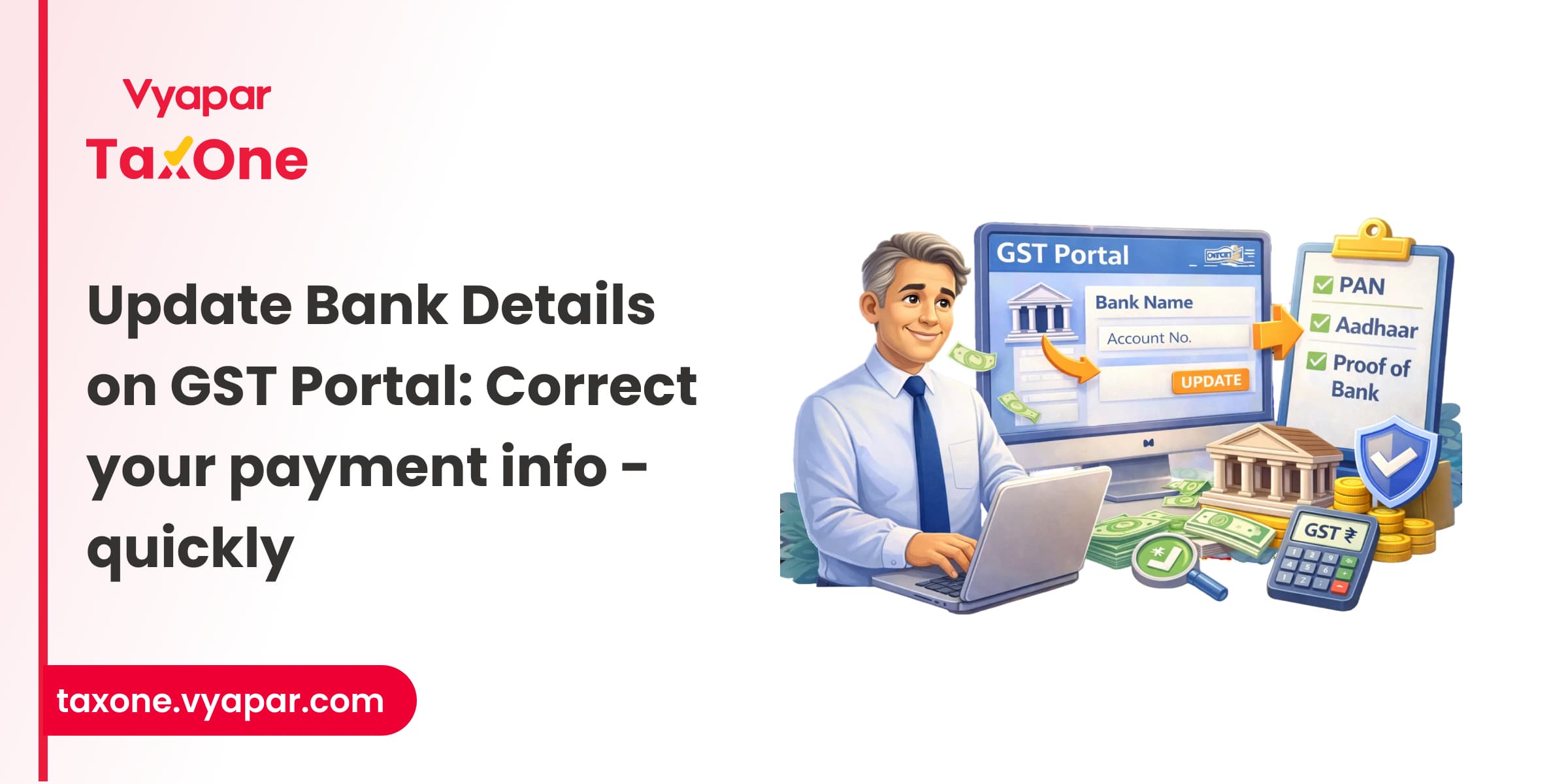
One of the most important recent changes is the introduction of Rule 10A under the CGST Rules, which mandates that taxpayers must provide their bank account details on the GST portal.
This blog explores the latest advisory on the matter, outlining how to update bank account details under GST, why this is important for businesses, and the consequences of non-compliance.
It also provides a step-by-step guide to help you navigate this process and avoid disruptions in your business.
Rule 10A of the CGST Rules, 2017 stipulates that every GST-registered person must provide their bank account details within 30 days of receiving GST registration or before filing their first outward supply return.
If these details are not submitted within this time frame, the GST registration may be suspended, which can severely disrupt business operations.
This rule is part of the government's efforts to link bank account details with GST registrations to minimize fraud, track transactions, and ensure seamless processing of refunds.
By linking business accounts to GST registration numbers, tax authorities can ensure that the GST refunds and input tax credits are routed to the right accounts.
While this rule applies to most businesses, certain categories of taxpayers are exempt from this requirement:
If you fall under any of these categories, you are not required to update your bank account details under Rule 10A. However, it’s always a good idea to verify your GST registration status to ensure you’re not unintentionally out of compliance.
Failure to update your bank account details within the prescribed 30-day period can lead to suspension of your GST registration.
This means you will be unable to file GST returns, issue invoices, or claim input tax credits (ITC), effectively hindering your business operations. Suspension can also result in financial penalties, as you will not be able to receive GST refunds.
If the suspension is not addressed within a stipulated period, GST authorities may initiate cancellation proceedings under Section 29 of the CGST Act. Once your GST registration is cancelled, it becomes very difficult to reinstate it, which can disrupt your entire supply chain and make you ineligible for ITC or refunds.
Not having valid bank account details linked to your GST registration can affect:
For businesses relying on timely refunds or credit for operations, this can be detrimental.
Now that we understand why this mandate is crucial, let’s walk through how to update your bank account details on the GST portal. Follow these steps to ensure a smooth and timely submission.
Before you begin the process, make sure you have the following:
Enter the following:
If updating existing details, ensure the new information is accurate and matches the supporting documents.
As a GST-registered business, it is critical that you:
Furnishing your bank account details under Rule 10A of the CGST Rules is not just a compliance requirement; it's essential for keeping your GST registration active, processing GST refunds, and maintaining business continuity.
By following the step-by-step guide provided in this blog, you can ensure that your business stays in good standing with the GST authorities, thereby avoiding penalties, suspension, or cancellation of your GST registration. Act now to prevent unnecessary disruptions in your business and safeguard your compliance.
If you fail to submit your bank details within the 30-day window, your GST registration may be suspended. This can have serious consequences on your ability to continue business operations.
Yes, you can update your bank details after the deadline, but the risk of suspension increases if the authorities flag your GST registration for non-compliance. It’s essential to act swiftly to avoid unnecessary disruptions.
Currently, there is no direct monetary penalty for failing to update bank account details, but the risk of registration suspension and cancellation outweighs the potential fines.
You can add up to 10 bank accounts under a single GSTIN. This is particularly useful if you manage multiple accounts for different purposes, such as operational and refund accounts.
Yes, the bank account must be in the name of the registered entity (the same as the GST registration name). This ensures that the GST refunds and credits are routed correctly.


Get started today and simplify your accounting process!