 Is Now Vyapar TaxOne | Same Trust, New Name!
 AI Weapon for Financial Soldiers
CA



Robotic process automation (RPA) has become a key player in the world of accounting and business operations.
Businesses can concentrate on more strategic initiatives by automating time-consuming and repetitive tasks. But to ensure RPA is implemented successfully, a pre-deployment checklist is crucial.
In this blog, we’ll explore why having a detailed checklist can make or break the success of RPA deployment.
As an accounting automation brand, we often write on such topics to help businesses stay compliant and make smarter decisions.
A pre-deployment checklist is a step-by-step guide to ensure all elements are in place before launching robotic automation in any business process. It’s like a safety net that helps organizations avoid mistakes, misconfigurations, and inefficiencies that may arise during or after deployment.
Just like any complex system, deploying robotic automation without proper planning can lead to technical glitches, delayed returns on investment, and operational disruption.
RPA systems, once deployed, can handle a vast amount of data and tasks. But improper setup can lead to errors. A pre-deployment checklist ensures all configurations are correct before the bots go live. This prevents the system from making mistakes that could lead to financial loss or operational downtime.
Not every task in your business should be automated. A checklist helps determine which processes should be prioritized for automation. This ensures that the RPA aligns with overall business goals. Skipping this step may result in automating processes that don't significantly impact business efficiency.
Before deploying RPA, technical compatibility is a must. The checklist includes ensuring that your systems can support the automation tools. This could include reviewing your IT infrastructure, software requirements, and integrations with existing systems. If the system is not technically ready, it could lead to a failed deployment.
Employee training is often overlooked during RPA deployment. The checklist should cover whether the staff is prepared to work with RPA tools. Training ensures employees are not only aware of the changes but also understand how to use the new tools efficiently.
Also Read: https://taxone.vyapar.com/post/rpa-in-accounting
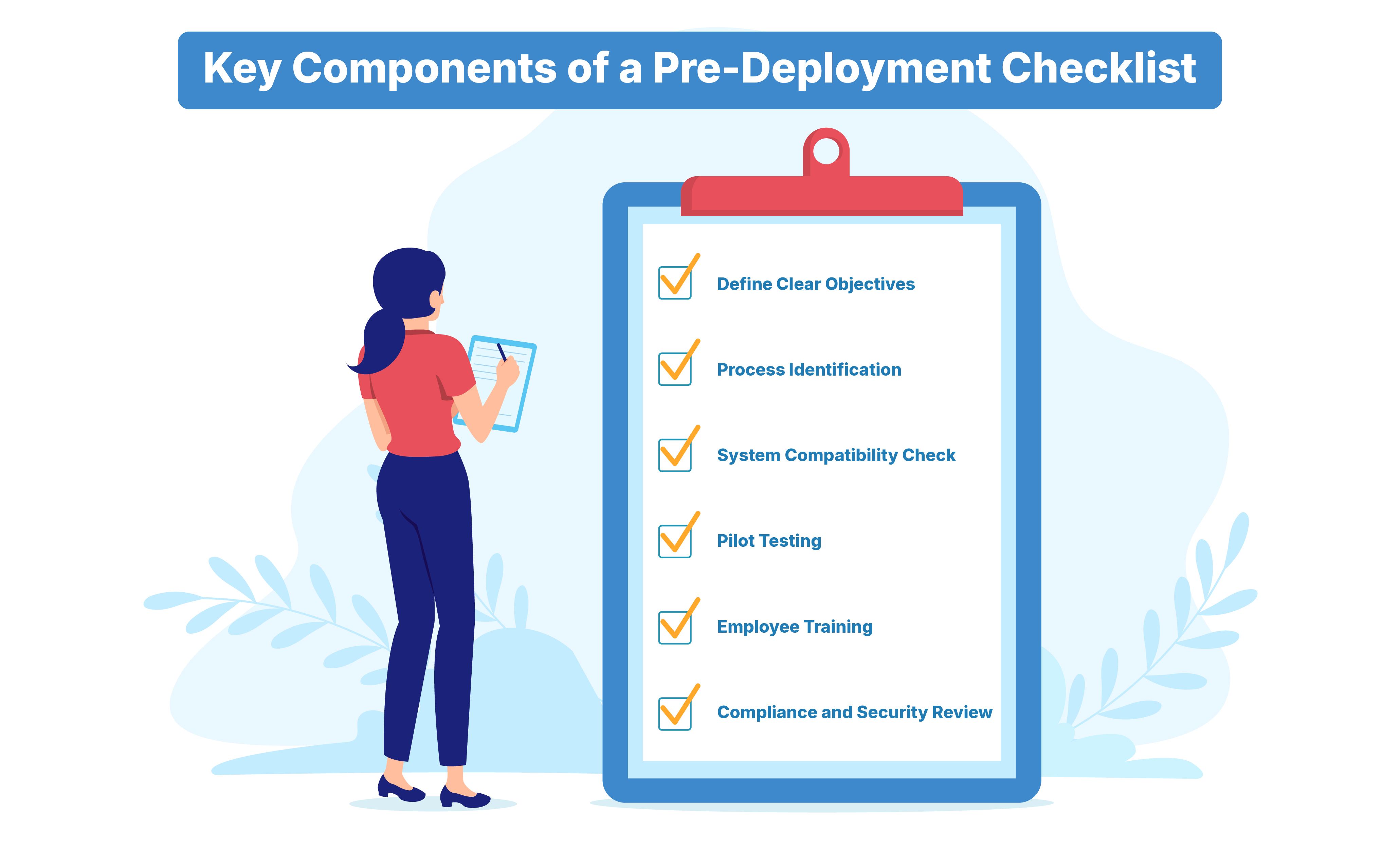
Before implementing RPA, it is important to define the goals clearly. What specific problem is the automation intended to solve? Are there certain metrics you plan to improve? Defining objectives helps align the entire deployment process with your business needs.
Not every process in a business needs automation. In this step, you identify which tasks are repetitive, time-consuming, and prone to error. Once identified, the most beneficial processes should be prioritized for automation.
Ensure that your existing systems and software can seamlessly integrate with the RPA. This means checking if your IT infrastructure can handle the automation and if there are any third-party systems that require modification or updates.
Running a pilot test is crucial to determine how the RPA solution works in a real-world scenario. The pilot phase provides valuable insights into system performance, technical challenges, and process efficiency before rolling it out across the board.
As RPA is deployed, employees who will interact with it should receive proper training. This training should cover not just how to use the automation tools but also the broader goals behind the automation.
Robotic automation often interacts with sensitive data. A checklist ensures that the deployment complies with regulatory standards such as data protection laws. It also ensures the system is secure and protects against unauthorized access.
Startups and small businesses may have limited resources to fix problems after deployment. Having a solid checklist minimizes the chances of costly rework or delays, allowing businesses to see returns faster.
When RPA works seamlessly from day one, startups can quickly redirect their focus toward core activities, such as customer acquisition and product development, without worrying about operational inefficiencies.
A pre-deployment checklist lays the groundwork for scaling automation solutions as the business grows. Starting on the right foot ensures that future deployments are smooth and error-free.
Ignoring a pre-deployment checklist can have several negative consequences:
At Vyapar TaxOne, we not only focus on accounting automation but also understand the importance of getting it right the first time.
A pre-deployment checklist is a foundational step we advise to you, for ensuring you have a smooth, error-free experience when transitioning to automation tools.
Businesses that follow a checklist enjoy faster, more reliable results from their automation efforts.
Also Read: Top 10 Accounting Automation Tools in India
A pre-deployment checklist for robotic automation isn’t just a nice to have—it’s essential for ensuring a smooth, successful deployment.
By considering everything from system compatibility to employee readiness, a checklist helps businesses avoid costly mistakes, stay aligned with business goals, and ensure that RPA delivers on its promises from day one.
We frequently write about topics like these because we believe in empowering businesses with knowledge that helps them make smarter financial and operational decisions.


Tax Professional & Business Finance Expert

Tax Professional & Business Finance Expert

Tax Professional & Business Finance Expert