 Is Now Vyapar TaxOne | Same Trust, New Name!
 AI Weapon for Financial Soldiers


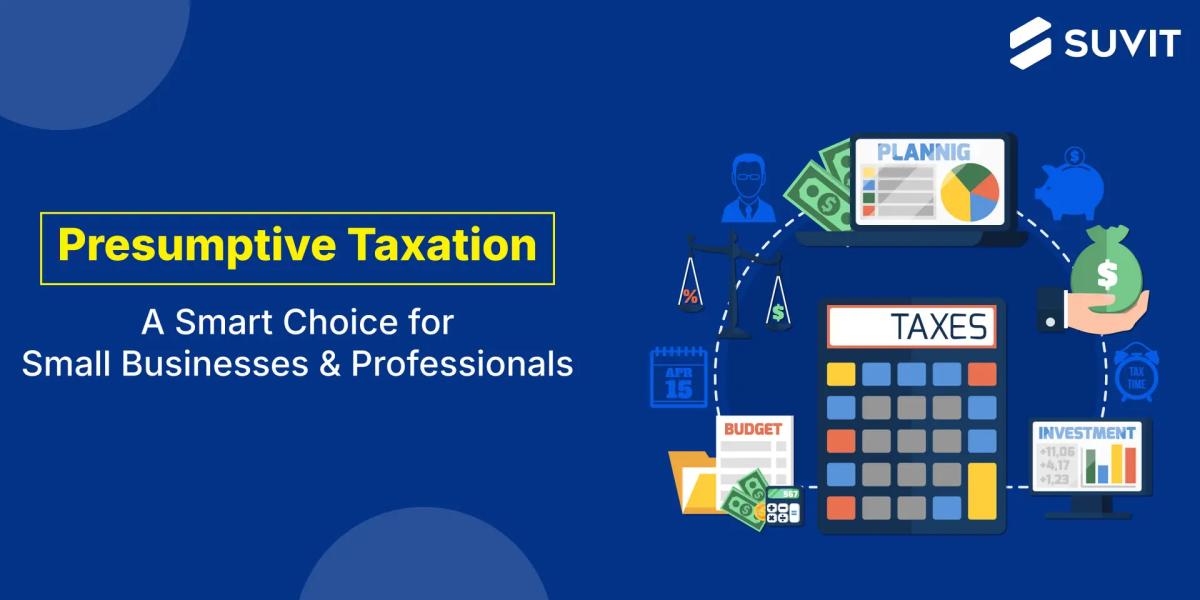
The Presumptive Taxation Scheme (PTS) is a significant part of the Indian tax system, designed to simplify tax compliance for small taxpayers.
Under this scheme, eligible taxpayers can compute their income at a prescribed rate and pay taxes accordingly, without maintaining detailed books of accounts.
This blog will provide a comprehensive overview of the presumptive taxation scheme, including its meaning, eligibility criteria, and implications for taxpayers.
Presumptive taxation refers to a method of taxation where the taxpayer’s income is presumed to be a certain percentage of their turnover or gross receipts. This scheme is intended to make tax compliance easier for small businesses, professionals, and freelancers who might otherwise find it difficult to maintain detailed records of income and expenses.
Understanding eligibility is necessary for anyone looking to take advantage of the presumptive taxation scheme. The eligibility criteria differ based on the type of taxpayer and the nature of the business or profession.
Under Section 44AD, individuals, Hindu Undivided Families (HUFs), and partnership firms (except Limited Liability Partnerships) engaged in eligible businesses can opt for this scheme.
Eligibility Criteria for Section 44AD:
Section 44ADA is designed for professionals such as doctors, lawyers, architects, engineers, accountants, and others specified under this section.
Eligibility Criteria for Section 44ADA:
The professional should be a resident of India. Gross receipts should not exceed ₹50 lakhs in the financial year. The profession should be one of those specified in Section 44AA (1) of the Income Tax Act.
Section 44AE is applicable for businesses involved in plying, hiring, or leasing goods carriages.
Eligibility Criteria for Section 44AE:
Also Read: Four Silent Killers in Your Accounting: What to Watch Out For
The computation of income under the presumptive taxation scheme is straightforward, as it is based on a fixed percentage of turnover or gross receipts.
For eligible businesses, income is presumed to be 8% of the gross turnover or receipts. However, if the receipts are received through digital transactions, the presumptive income is reduced to 6% of such receipts.
Professionals opting for Section 44ADA can declare 50% of their gross receipts as income. This means half of the total receipts are considered net income, and no further expenses are allowed as deductions.
For goods vehicles, income is computed as ₹1,000 per ton of gross vehicle weight or unladen weight per month or part thereof during which the vehicle is owned by the taxpayer.
The presumptive taxation scheme offers several benefits to small taxpayers, making it a popular choice for many.
Taxpayers opting for the presumptive scheme are not required to maintain detailed books of accounts, thus reducing their compliance burden.
Since there is no requirement for a detailed audit or maintaining books, the cost of tax compliance reduces significantly.
The fixed rate of taxation provides clarity and certainty about tax liability, making financial planning easier for small businesses and professionals.
While the presumptive taxation scheme offers simplicity, taxpayers should consider the following implications before opting for it:
Under the presumptive taxation scheme, taxpayers are not allowed to carry forward losses that are more than the presumptive income. This could affect those with significant expenses or fluctuating incomes.
If a taxpayer opts for the presumptive scheme, they must continue using it for at least five consecutive years. If the taxpayer decides to exit the scheme before this period, they will be ineligible to rejoin for the next five years.
Since the presumptive income is considered net of all expenses, taxpayers cannot claim further deductions for expenses such as rent, salary, or other operational costs.
The Indian government frequently revises the presumptive taxation scheme to ensure it remains beneficial and fair. Recent amendments have aimed to increase the turnover limit to ₹3 crores for businesses and ₹50 lakhs for professionals, making it more inclusive.
To opt for the presumptive taxation scheme, eligible taxpayers need to file their Income Tax Return (ITR) in Form ITR-4 (Sugam). This form is designed specifically for individuals, HUFs, and firms opting for the presumptive scheme. It is important to file the return before the due date to avoid penalties and ensure the benefits of the scheme.
Also Read: AP Automation Common Challenges: A Guide for Businesses
The Presumptive Taxation Scheme is an excellent tool for small businesses and professionals in India to simplify their tax compliance and reduce administrative burdens. However, it is essential to understand the eligibility criteria, computation method, and implications fully before opting for the scheme. With proper planning and a clear understanding of the rules, taxpayers can effectively utilize this scheme to their advantage.

Get started today and simplify your accounting process!