 Is Now Vyapar TaxOne | Same Trust, New Name!
 AI Weapon for Financial Soldiers


Hello everyone, and welcome to the Vyapar TaxOne blog post! We’re passionate about empowering businesses, particularly small and medium-sized enterprises (SMEs), to thrive in today’s competitive landscape.
Did you know that MSMEs form the backbone of the Indian economy, contributing a whopping 29% of the GDP? However, these enterprises often face challenges in maintaining quality standards, reducing waste, and keeping up with ever-evolving market demands.
Understanding and achieving MSME ZED certification (Zero Defect Zero Effect) is now essential for businesses wanting a competitive edge, improved operational efficiency, and access to government incentives.
Key Takeaway:
MSME ZED certification can unlock government subsidies, improve product quality, reduce operational costs, and boost your competitive advantage.
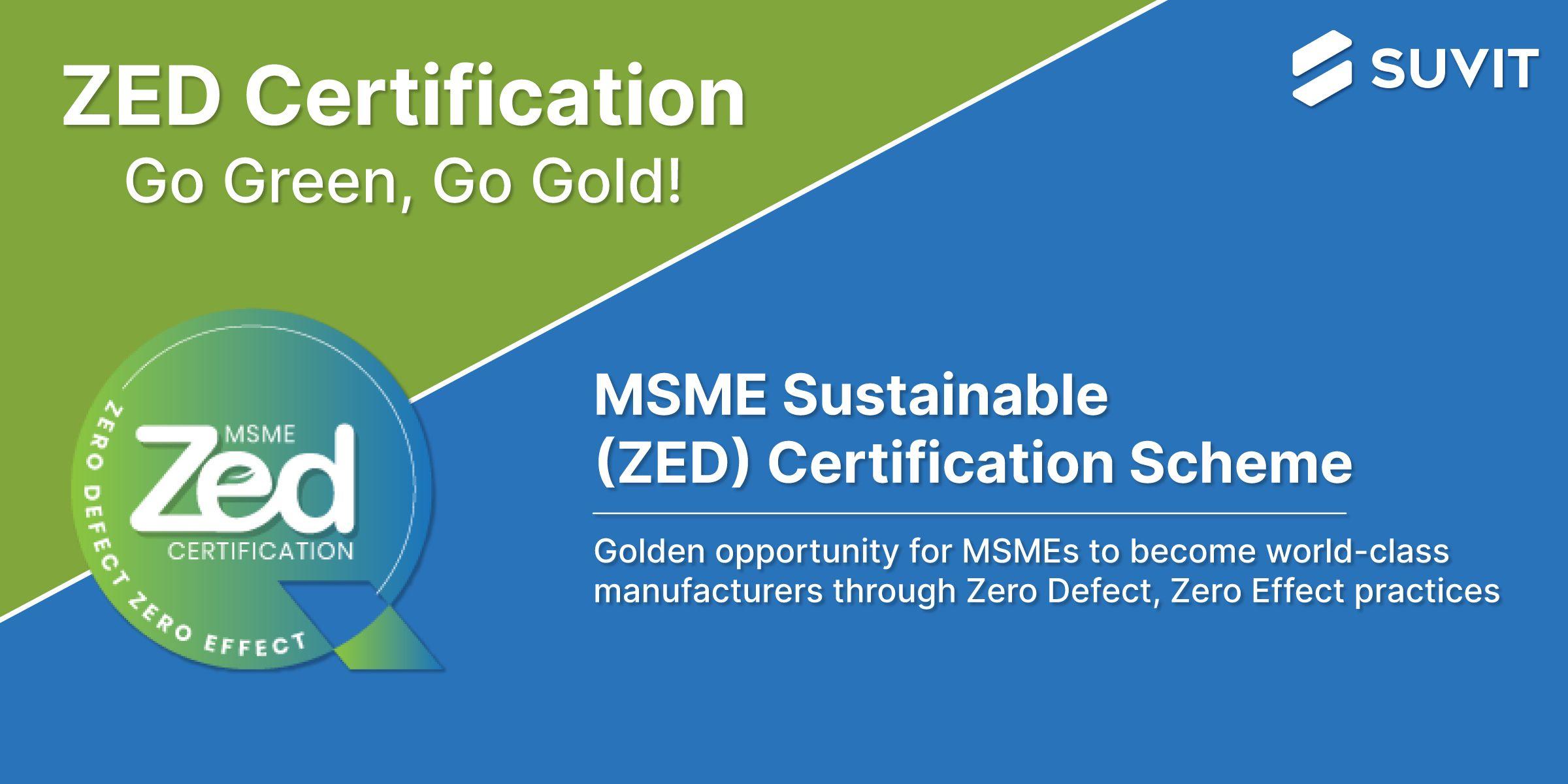
ZED stands for Zero Defect, Zero Effect. It is a government-backed certification program launched by the Government of India, designed specifically to help Micro, Small and Medium Enterprises (MSMEs) enhance product quality while minimizing their environmental impact.
The program’s origin is linked to Prime Minister Narendra Modi’s visionary “Make in India” campaign, focusing on quality manufacturing and sustainability.
Emphasises reducing defects throughout the manufacturing process through rigorous quality control and continuous improvement. This results in reliable products that meet or exceed customer expectations, as well as reduced costs associated with rework, scrap, and customer complaints.
Focuses on minimising environmental impact by implementing practices that reduce waste generation, promote energy efficiency, and enforce responsible waste management. This helps MSMEs reduce their carbon footprint and operational costs.
Together, these pillars provide a framework for MSMEs to improve both quality and sustainability, supporting long-term success.
The certification process is deliberately structured to help MSMEs assess, improve, and validate their manufacturing practices by ZED principles.
The MSME starts by conducting a self-assessment using guidelines and criteria provided by the ZED program. This process helps identify gaps and areas of improvement.
After self-assessment, MSMEs apply for a comprehensive evaluation by a third-party ZED empanelled agency. These agencies follow standardised assessment protocols focusing on:
Based on assessment results, MSMEs are awarded one of three certification levels, indicating their commitment:
| Level | Meaning |
|---|---|
| Bronze | Establishes a good foundation for ZED practices |
| Silver | Demonstrates strong commitment and improvements |
| Gold | Recognizes MSMEs as leaders in quality and sustainability |
ZED certification offers substantial benefits:
Improvements lead to a stronger brand reputation and increased customer satisfaction, ultimately reducing costs associated with rework or returned products.
Waste minimisation means lower material costs and reduced environmental liabilities.
Efficient energy use lowers bills and lowers the carbon footprint, supporting green business practices.
Consumers are increasingly preferring brands that are committed to quality and sustainability. ZED certification provides a visible mark of excellence.
Certified MSMEs gain access to financial assistance, including subsidies on certification fees, reduced interest rates on loans, and preferential consideration for government tenders.
To provide clarity, here is a detailed comparison table of certification levels:
| Certification Level | Number of Parameters | Certification Cost | Government Subsidy (Micro/Small/Medium) | Validity Period |
|---|---|---|---|---|
| Bronze | 5 | ₹10,000 | 80% / 60% / 50% | 3 years |
| Silver | 14 | ₹40,000 | 80% / 60% / 50% | 3 years |
| Gold | 20 | ₹90,000 | 80% / 60% / 50% | 3 years |
Leadership, workplace safety, swachh (clean) workplace, timely delivery, and quality management.
All Bronze parameters, including energy efficiency, hazard management, resource optimisation, supply chain management, occupational health, and others.
Includes Silver parameters plus innovation management, risk identification and mitigation, advanced sustainability practices, and more.
Visit the official ZED Certification website and take the commitment pledge.
Download the self-assessment tool from the portal and evaluate your current manufacturing and environmental practices.
Use the self-assessment results to identify areas for improvement. Consider engaging a ZED-empanelled consultant for expert guidance.
Select an authorised agency from the official list for conducting your third-party audit.
Register and submit the necessary documents on the ZED portal. Documents commonly include:
The selected agency reviews submissions and visits your site for verification.
Upon successful assessment, you will receive your MSME ZED certification level and be eligible to apply for subsidies.
Certification remains valid for 3 years, after which you must reapply.
No. ZED certification is voluntary but strongly recommended for MSMEs aiming for sustainable growth and government incentives.
All manufacturing MSMEs registered with a valid Udyam Certificate are eligible. The service sector is expected to be included in future phases.
Completion can take several weeks, depending on your preparation and agency schedules.
Mandatory documents include Udyam registration, GST certificate, quality and safety records, and proof of environmental compliance.
The government offers subsidies covering 80% for microenterprises, 60% for small enterprises, and 50% for medium-sized enterprises, to help offset certification costs.
Each manufacturing unit must obtain certification separately.
Achieving MSME ZED certification is an effective way to future-proof your business, offering improved product quality, sustainability, and access to government incentives.
Start your journey today! Visit the official ZED Certification portal to learn more, download tools, and apply.


Get started today and simplify your accounting process!