 Is Now Vyapar TaxOne | Same Trust, New Name!
 AI Weapon for Financial Soldiers


Tax planning is an essential part of managing personal finances, and one of the most effective ways to reduce your tax liability is through income tax deductions.
You can maximize your savings and reduce your taxable income by strategically availing deductions under various sections of the Income Tax Act. For the financial year 2024-25 (Assessment Year 2025-26), several deductions can help you minimize your tax burden.
Let’s dive into the details of the key income tax deductions, including Section 80C, 80CCC, 80CCD, and 80D, and explore how you can make the most of them.
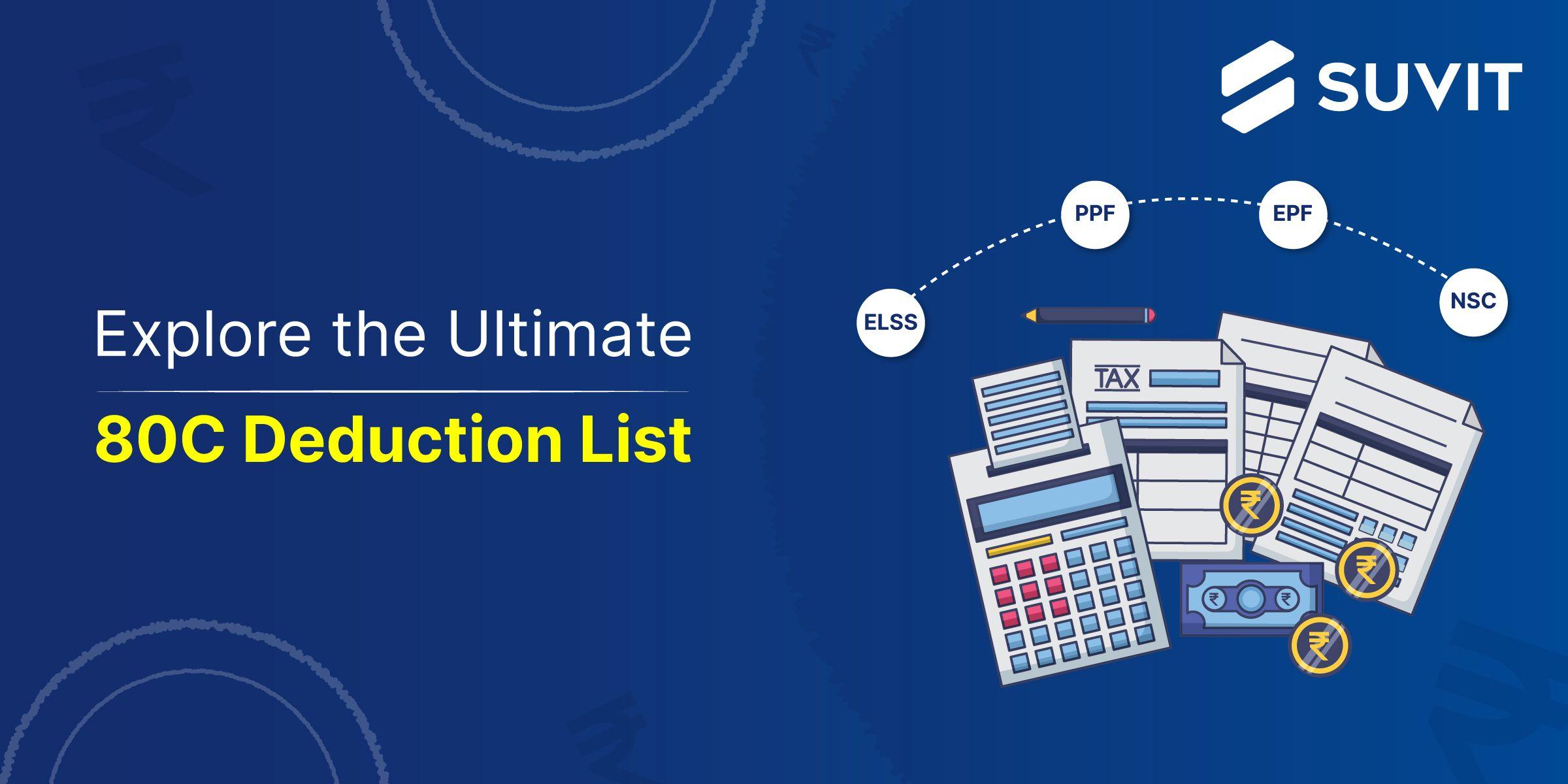
Section 80C of the Income Tax Act is among the most popular provisions for availing tax deductions. It enables individuals to reduce their taxable income by claiming deductions on various eligible investments and expenditures, with a cap of ₹1.5 lakh annually. Here’s a closer look at the most popular options under Section 80C that can help you save on taxes:
Equity Linked Savings Scheme (ELSS): ELSS funds are a great option for tax-saving investments. They offer both tax deductions and potential wealth growth through equity market exposure.
Investments in ELSS funds qualify for deductions under Section 80C, making them an attractive option for those looking to save taxes while also building wealth.
Public Provident Fund (PPF): A government-supported savings scheme known for its appealing interest rates and tax advantages. Contributions to a PPF account qualify for deductions under Section 80C, and the interest earned is also tax-free, making it an ideal long-term investment.
Employee Provident Fund (EPF): Both employee and employer contributions towards the EPF account are eligible for tax deductions under Section 80C. This makes it an excellent tax-saving tool for salaried individuals.
Life Insurance Premiums: Premiums paid towards life insurance policies, including term insurance and endowment policies, are eligible for deductions under Section 80C. However, the premium must not exceed 10% of the sum assured.
National Savings Certificate (NSC): NSC is a fixed-rate, government-backed savings instrument that provides tax benefits under Section 80C. With a fixed return and a guaranteed interest rate, it’s a safe investment option for risk-averse investors.
Maximize Your 80C Deductions: By diversifying your investments across these options, you can make the most of the ₹1.5 lakh deduction limit and reduce your taxable income significantly.
Section 80CCC provides tax deductions for amounts invested in specific pension schemes offered by insurance companies. These plans help ensure a steady income stream after retirement, making them a critical component of long-term financial planning. However, it’s important to note that the total deduction available under Sections 80C, 80CCC, and 80CCD(1) combined cannot exceed ₹1.5 lakh.
Tip: Looking to build a retirement corpus? Opting for a pension plan under Section 80CCC not only supports your long-term financial goals but also helps you save on taxes.
Section 80CCD provides deductions for contributions made to the National Pension System (NPS), a government-backed retirement savings scheme. It’s divided into two subsections:
80CCD(1): This section permits tax deductions on contributions made to the National Pension System (NPS)—up to 10% of salary (basic + dearness allowance) for salaried individuals, or 20% of gross total income for the self-employed. These deductions fall within the ₹1.5 lakh limit shared with Section 80C.
80CCD(2): This subsection offers deductions for employer contributions to NPS, with no monetary limit. Employers can contribute up to 14% of the employee’s salary, and this is also eligible for tax deductions.
Maximize Your NPS Contributions: NPS offers a unique opportunity to save additional tax under Section 80CCD(2) by including employer contributions, which have no upper limit.
Health expenses can be a significant burden, but Section 80D provides a way to ease the financial strain by offering tax deductions on health insurance premiums.
Health Insurance Premiums: Premiums paid for health insurance policies covering yourself, your spouse, children, and parents are eligible for deductions. Additionally, premiums paid for preventive health check-ups are also deductible.
Deduction Limits:
Additional Deductions for Parents: You can also claim deductions of up to ₹25,000 for health insurance premiums paid for your parents, or ₹50,000 if they are senior citizens.
Protect Your Health and Your Wallet: By investing in comprehensive health insurance, you not only safeguard your health but also lower your taxable income under Section 80D.
Navigating tax deductions can seem overwhelming, but understanding the provisions under Sections 80C, 80CCC, 80CCD, and 80D can significantly reduce your tax liability.
By strategically investing in tax-saving instruments and planning your health and retirement contributions, you can minimize your taxes while building a secure financial future.
Pro Tip: Consider using an accounting and auditing automation tool to simplify your tax planning, ensure compliance, and maximize your savings.
By carefully planning your tax-saving investments and understanding the deductions under Sections 80C, 80CCC, 80CCD, and 80D, you can maximize your savings for the financial year 2024-25 (Assessment Year 2025-26). Start today to optimize your financial planning and secure a brighter, tax-efficient future!
Remember to stay updated with the latest tax rules and guidelines to make the most out of every available deduction. Happy Tax Planning!
Section 80C allows individuals to claim deductions for investments like PPF, EPF, and ELSS, helping reduce taxable income. It’s important because it offers a straightforward way to save on taxes while also securing your future.
Investments in PPF, EPF, NSC, ELSS, and life insurance premiums are eligible for deductions under Section 80C. Check the specific eligibility criteria for each to ensure they qualify.
Section 80CCC covers pension plan contributions to insurance companies, while Section 80CCD pertains to contributions to the NPS, which is a government-backed scheme.
Maximize savings by investing in high-return instruments like ELSS or PPF for 80C and ensuring you have adequate health insurance coverage for Section 80D.
Yes, you can combine deductions from Sections 80C, 80CCC, 80CCD, and 80D, but each has specific limits. For example, the limit for Section 80C is ₹1.5 lakh, while Section 80D allows deductions for health insurance premiums.
The maximum deduction limit under Sections 80C, 80CCC, and 80CCD combined is ₹1.5 lakh, with additional benefits available for NPS contributions under Section 80CCD(1B).
Yes, under Section 80D, you can claim deductions for premiums paid for your parents’ health insurance, especially if they are senior citizens.


Get started today and simplify your accounting process!